
.webp?language=en-US)


Allensworth Rising: Rural Resilience in California's Freedom Colony
.webp?language=en-US)
.webp?language=en-US)
.webp?language=en-US)
.webp?language=en-US)
.webp?language=en-US)
.webp?language=en-US)
.webp?language=en-US)
.webp?language=en-US)
.webp?language=en-US)
.webp?language=en-US)
.webp?language=en-US)
.webp?language=en-US)
.webp?language=en-US)
.webp?language=en-US)
.webp?language=en-US)
.webp?language=en-US)
-
The Allensworth Community Plan is the outcome of a multi-year commitment to the people and place of California’s only Black freedom colony, a rural community in a landscape of extreme inequality and climate vulnerability shaped by 150 years of industrial agriculture in the Central Valley. The plan advances the town’s original visionary aspirations and the community’s shared goal of climate-resilient rural self-sufficiency. The work required deep trust-building with longstanding Black families, Latino/x residents, and Native tribes, through collaborative partnerships centered on culture and basic needs such as drinking water access. The project is a model for equitable rural community planning in regions dominated by industrial agriculture.
-
Allensworth was founded in 1908 as the only town in California founded, financed, and governed by Black Americans. With four partners, ColonelAllensworth—who escaped slavery and became the highest-ranking African American military officer of his time—established the town as a refuge and center for Black economic and agricultural innovation.
The founders struggled to secure land due to developers’ unwillingness to support a so-called “race colony.” The Pacific Farming Co ultimately sold them 800 acres of former Tulare Lake wetlands, drained in the late 19
-c for industrial agriculture. Although irrigation was promised as part of the agreement, that commitment was broken, wells dried up, and the town faced compounded racially motivated infrastructural barriers. Despite these challenges, descendants’ advocacy led CA State Parks to acquire 240 acres in 1974, now operated as Col. Allensworth State Historic Park.
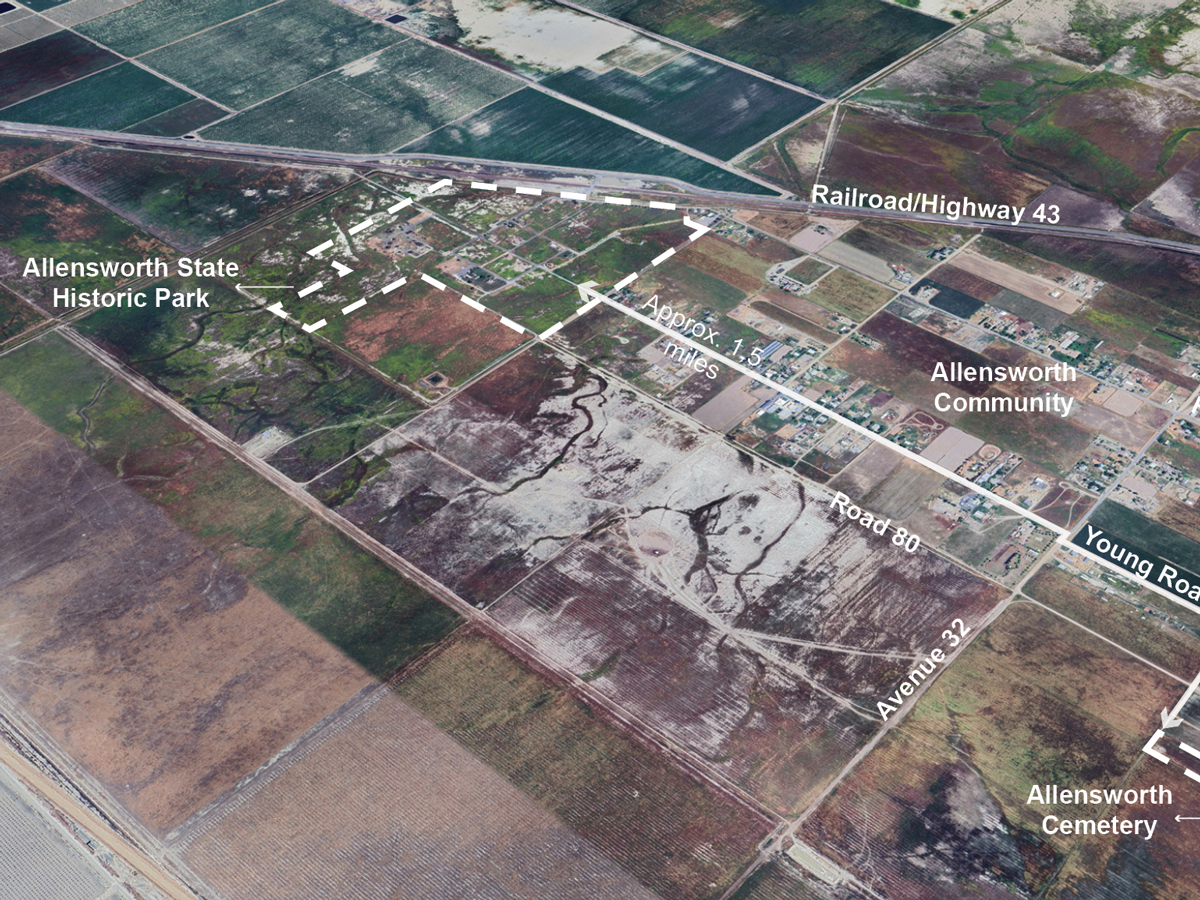
The adjacent “living community” of Allensworth—an unincorporated rural hamlet—has approx. 600 residents, many of them farmworkers facing economic, health, and immigration vulnerabilities. Climate stress from megadroughts, rising temperatures, and episodic flooding has intensified environmental injustices, including arsenic-contaminated drinking water, poor air quality, and pesticide accumulation. Water and food insecurity, limited educational access, and constrained economic opportunities persist. Amidst this, the Allensworth Progressive Association has played a key role in securing resources to ensure that Allensworth “rises again.”
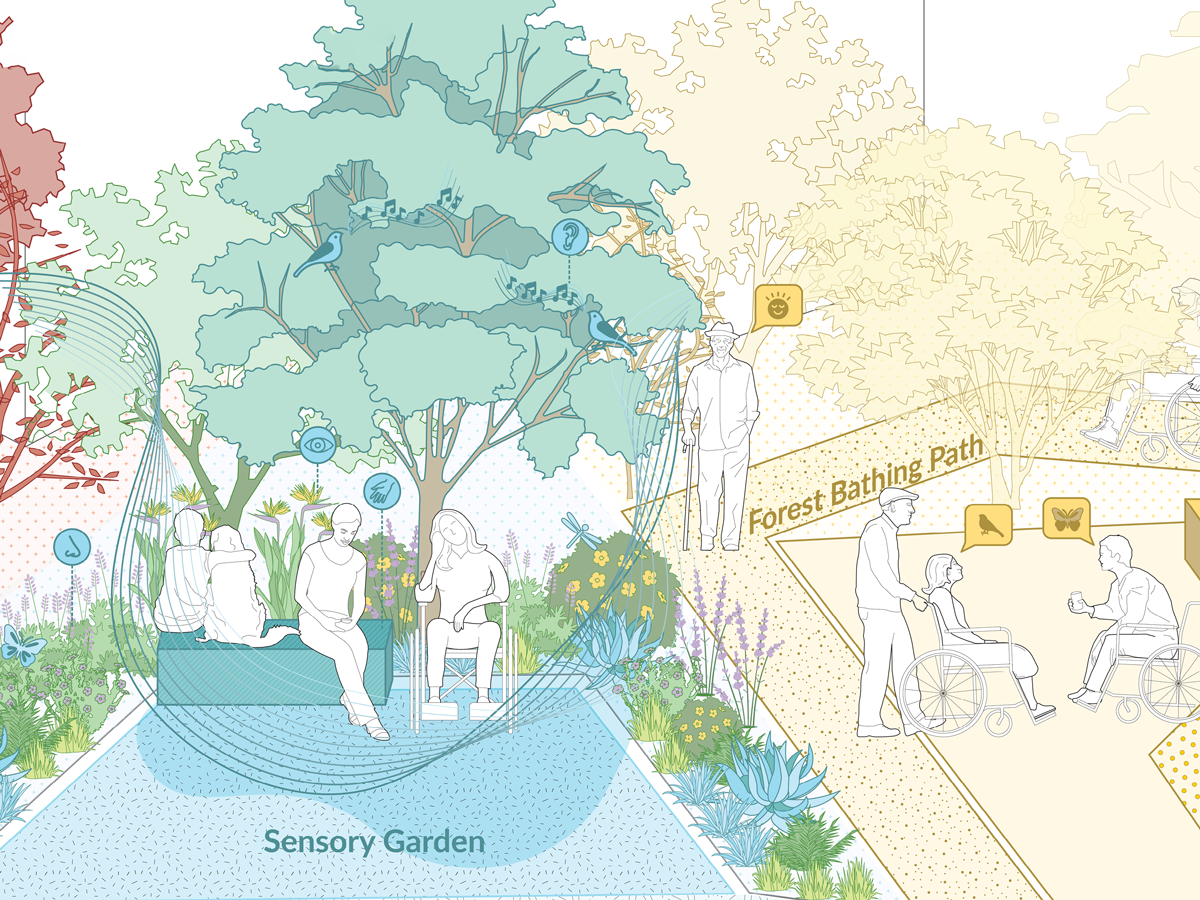
The plan provides a roadmap for achieving the community’s primary value: climate-resilient rural self-sufficiency. Centering culture as the foundation of community development, the plan integrates environmental and climate justice protections, water and infrastructure security, expanded educational opportunities, and economic development rooted in regenerative farming.
The plan established a governance and partners workflow to coordinate local governing bodies, external agencies, and community organizations. Engagement was sustained through monthly “Cafecitos” in the Community Center and Town Halls at the Elementary School, both accessible spaces for decision-making. Participatory community mapping workshops brought together Black families and the predominantly Latino/x residents living there today, prioritizing reciprocal learning and shared asset identification as the basis for analysis.
A key catalyst project is the Allensworth Historical & Community Cemetery. Established in 1918, the site contains at least 42 unmarked graves,including many original settlers. In 2020, the Allensworth Community Services District assumed ownership without resources for preservation while receiving approval to develop an adjacent active community cemetery. The Community Plan advances the cemetery as a critical intervention, offering preservation, design, and phased implementation strategies to stabilize its future.
The Allensworth Community Plan is the result of a multi-year, ongoing commitment to CA’s only Black freedom colony. The process involved a complex set of partnerships that center Black and Brown residents and Native tribes who look to Pa’ashi, the former Tulare Lake, as a framework for advancing land and water justice in the basin. Together, the plan demonstrates how landscape architecture can address basic human needs while advancing culturally grounded, climate-resilient futures in rural California.
-
- California meadow sedge (Carex pansa)
- Rusty Sedge (Carex subfusca)
- Blue Wild Rye (Elymus glaucus)
- Red Fescue (Festuca rubra)
- California Fescue (Festuca californica)
- Western Fescue (Festuca idahoensis)
- Common Rush (Juncus effusus)
- California Grey Rush (Juncus patens)
- Blue Wild Rye (Leymus glaucus)
- Deer grass (Muhlenbergia rigens)
- Purple Needlegrass (Nasella pulchra)
- Foothill Needlegrass (Nasella lepida)
- Blue-eyed grass (Sisyrinchium bellum)
- Marsh Baccharis (Baccharis douglasii)
- Coyotebrush (Baccharis pilularis)
- Mountain Mahogany (Cercocarpus betuloides)
- Western Redbud (Cercis occidentalis)
- Catalina Perfume (Ribes viburnifolium)
- California Wild Rose (Rosa californica)
- Sage (Salvia ssp.)
- Buckeye (Aesculus californica)
- Catalina Cherry (Prunus lyonii)
- Elderberry (Sambucus mexicana)
- Black elderberry (Sambucus nigra)
- Coast live oak (Quercus agrifolia)
- Valley oak (Quercus lobata)
-
- Shuyi Zhang, Landscape Justice Initiative Intern (USC MLA '25)
- Kavya Gudihal, Landscape Justice Initiative Intern (USC MLA '25)
- Nina Weithorn, Landscape Justice Initiative Intern & Associate (USC MLA '24)
- Viraj Chauhan, USC MLA '24 / GIS Mapping Intern
- Mark Reid, Landscape Justice Initiative Intern (USC MLA '25)
- Jade Orr, Landscape Justice Initiative Associate
- Yuliang Jiang, Landscape Justice Initiative Associate
- Leslie Dinkin, Landscape Justice Initiative Intern (USC MLA '23)
- Lauren Cubacub, Landscape Justice Initiative Intern (USC MLA '22)
- Shina Devon, USC M.Arch '24 / Class Member in LJI Seminar on Allensworth
- Lucia Bayley, USC MLA '24 / Class Member in LJI Seminar on Allensworth
- Luis Mota, USC MLA '24 / Class Member in LJI Seminar on Allensworth
- Dhriti Pangasa, USC M.Arch '25 / Class Member in LJI Seminar on Allensworth
- Sherry Hunter, Allensworth Community Services District
- Denise Kadara, Allensworth Progressive Association
- Dezaraye Bagalayos, Allensworth Progressive Association
- Kayode Kadara, Allensworth Community Leader
- Tekoah Kadara, Allensworth Progressive Association
- Valerie Jasso Garospe, Allensworth Progressive Association
- Rashel Cazares, Allensworth Progressive Association
- Jose Armando Munguia, Allensworth Progressive Association
- Goana Toscano, Allensworth Progressive Association
- Sonya Montgomery, Allensworth Progressive Association
- Sara Daleiden, Sara Daleiden Consulting
- Robert Hansen, Biologist
Advertisement
Related Awards
-listing-img.webp?language=en-US)
ASLA / IFLA Global Impact Award, Analysis & Planning
The Four Coasts Project
The US Army Corps of Engineers is responsible for the bulk of the nation’s water resources infrastructure. USACE’s Engineering With Nature program works to align that infrastructure with natural processes and support a broader range of benefits to the nation’s economy, local communities, and ecosystems. Four Coasts is a three-year effort by landscape architects and engineers working with EWN Proving Ground districts to identify and advance nature-based coastal infrastructure projects.