
.webp?language=en-US)

.webp?language=en-US)
Harper Preserve: Agrivoltaic Research Park + Community Center
Kayla Vaccaro, Student ASLA; Zhiyu Guo, Student ASLA; Kate Perazzo; Yunjia Zou; Daniela Cruciani

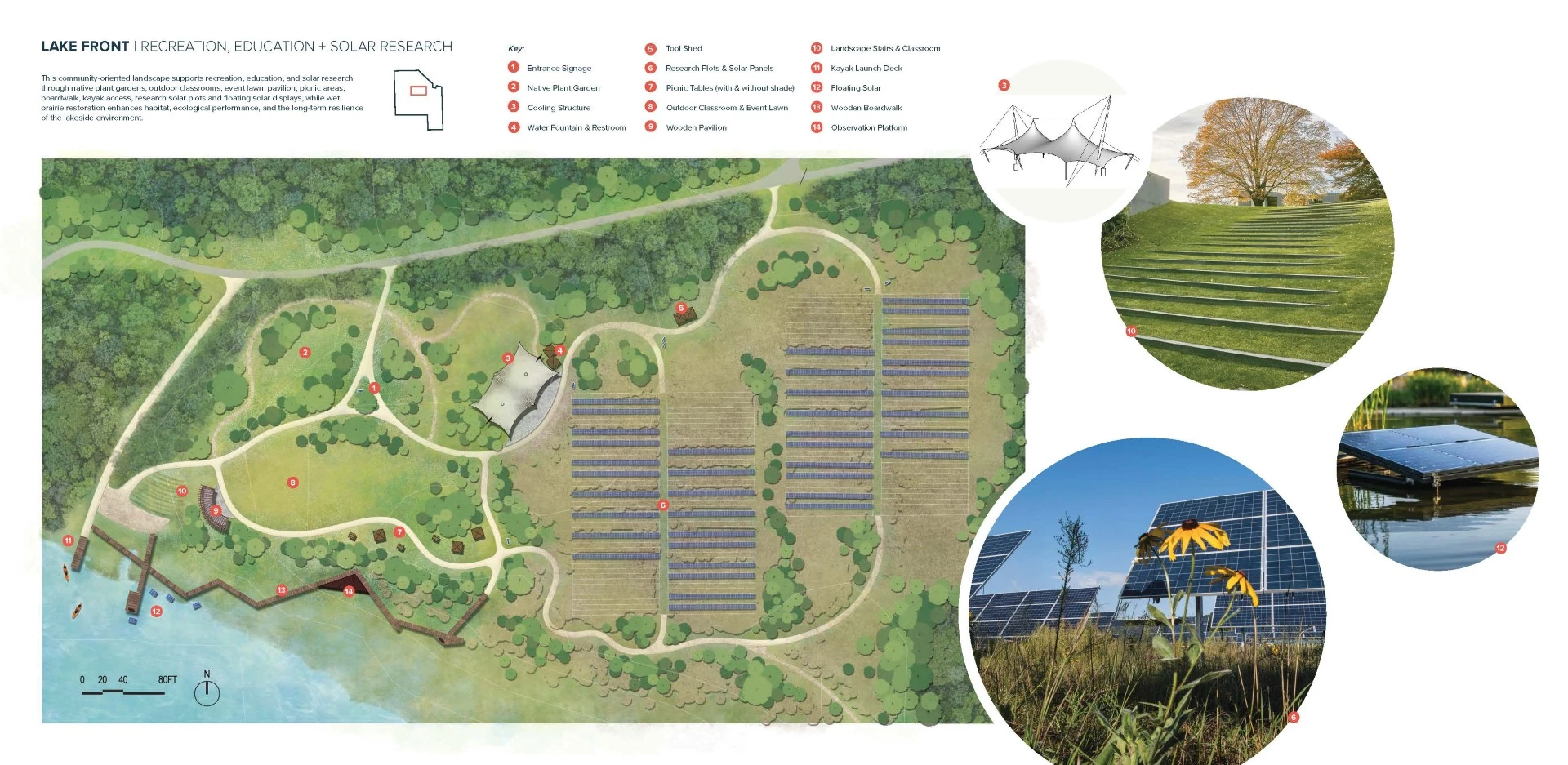
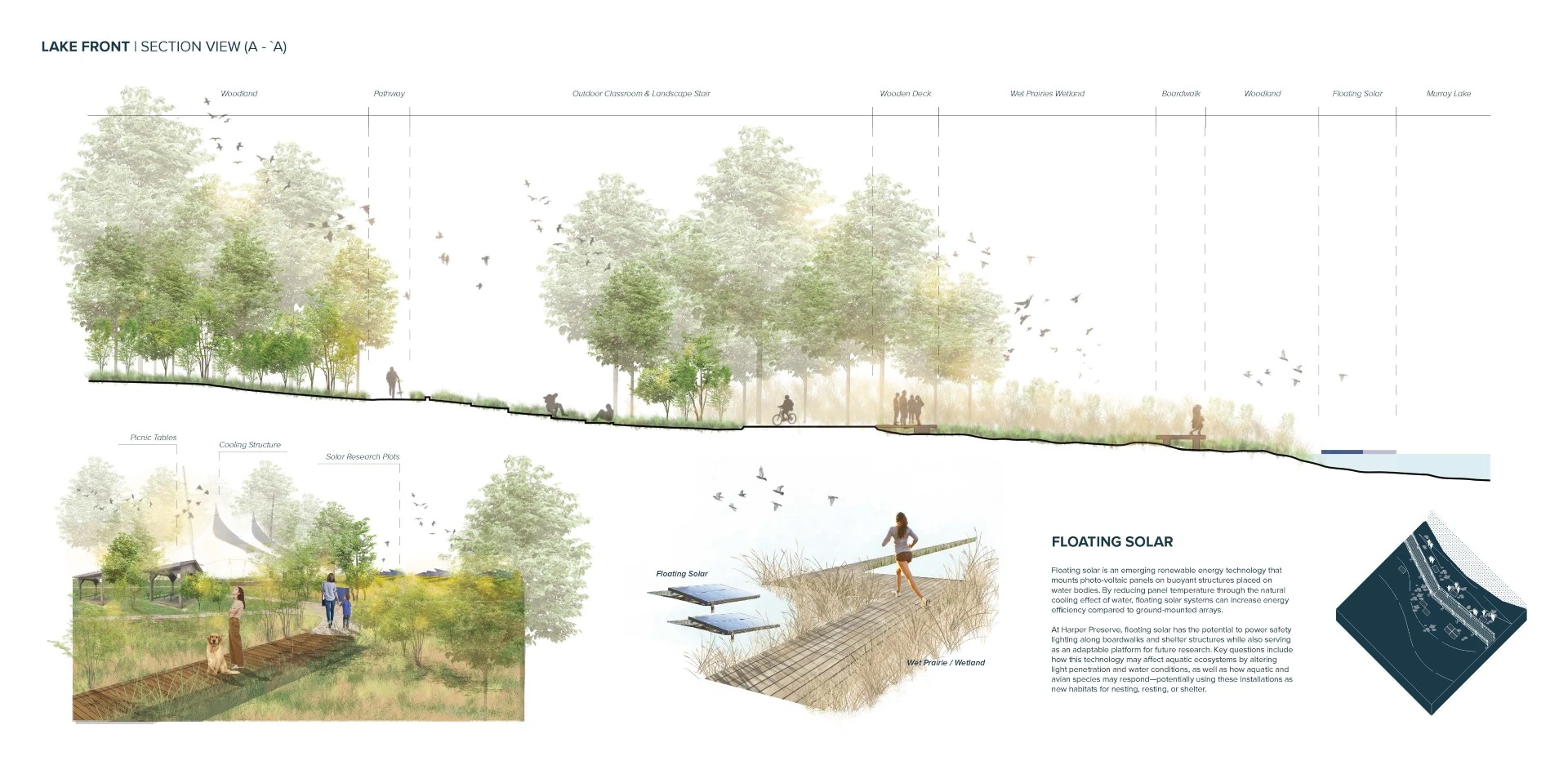
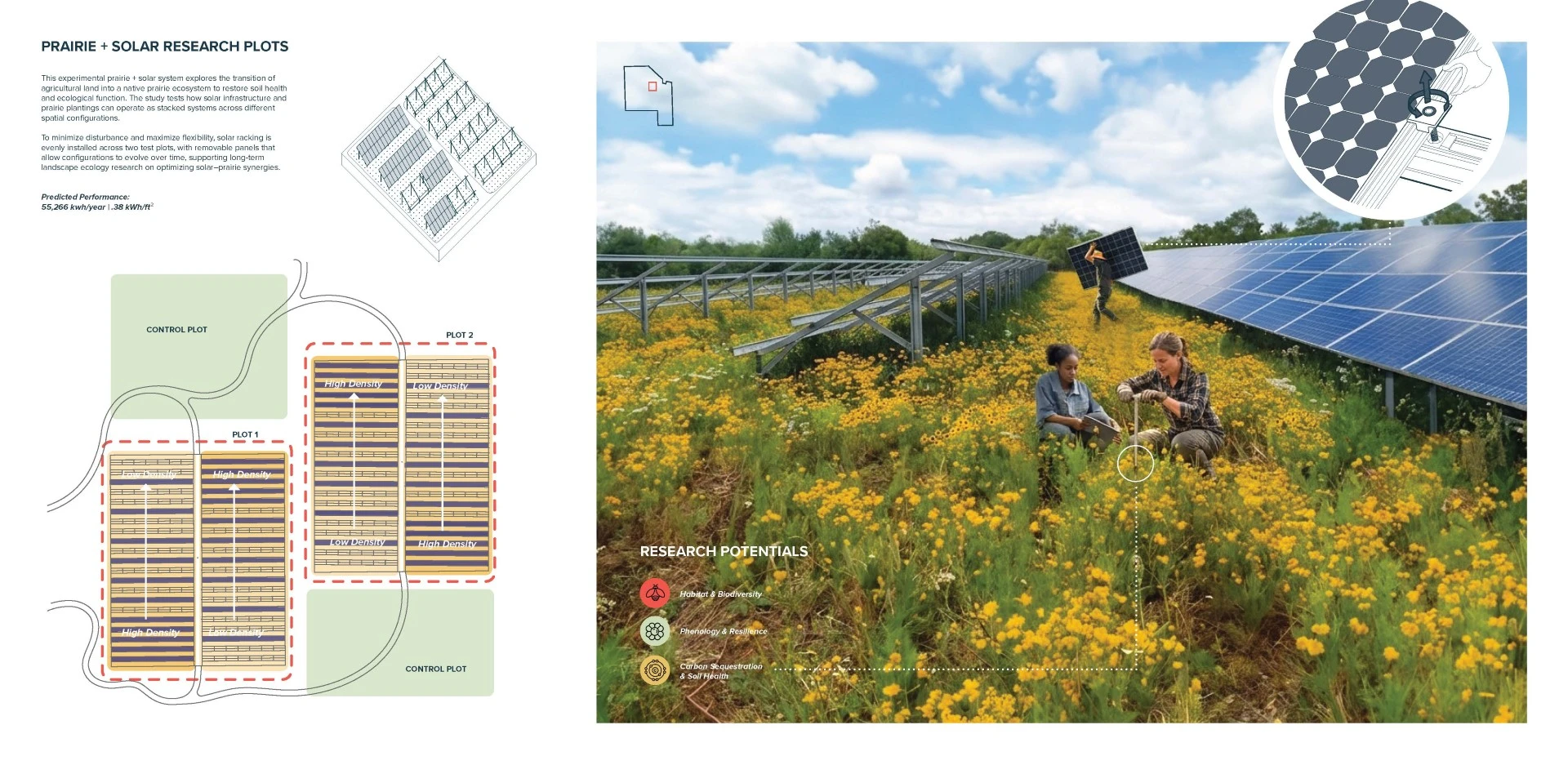
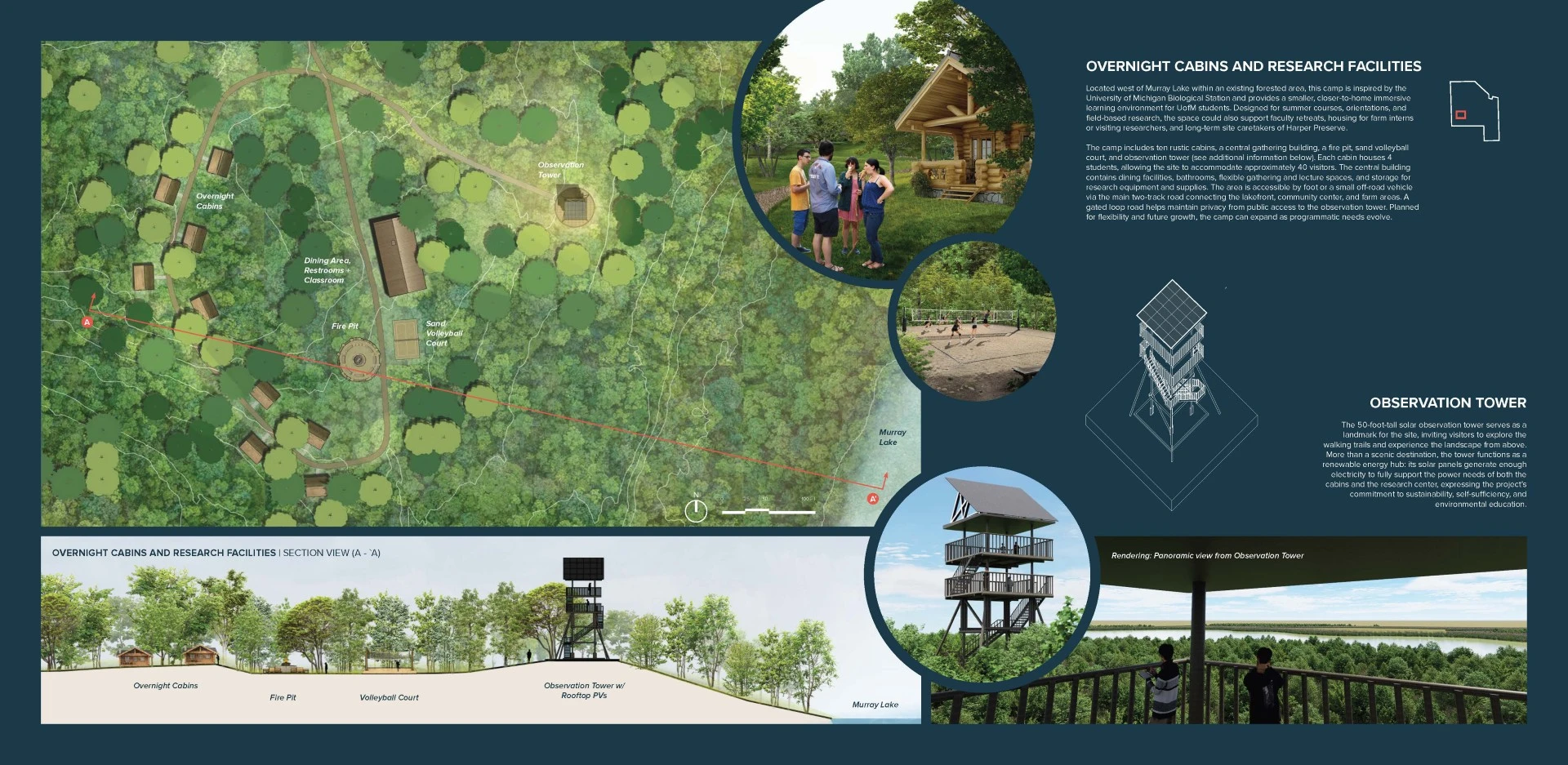
Great balance of energy production, agricultural productivity, and ecology guided by landscape architecture.
Awards Jury
-
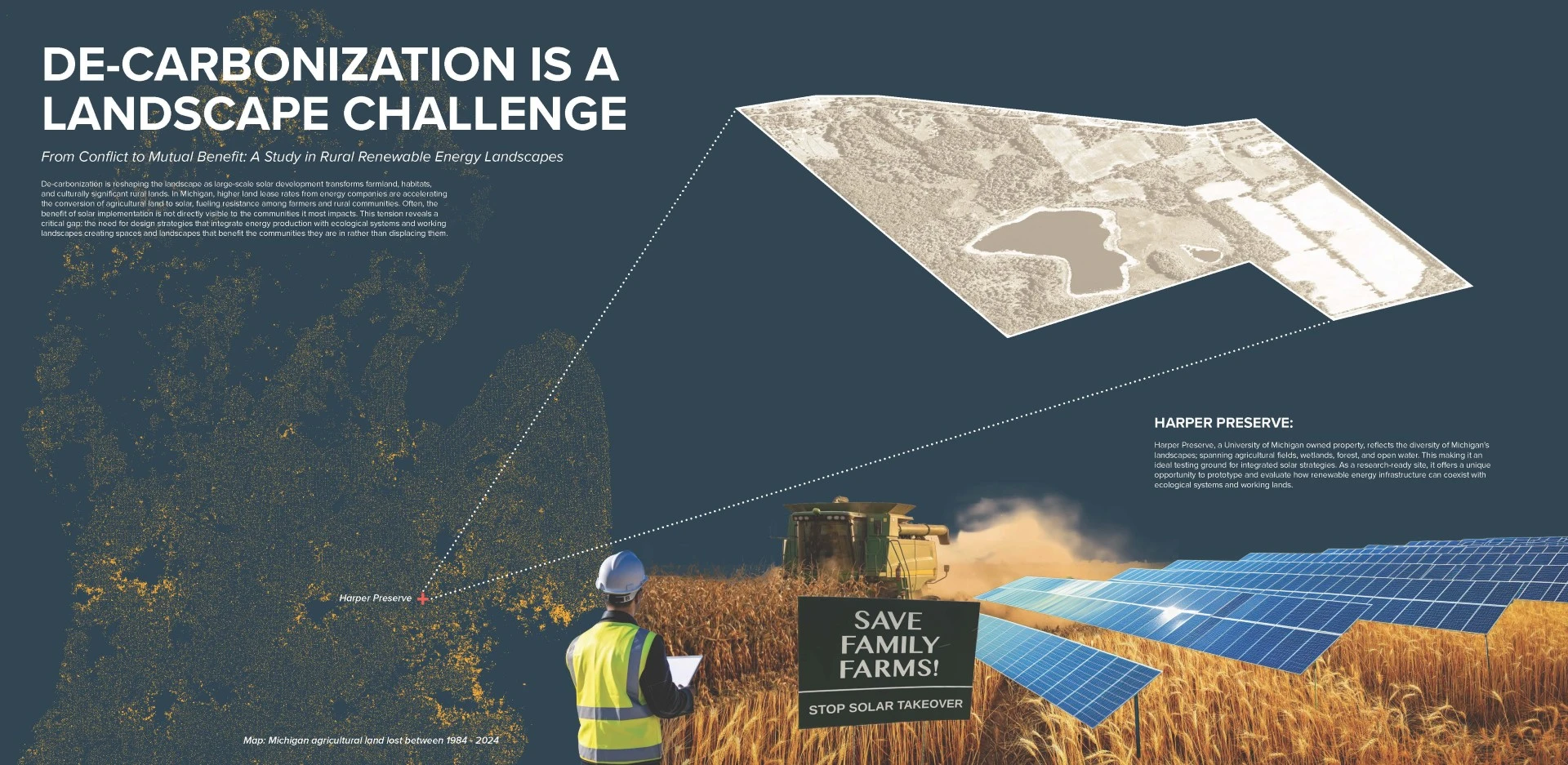
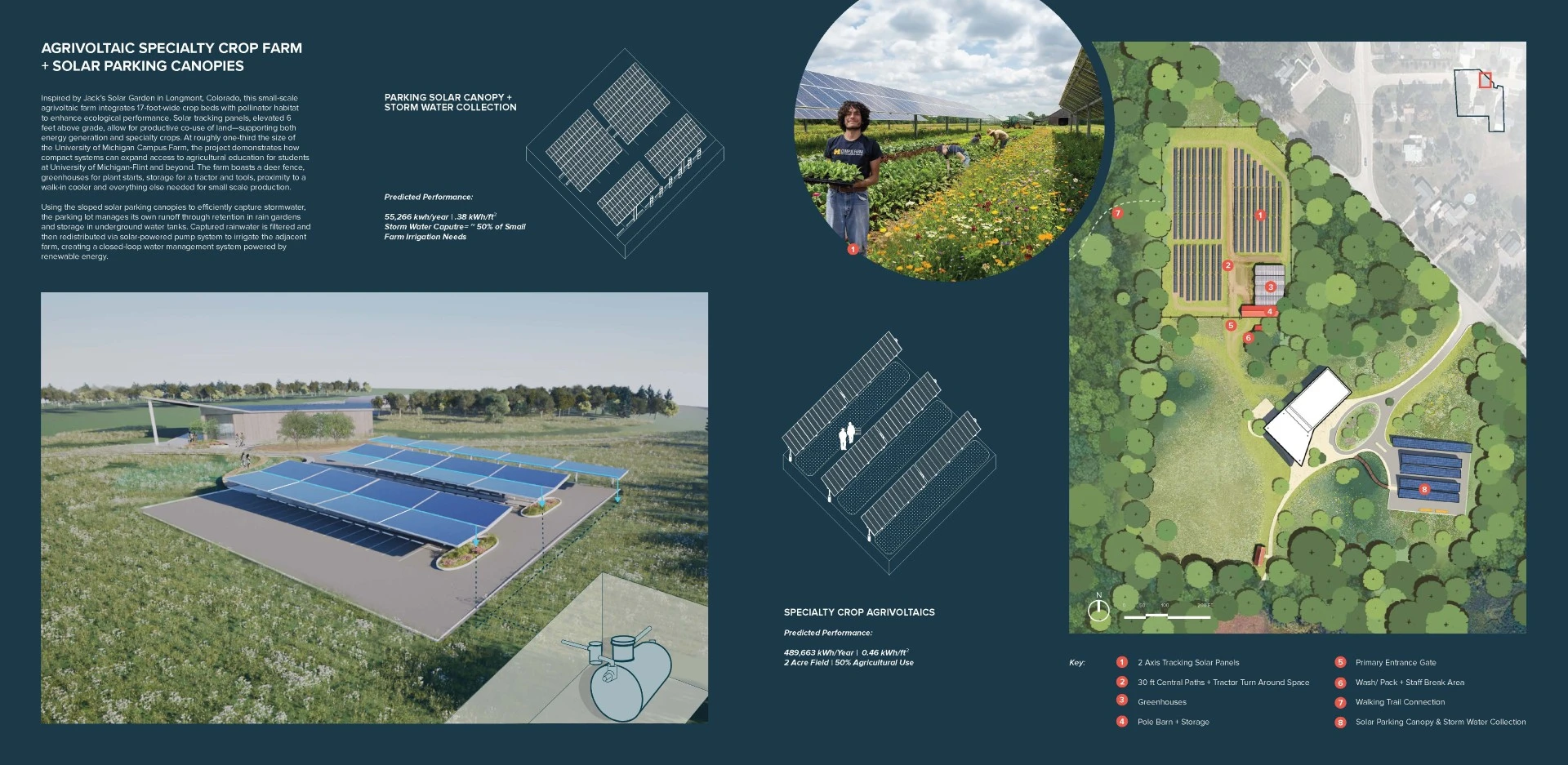
As the need for sustainable energy grows, decarbonizing energy systems becomes a landscape challenge. Solar energy is a land-intensive resource, and in the midwest it faces pushback as energy companies outbid farmers for land leases. This project is a unique approach to experimental solar-integrated and agrivoltaic systems. Centered around renewable energy production, the project positions the landscape as both a living laboratory and community resiliency hub–supporting rural culture through energy transition while advancing carbon sequestration, ecological performance, and public resources during times of disruption.
-
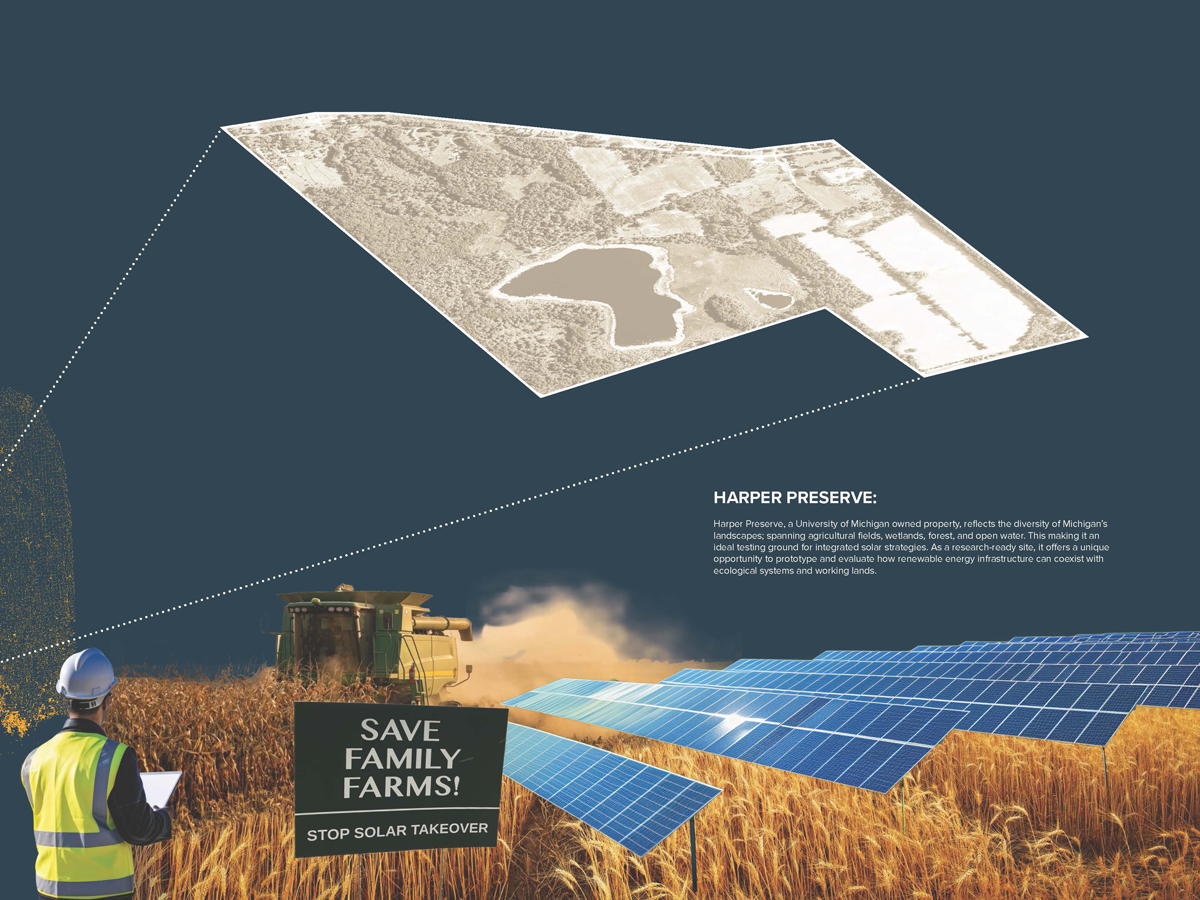
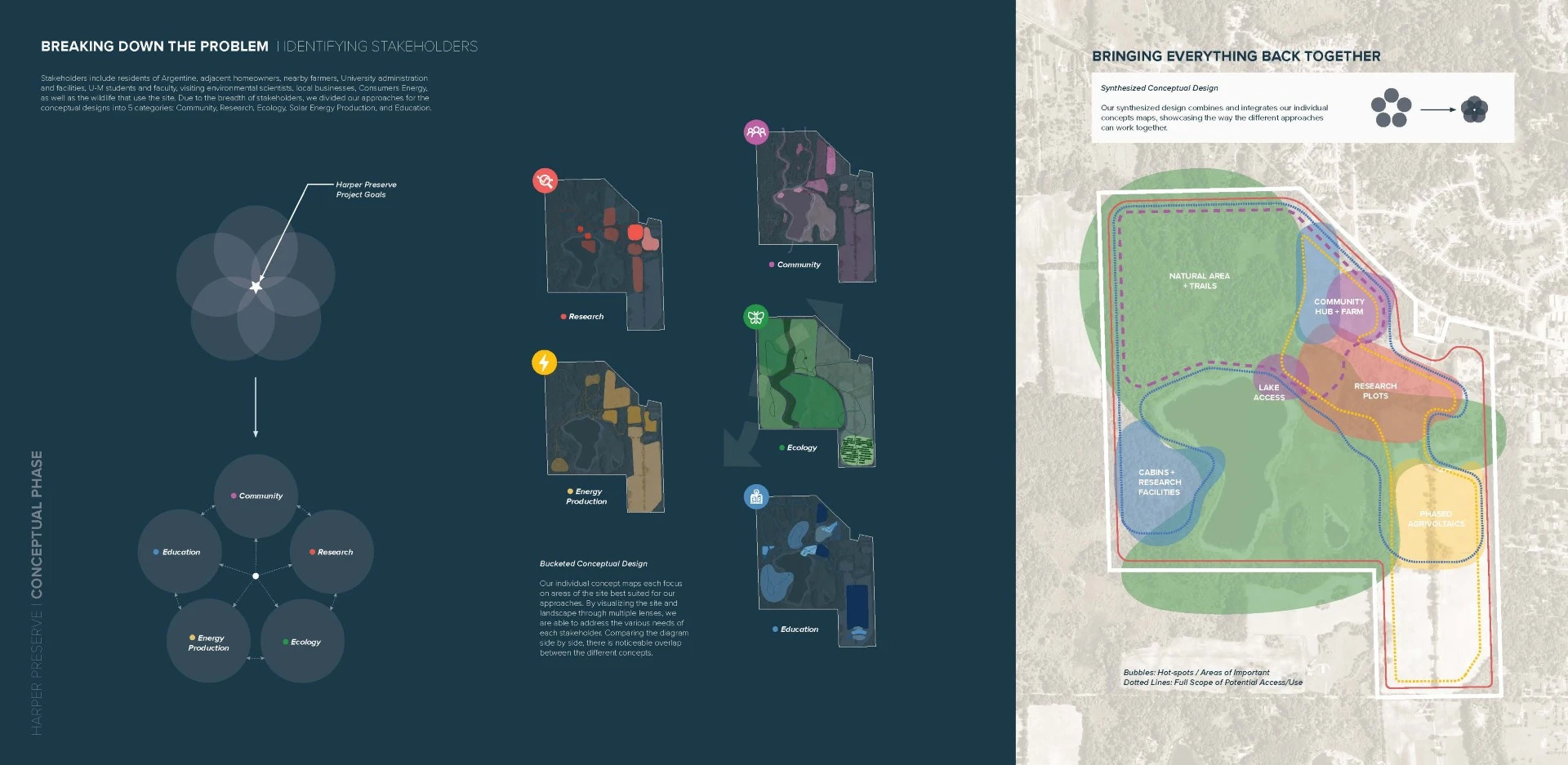
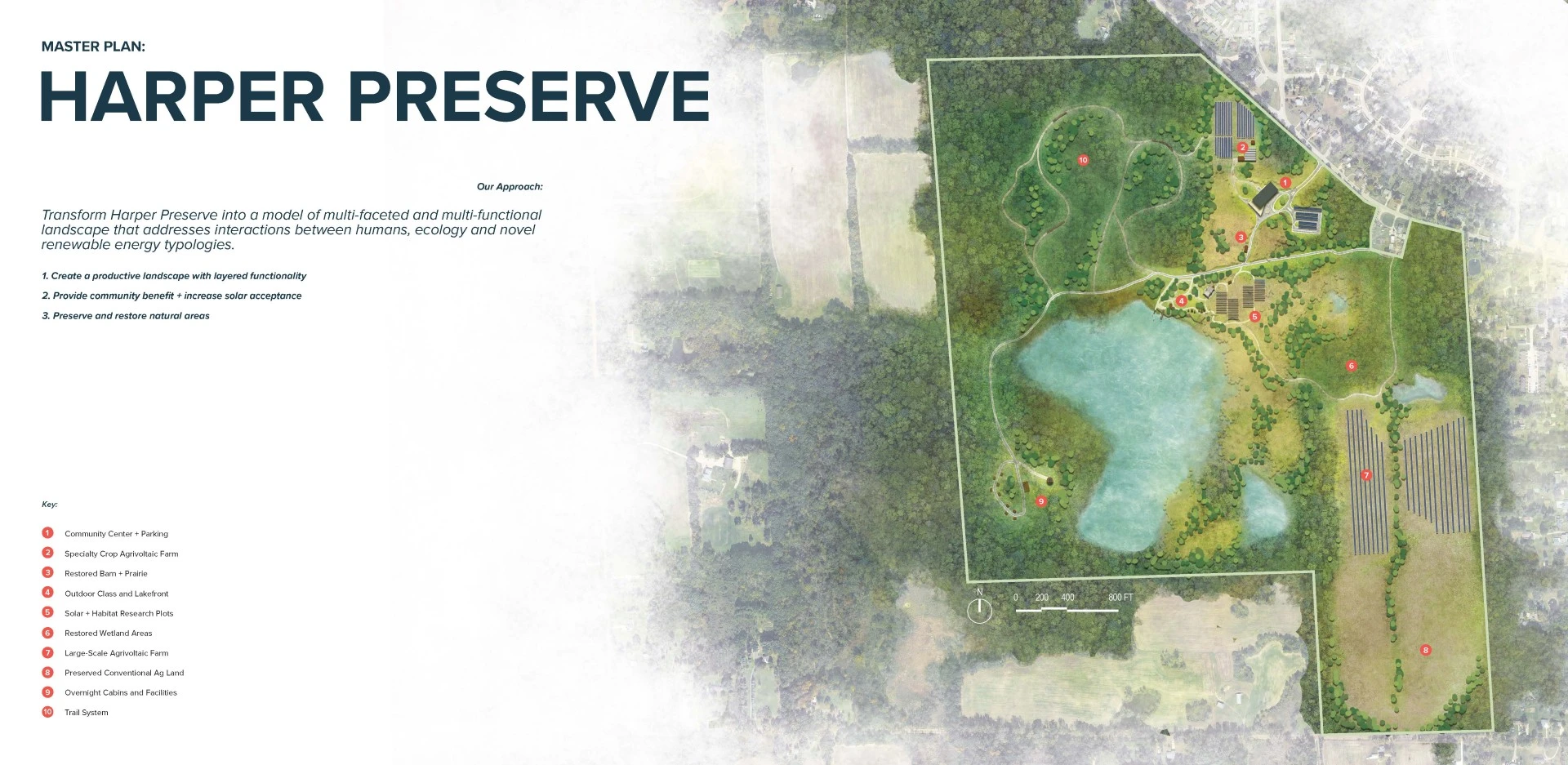
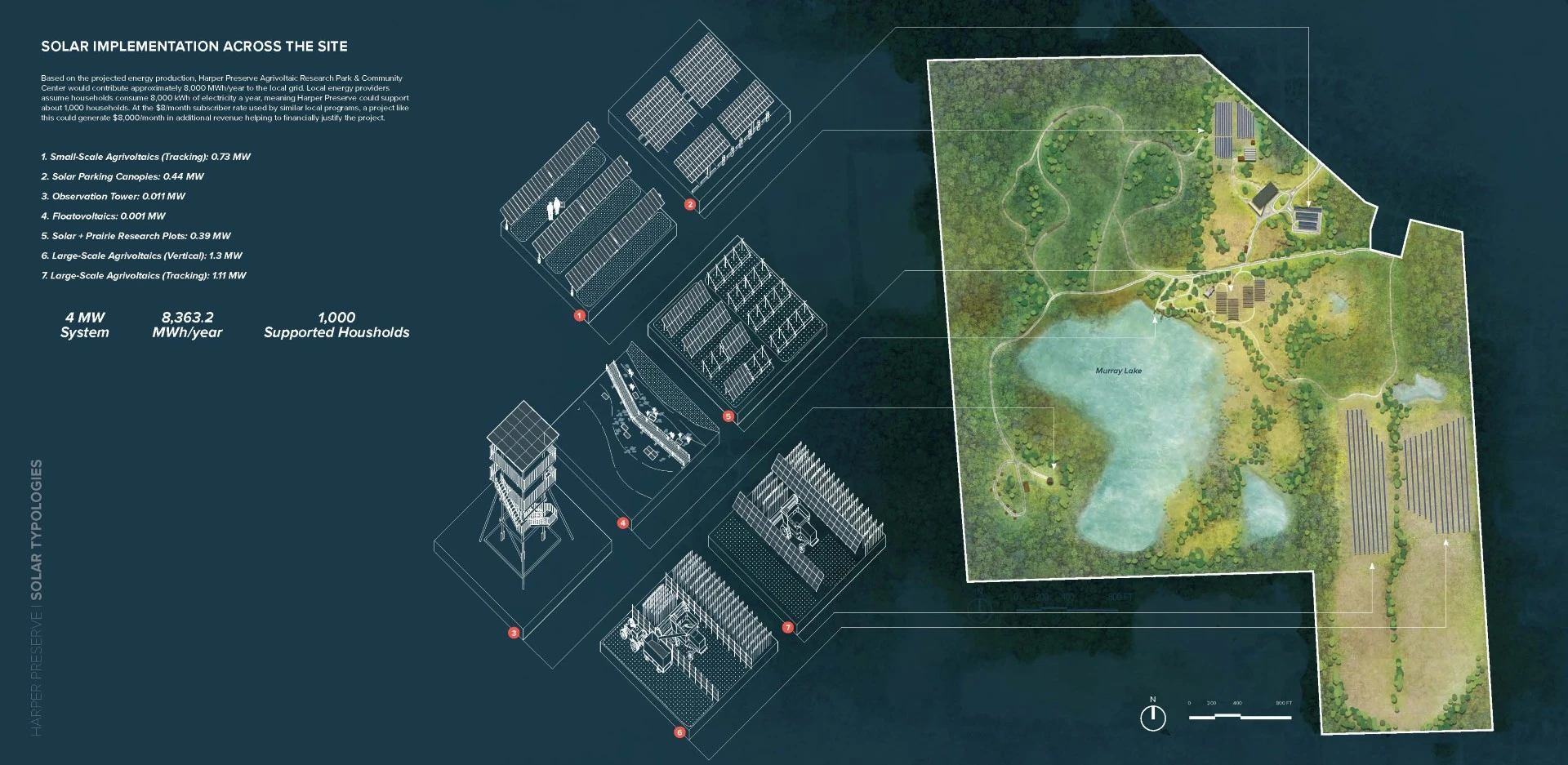
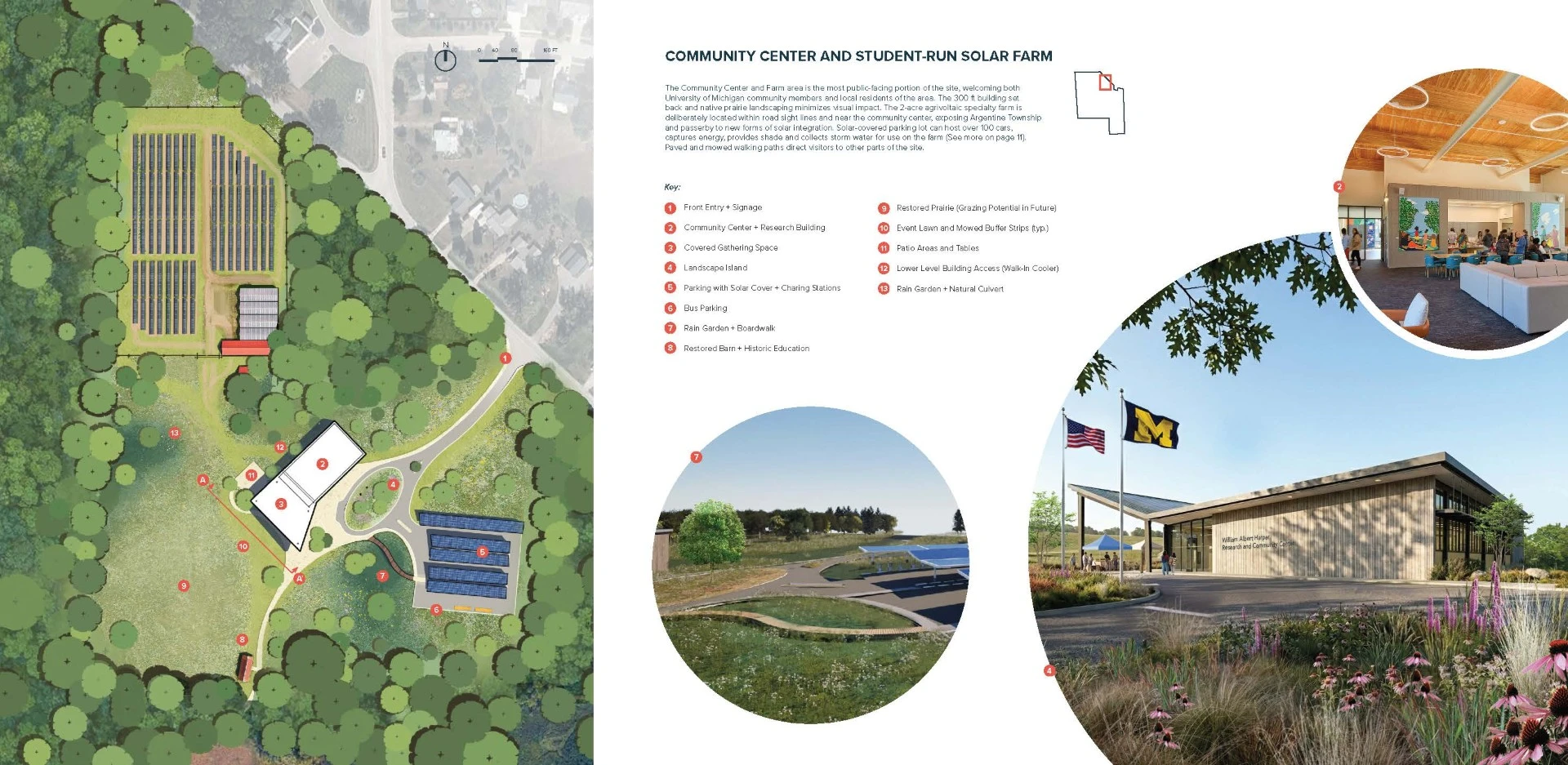
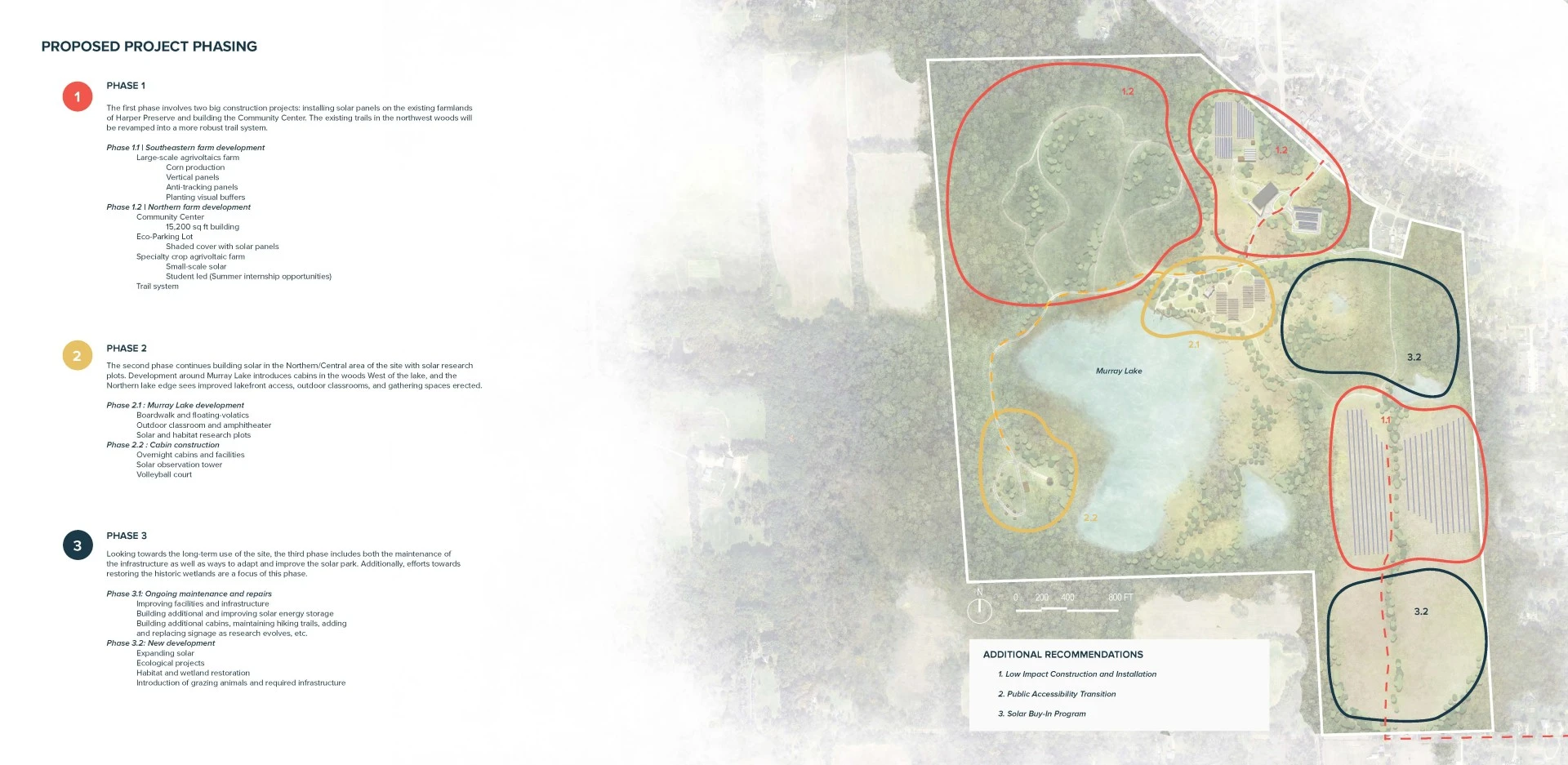
As renewable energy infrastructure rapidly expands worldwide, decarbonization has become a landscape challenge. Solar energy is inherently land-intensive. As a result, it is often competing with farmland, ecosystems, and rural identity for space. In the Midwest, land use competition can create tension with farmland preservation, rural character, and community acceptance as energy companies compete for land leases. This project reimagines Harper Preserve as a 4 MW multifunctional agrivoltaic solar system and living laboratory, exploring how solar infrastructure can support energy production while also sustaining farming, ecological health, research, and rural community resilience.
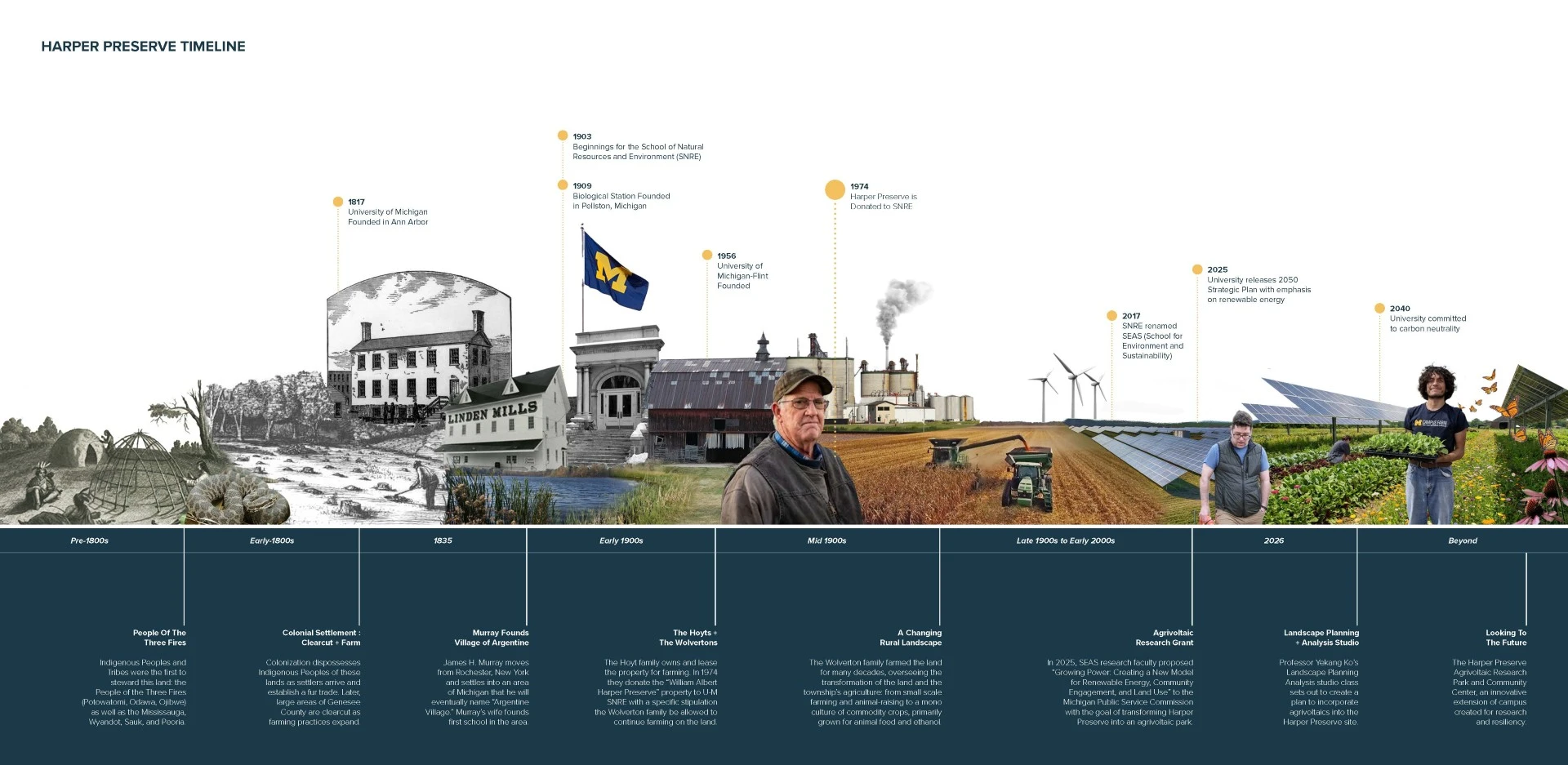
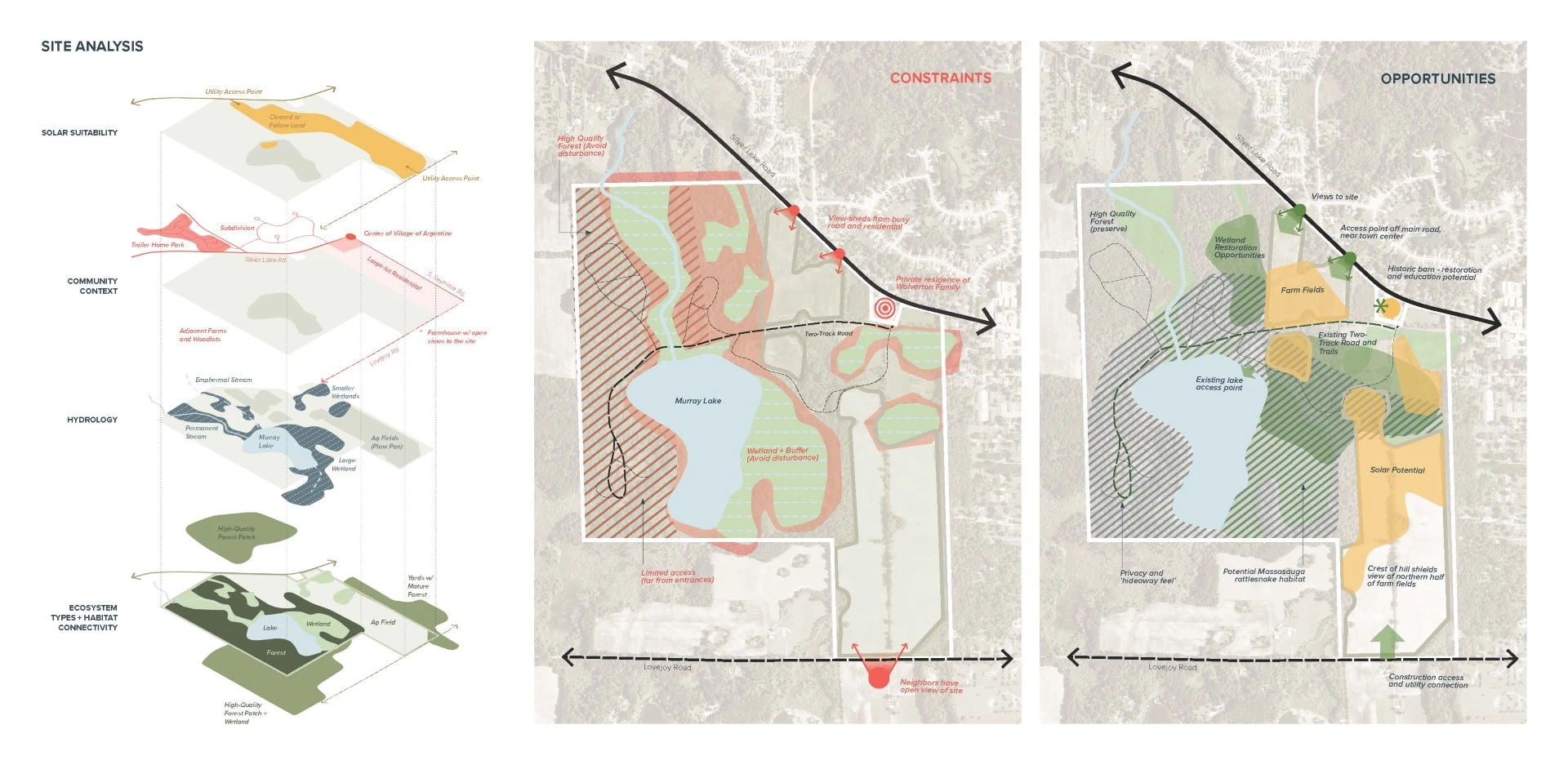
Harper Preserve is a 375-acre site owned by the University of Michigan's School for Environment and Sustainability, located in Argentine Township within Genesee County. It hosts agricultural fields, wetlands, forests, and Murray Lake, and represents well the broader composition and character of Lower Michigan's rural landscapes. Conversations with the preserve's caretaker revealed tensions between solar development and the local farming community. These tensions are heightened by the fact that many residents have seen little direct benefit from utility-scale solar and are frustrated by its intrusion into their home landscape.
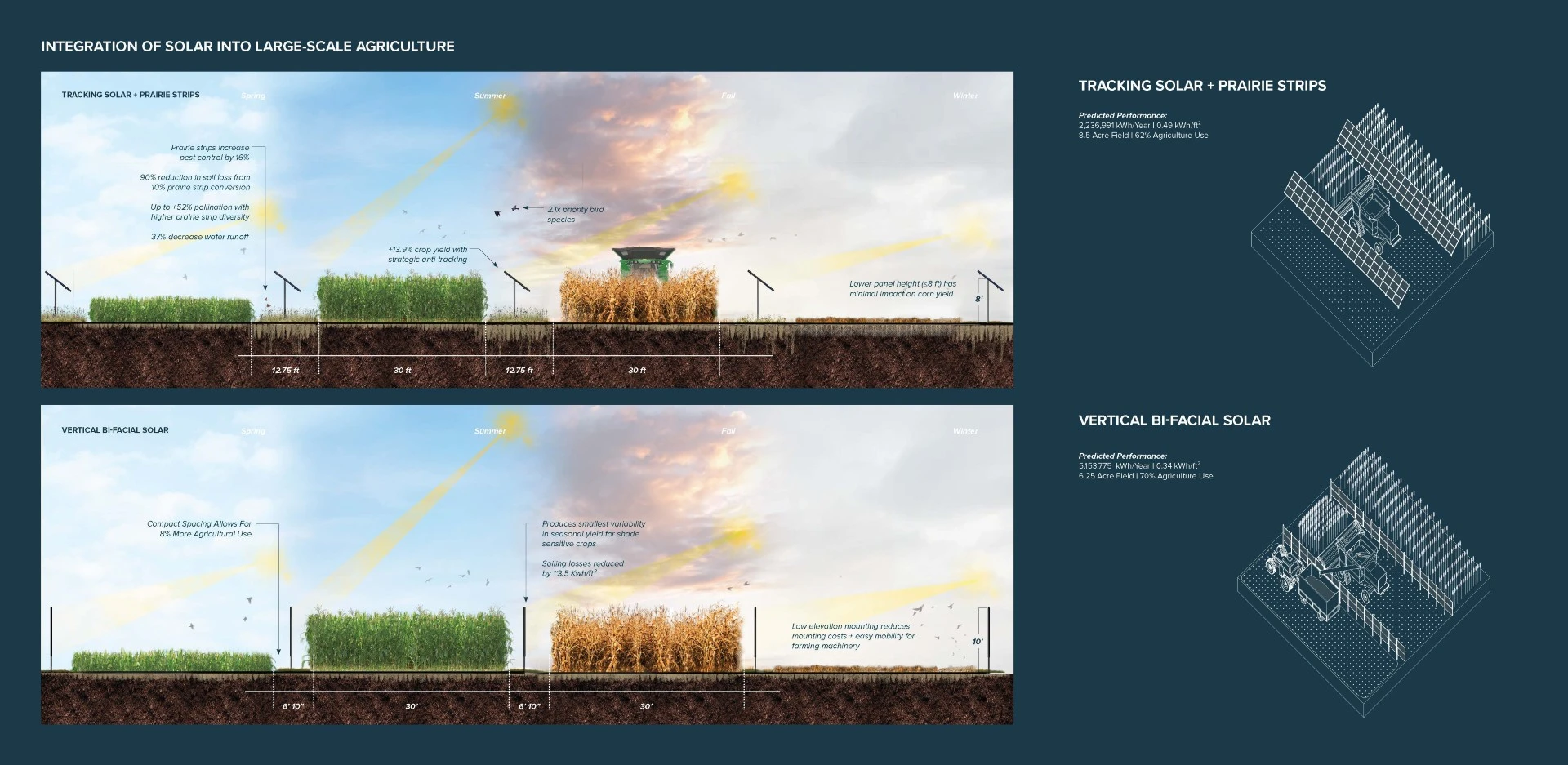
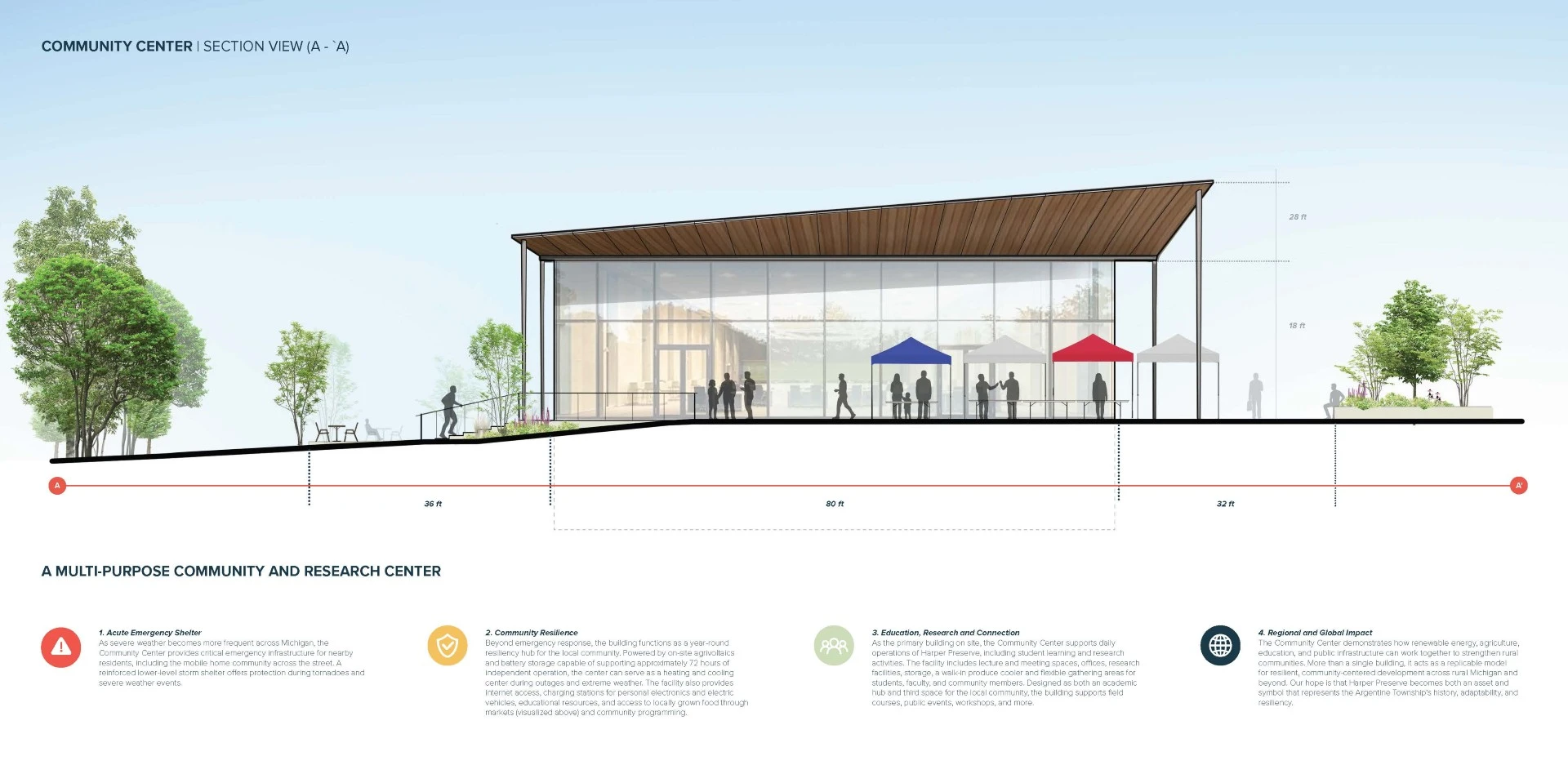
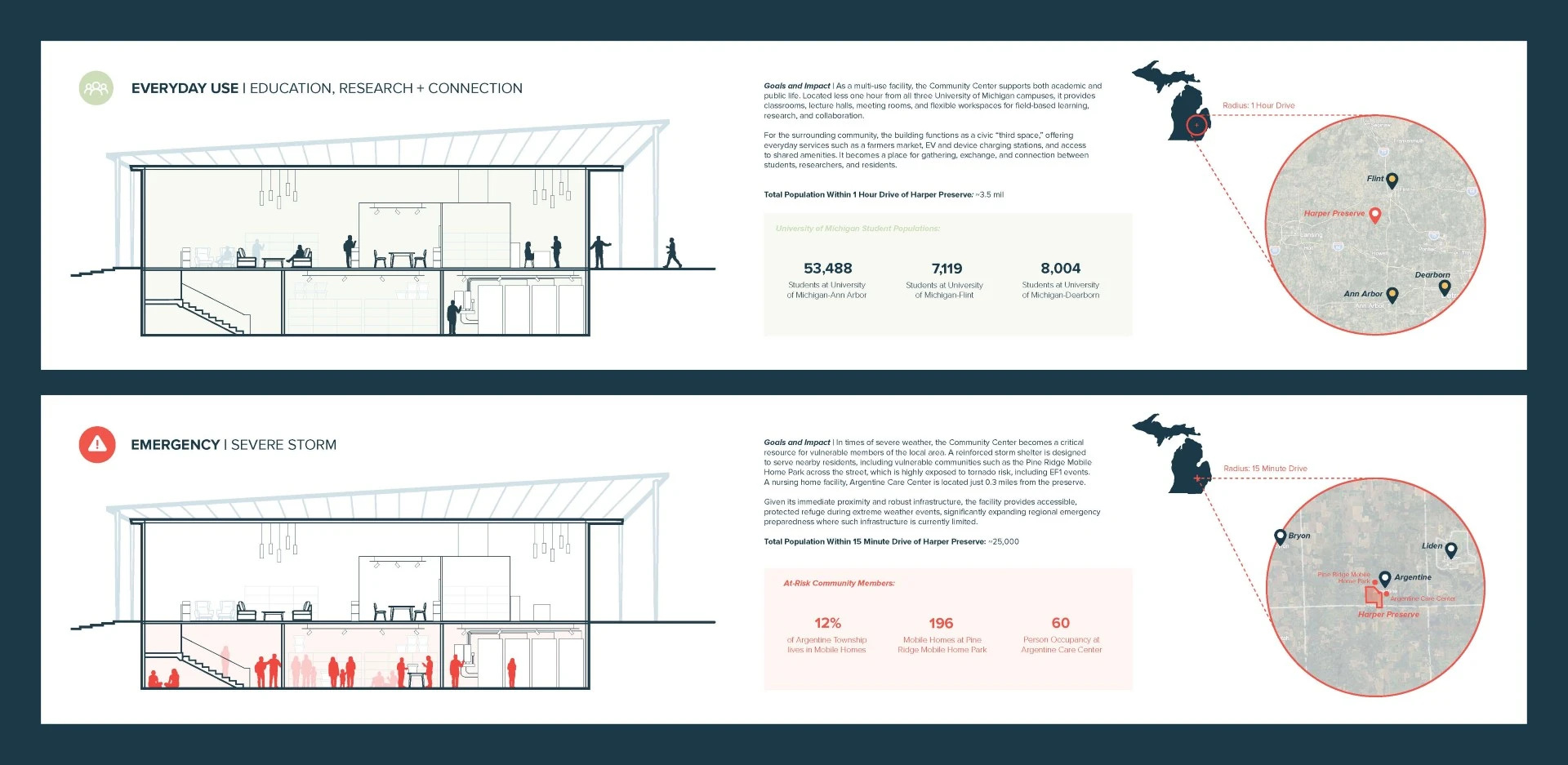
Genesee County is also facing a generational transition. Nearly 80% of county land remains in agriculture; however, an aging population and declining interest in farming among younger generations are creating uncertainty around the future use of the land. This project investigates how renewable energy infrastructure can support, rather than replace, Midwestern agricultural landscapes by testing models of solar integration that provide supplemental income while maintaining productive cropland through agrivoltaics. At the same time, this proposal seeks to make renewable infrastructure visibly beneficial to the surrounding community through the introduction of a multiuse resiliency hub. With 12% of Argentine Township residents living in mobile homes, the Community Center is strategically located across from the neighboring mobile home community, creating a shared space for gathering, education, and on-site research exchange while providing critical shelter and emergency cooling resources for vulnerable community members during severe weather events.
Developed through collaboration between graduate students in Landscape Architecture and Environmental Policy and Planning, the project combines spatial design with implementation strategy, solar performance metrics, and community-centered planning. The proposal demonstrates how landscape architecture can guide more equitable and adaptive energy transitions by aligning renewable energy production with environmental stewardship, rural economies, and community resilience. As regions around the world confront similar tensions between decarbonization and land use, Harper Preserve offers a scalable model for integrating renewable infrastructure into working landscapes without displacing the communities and ecologies that define them.
Advertisement
Related Awards
Award of Excellence, Student Collaboration
The Firelighters
Location: Davis, CA
Students: Nicholas Hardt-Mason, Student ASLA; Helene Hoffman; Stasha Leonard; Amber Lin; Vallerie Morones, Student ASLA; Mary Kate O'Connor, Student ASLA; Fermin Pereira; Simone Shupper; Eavan Swanson; Lauren Swing, Student ASLA
School: University of California, Davis
Faculty Advisor(s): Emily Schlickman, ASLA
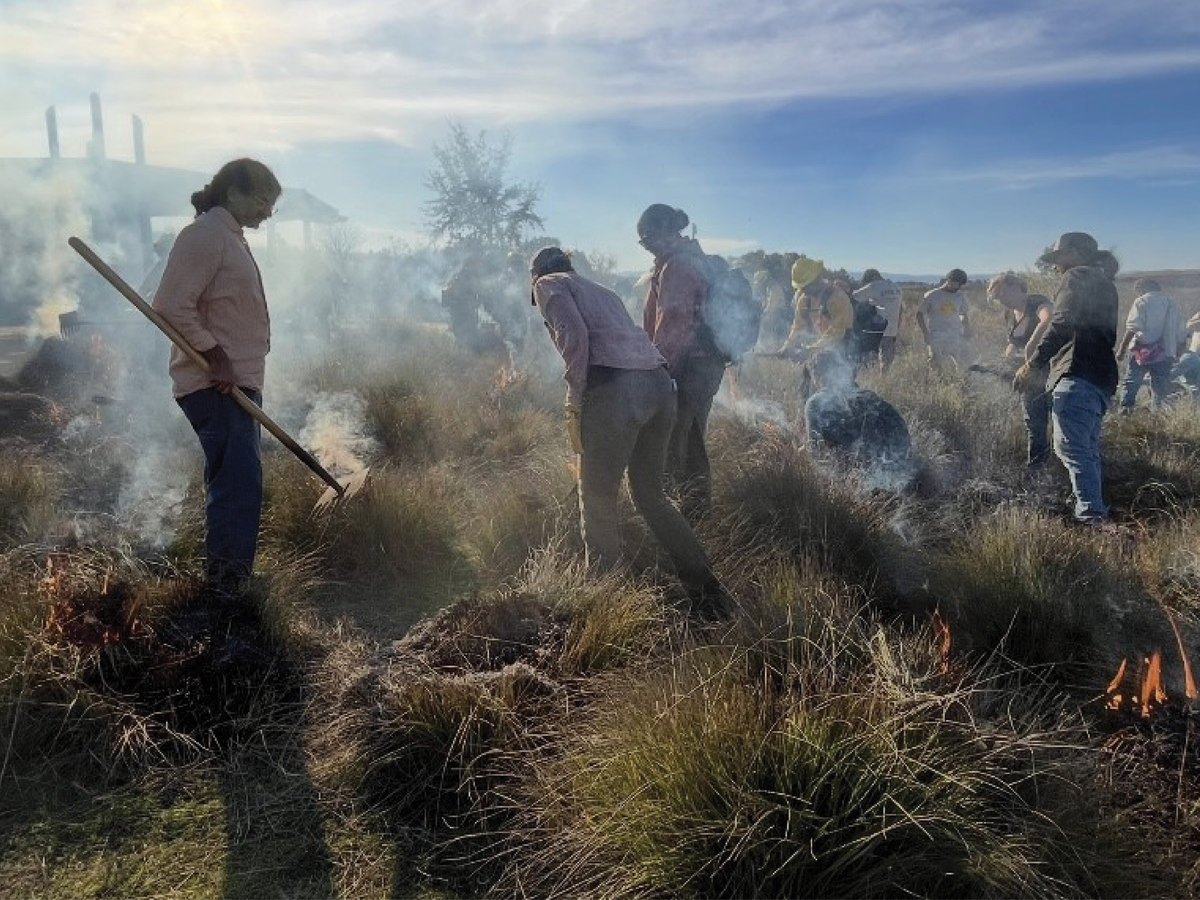
Over ten weeks, eleven landscape architecture and environmental design students trained as prescribed fire practitioners and volunteered on seven burns with community partners. Their service helped to expand prescribed fire capacity, shift wildfire perceptions, and move design education closer to practice, from simply drawing fire on paper to tending it. Working with fire professionals, landowners, prescribed burn associations, fire ecologists, and Indigenous practitioners, students advanced beneficial fire as a key strategy for reducing risk in fire-prone landscapes. The cohort now serves as an on-call volunteer crew, developing a public exhibition on fire messaging, establishing a long-term fire plot, and mentoring future Firelighters.