
.webp?language=en-US)


Let the Hills Hold: Eco-Social Reknitting after Wayanad’s Landslides
Biyun Shen, Student Intl ASLA; Qiuqi Wu, Student Intl ASLA; Jiajing Zhao, Zhou Zhou, Student Intl ASLA

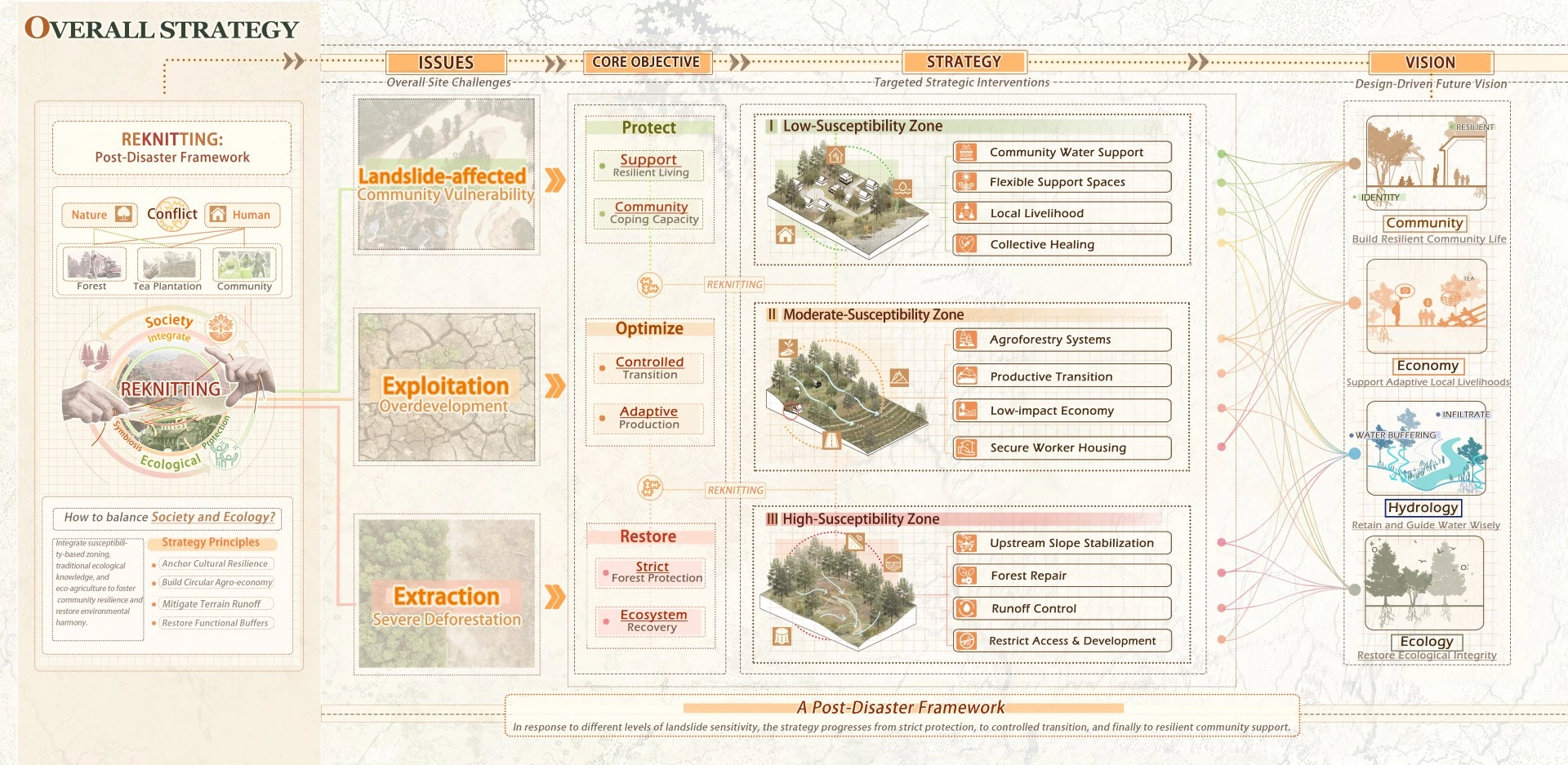

As a complex landscape with many variables of impact, this work is a wonderful, comprehensive approach to identifying, analyzing, and resolving a problem. Love the color palette.
Awards Jury
-
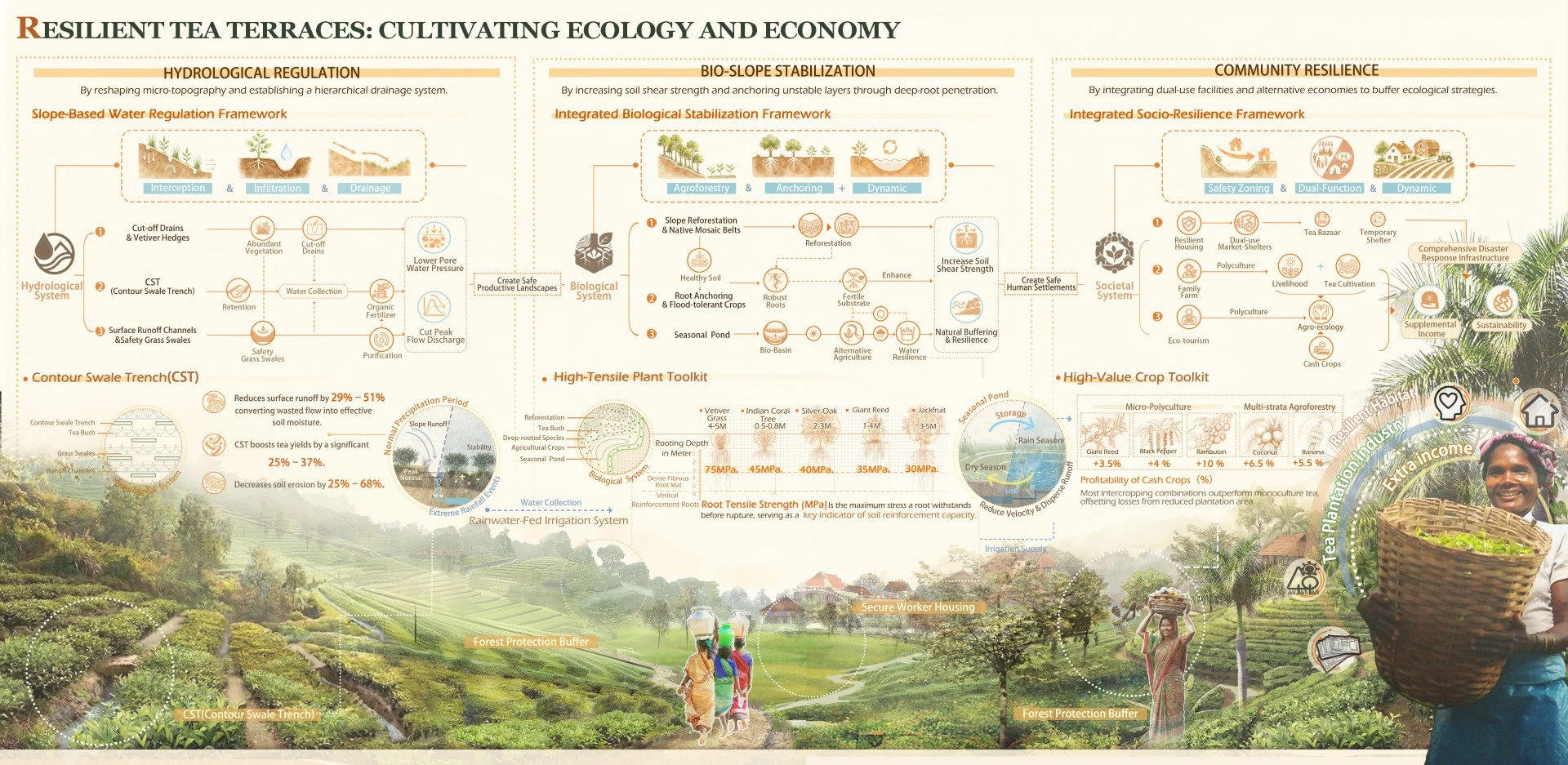
Wayanad is known for its lush hills and tea landscapes. Yet beneath this beauty, fractured relationships among forest, water, tea economy, and settlement have allowed landslide risk to accumulate. The 2024 landslides exposed this imbalance. Eco-Social Reknitting looks beyond the slope as a single site of hazard, treating it as living ground repaired through forest, roots, water, and community care. The proposal organizes this ground into three linked systems: living forest slopes in the High-Susceptibility Zone, rooted tea terraces in the Moderate-Susceptibility Zone, and recovery commons in the Low-Susceptibility Zone. Together, they stabilize land, sustain livelihoods, and support daily life, resilience, and long-term recovery in Wayanad.
-
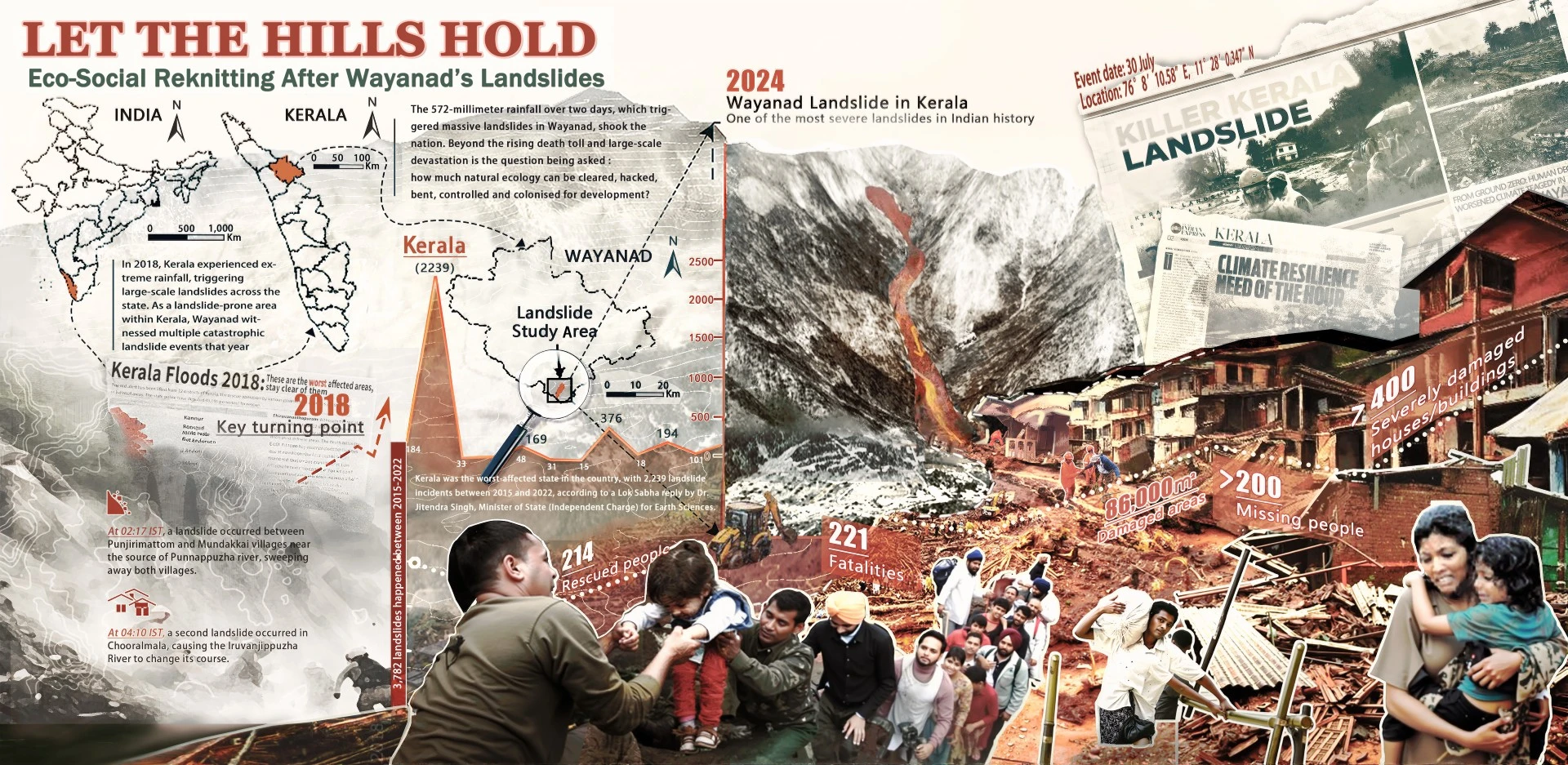
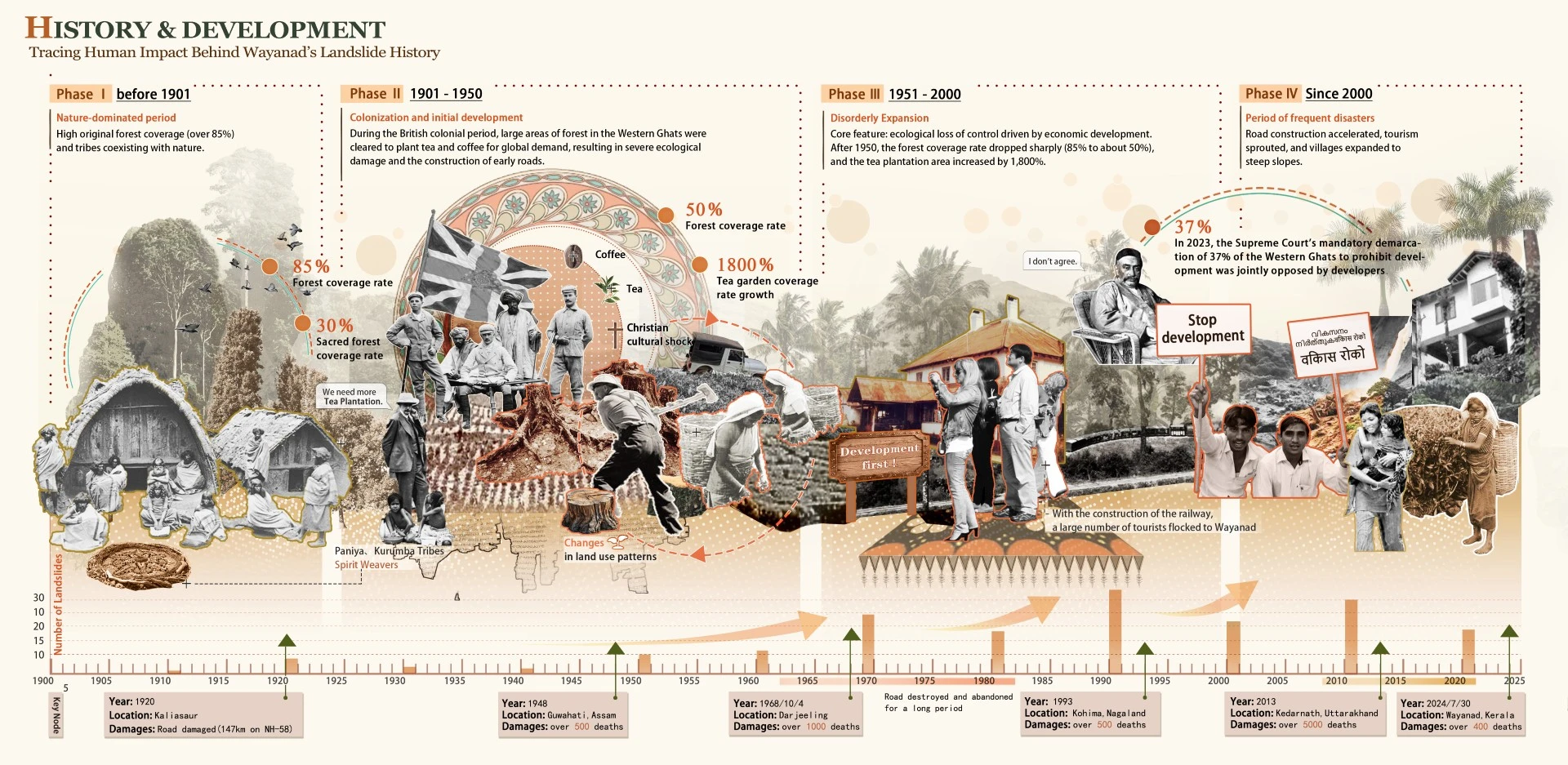
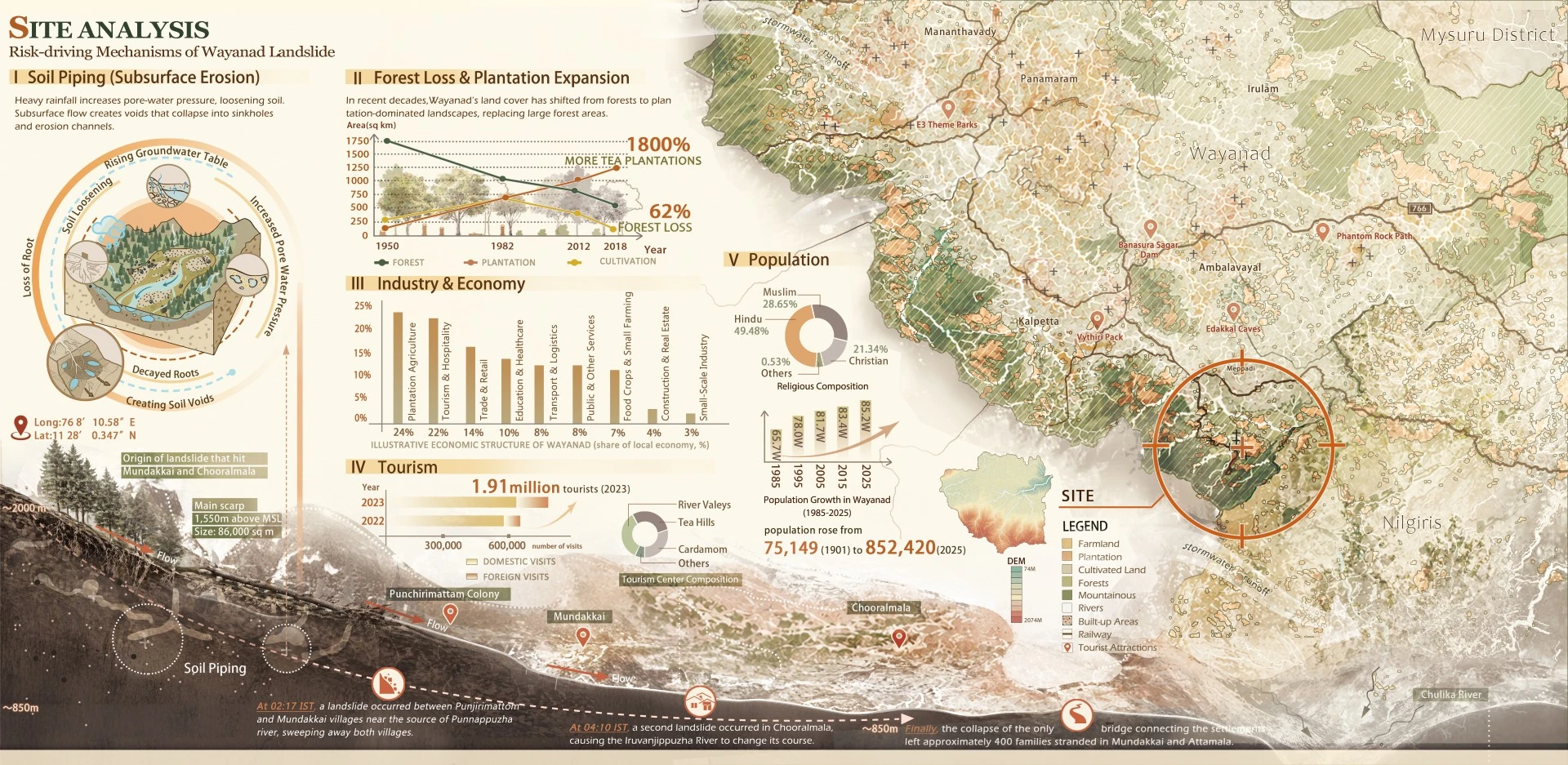
In July 2024, extreme monsoon rainfall triggered severe landslides in the Western Ghats. However, this was not purely a natural disaster. Rapid population growth and unregulated construction, especially hillside resorts, intensified development pressures. Large-scale deforestation and monoculture tea plantations weakened soil structure, while the area's inherently fragile geology—with steep slopes and low soil cohesion—further increased landslide risks. As a result, villages like Mundakkai and Chooralmala suffered devastating damage.
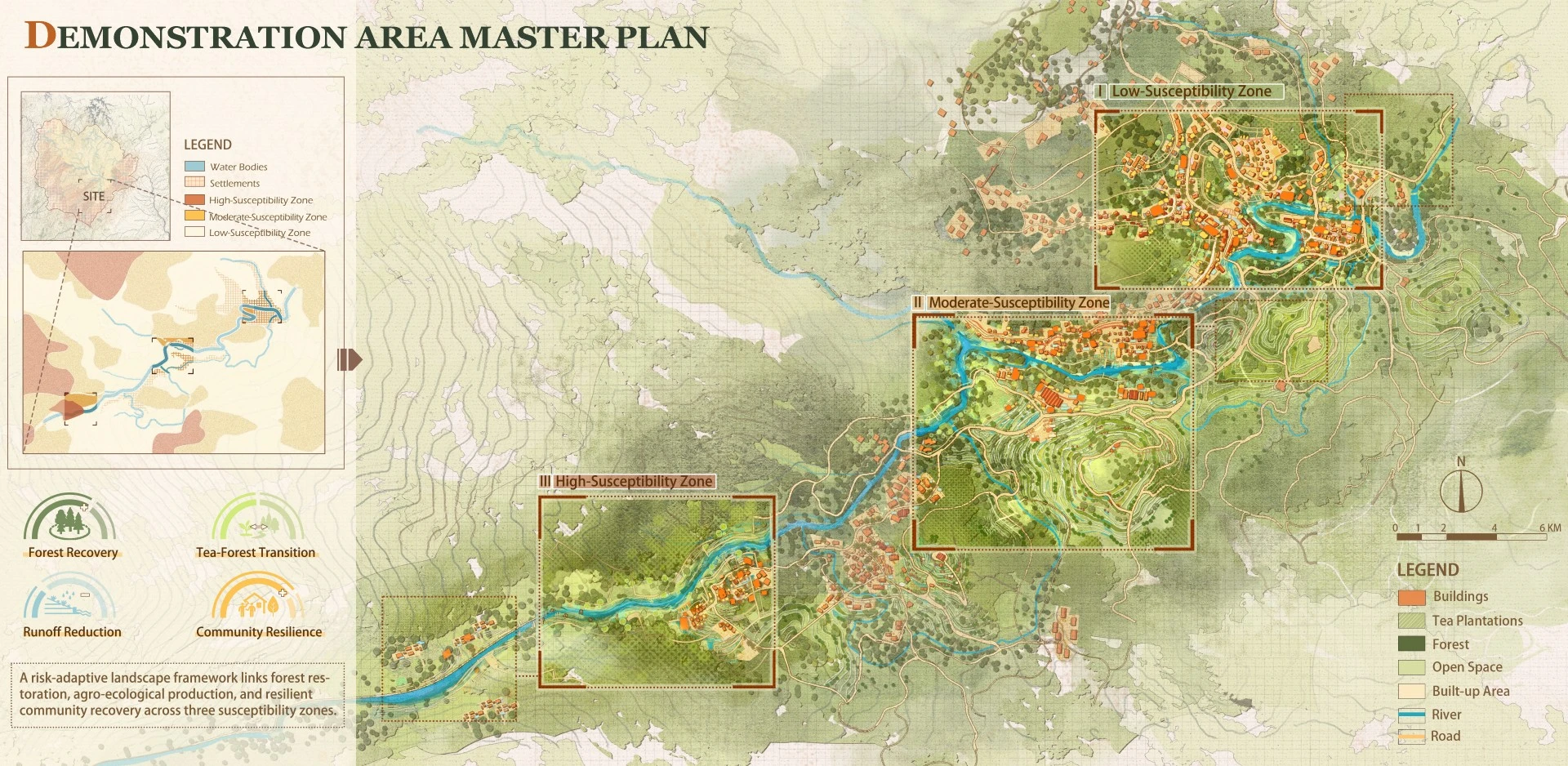
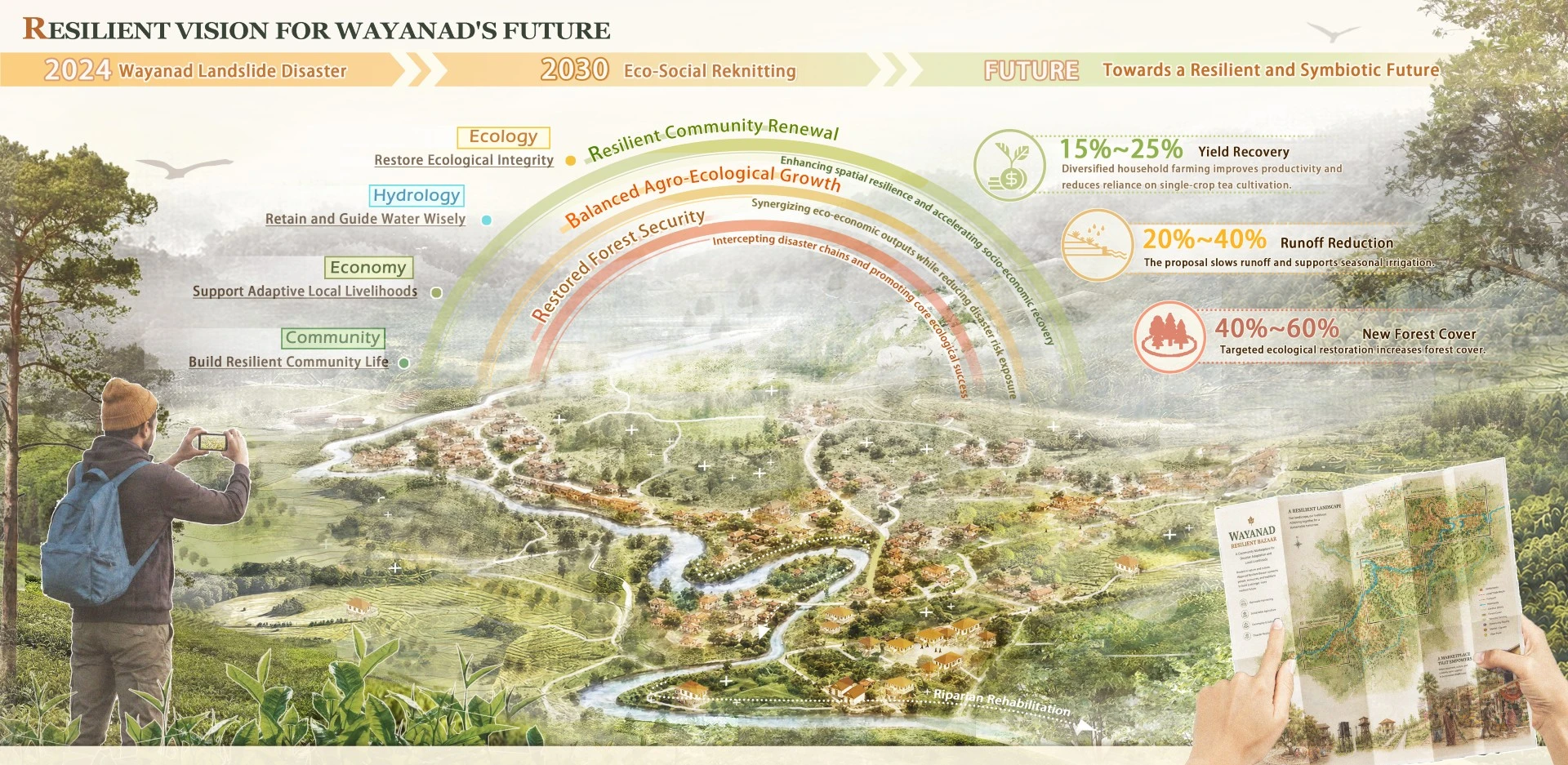
This project reframes landslide recovery in Wayanad as a process of rebuilding relationships between slopes, forests, water, agriculture, and community life. Rather than relying on isolated engineering responses, the proposal uses susceptibility-based planning to guide where land should be protected, transformed, or strengthened. Through ecological restoration, agroforestry transition, water management, and community recovery spaces, the project turns risk zoning into a living system for long-term resilience.
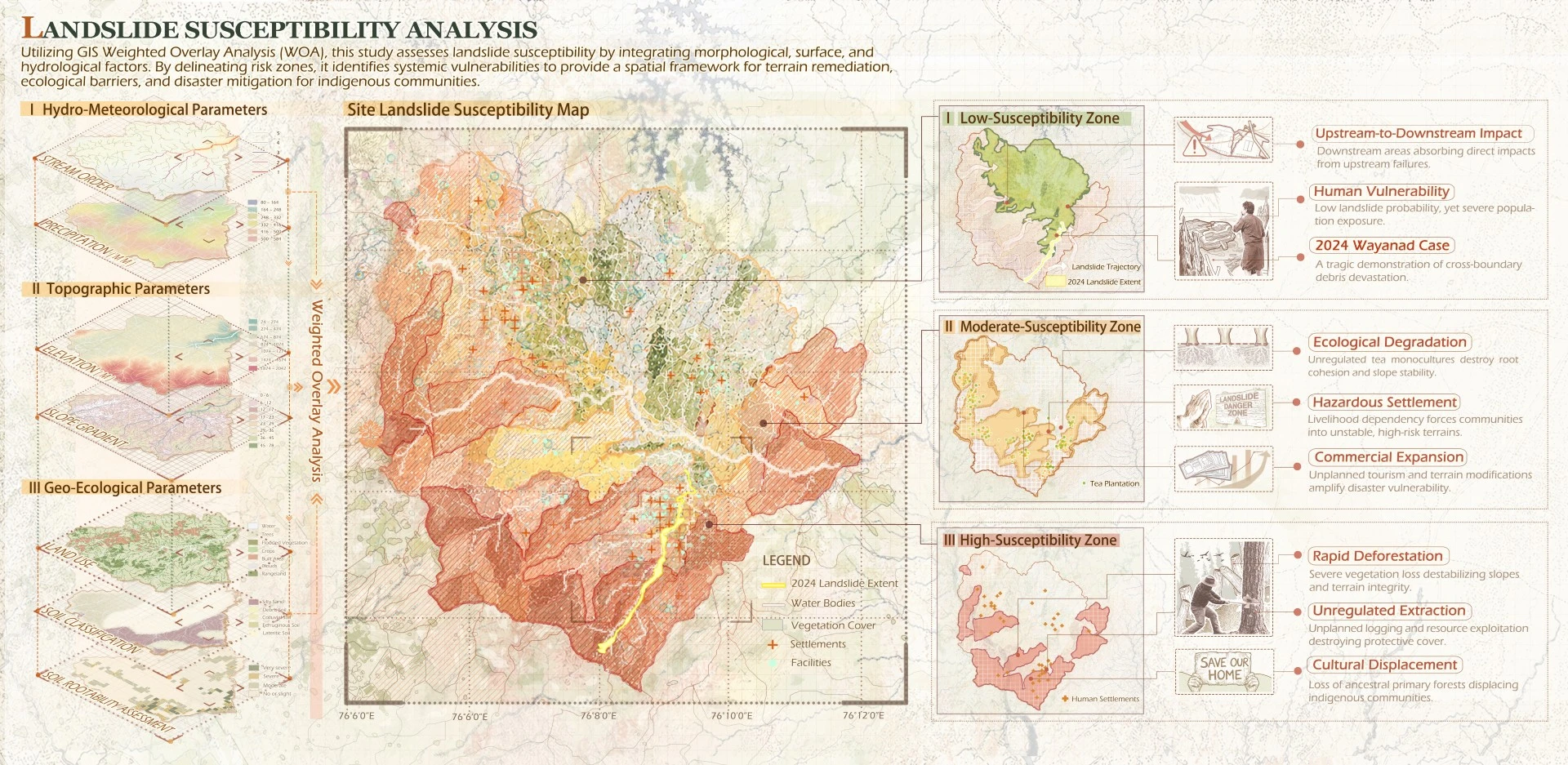
Using GIS (Geographic Information Systems) to conduct landslide susceptibility analysis, we classified Wayanad's terrain into three intervention levels and proposed adaptive strategies for each:
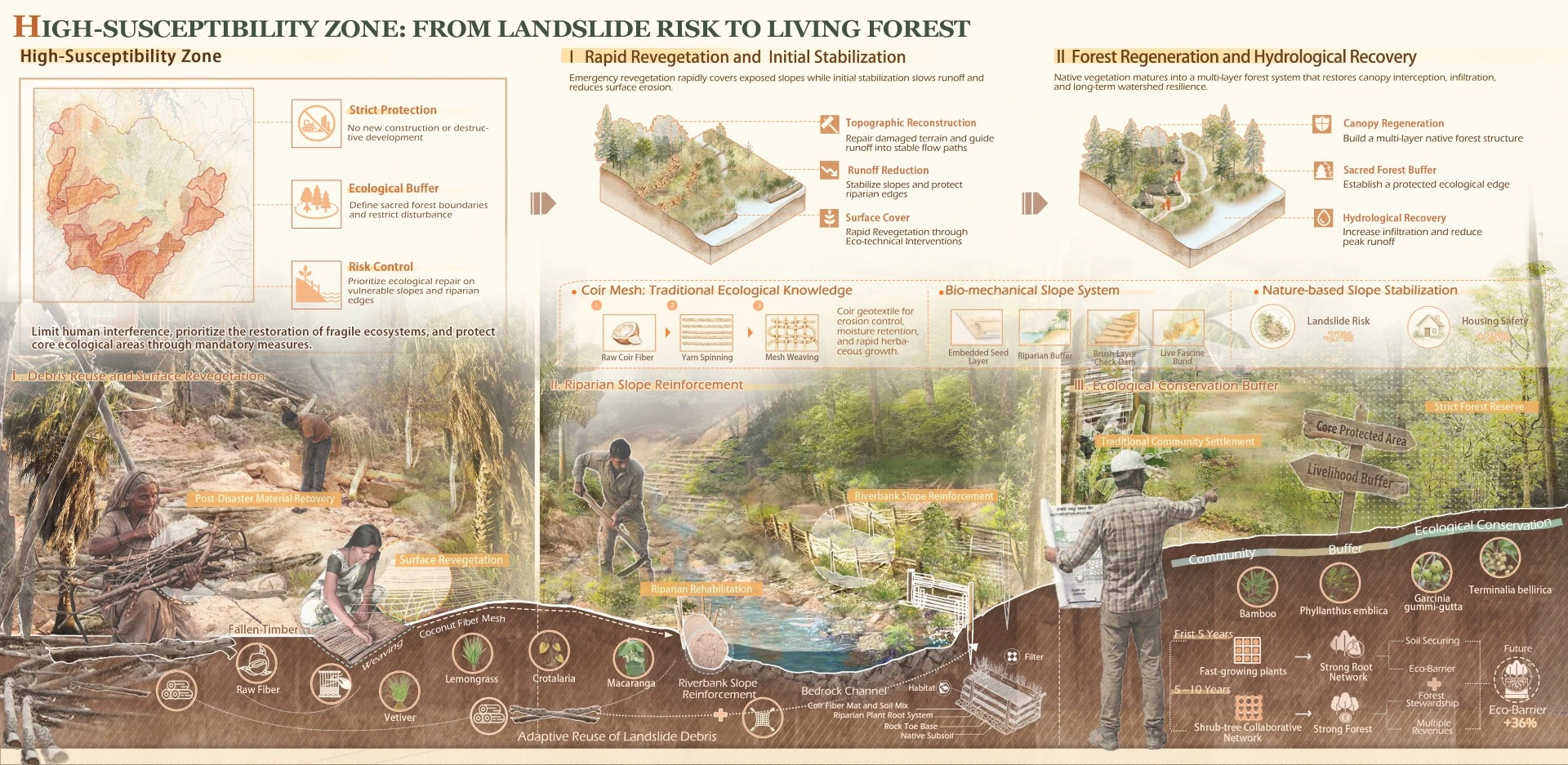
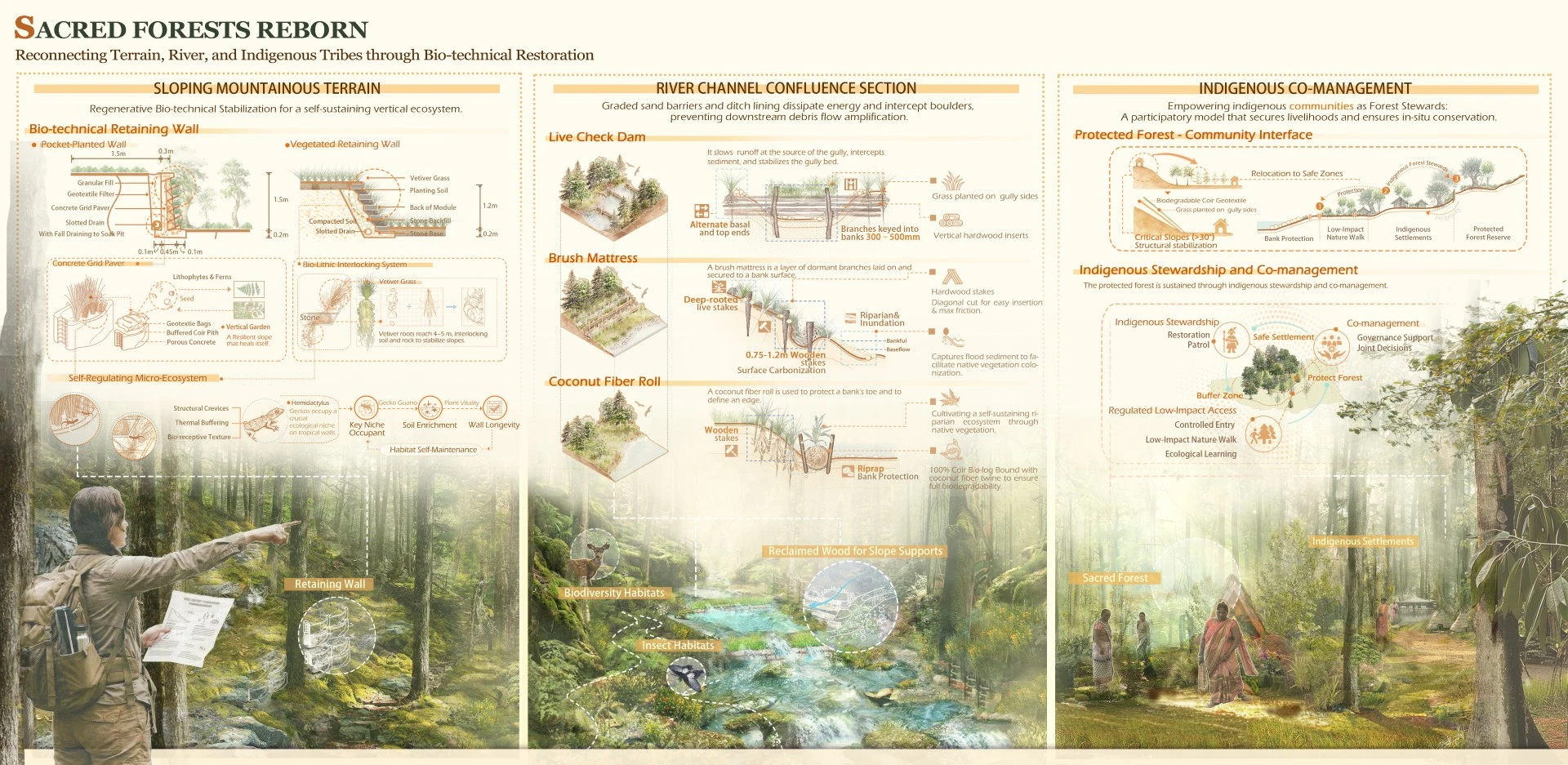
High-susceptibility zone strategy: Living forest slope-stabilization system — Develop a low-intervention restoration model on landslide-prone slopes by limiting construction and extraction. Native revegetation, coconut-fiber bioengineering, contour planting, check dams, and restored drainage channels slow runoff and reinforce soil, creating living forest buffers guided by indigenous forest stewardship.
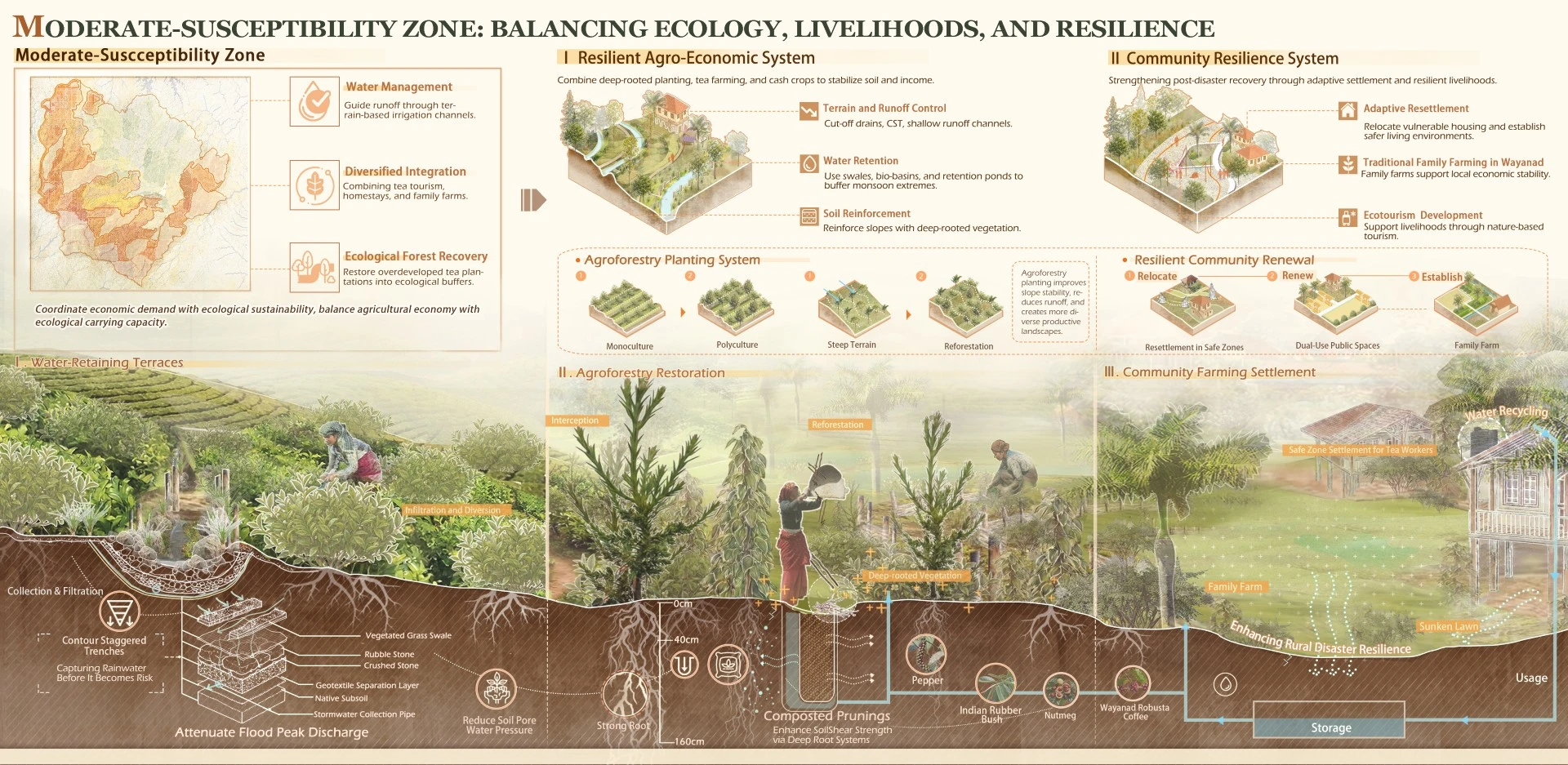
Moderate-susceptibility zone strategy: Resilient tea terrace system — Transform vulnerable monoculture tea plantations into diversified agro-ecological terraces. Intercropping, agroforestry planting, slope-stabilizing vegetation, and runoff regulation improve soil retention and water management while maintaining agricultural productivity. Temporary shelters are integrated near tea plantations to provide safe refuge for workers during heavy rainfall and landslide warnings. Local crops and low-impact ecotourism create new income opportunities, allowing ecological restoration, worker safety, and livelihood recovery to operate together.
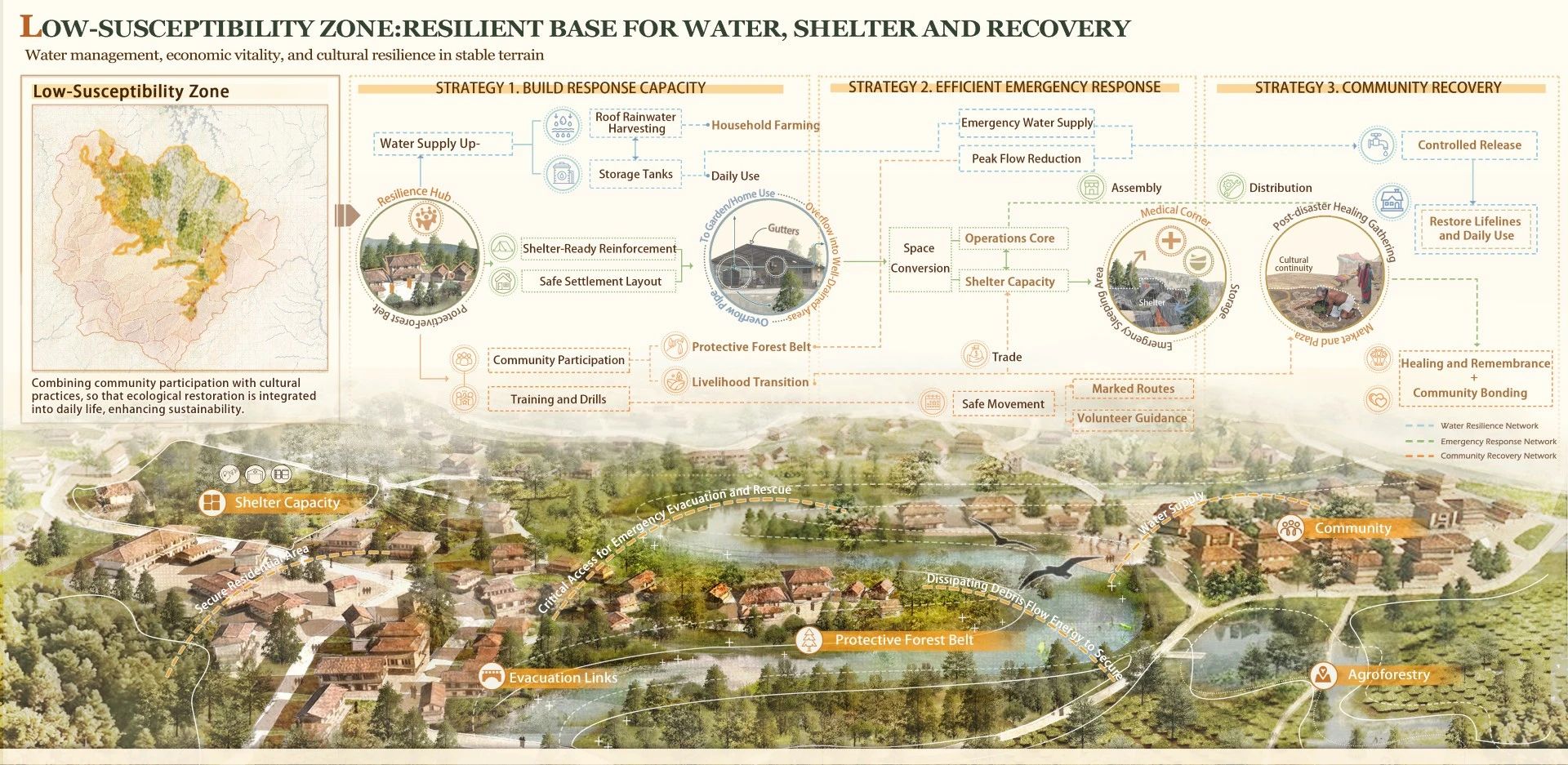
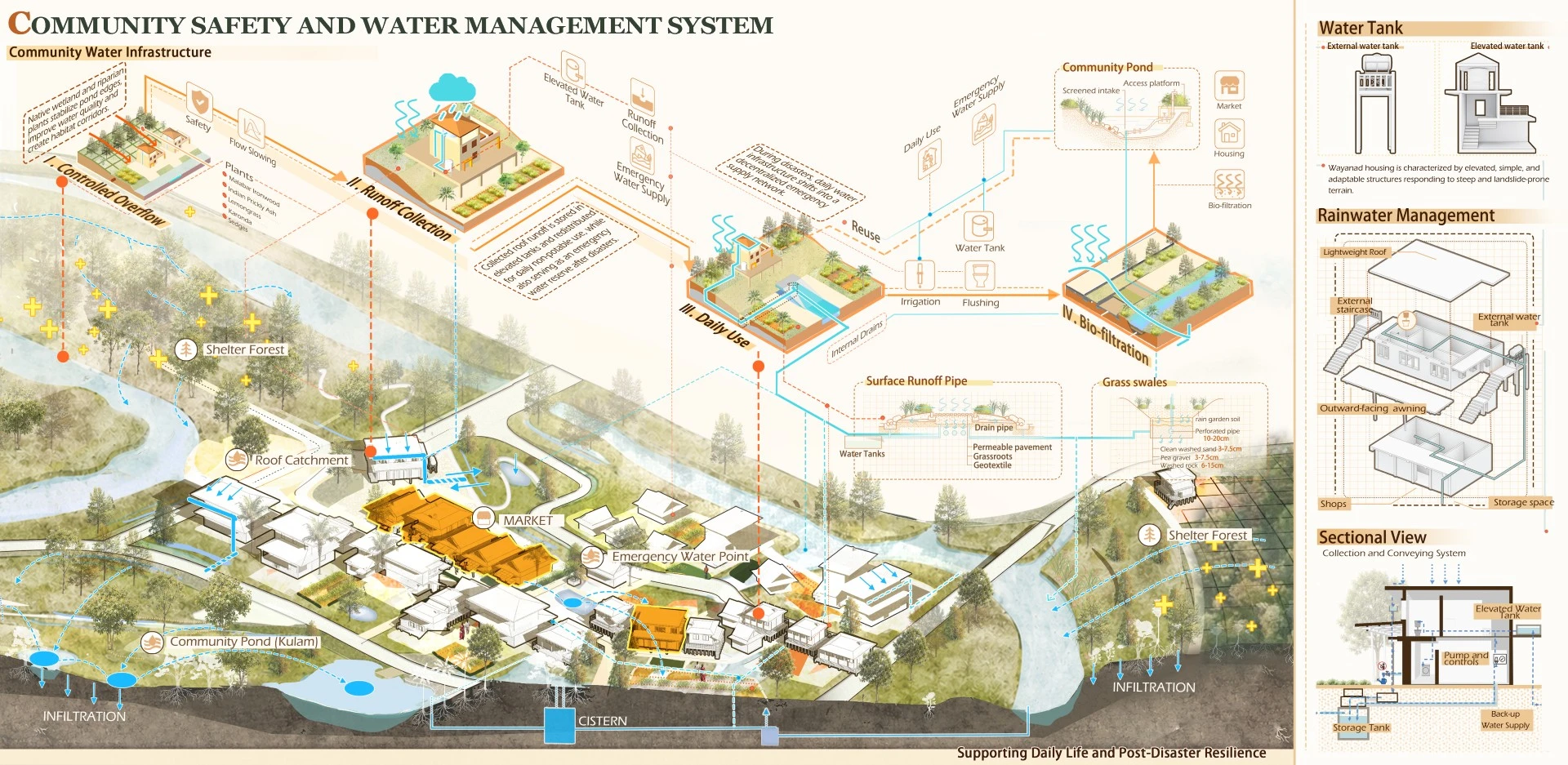
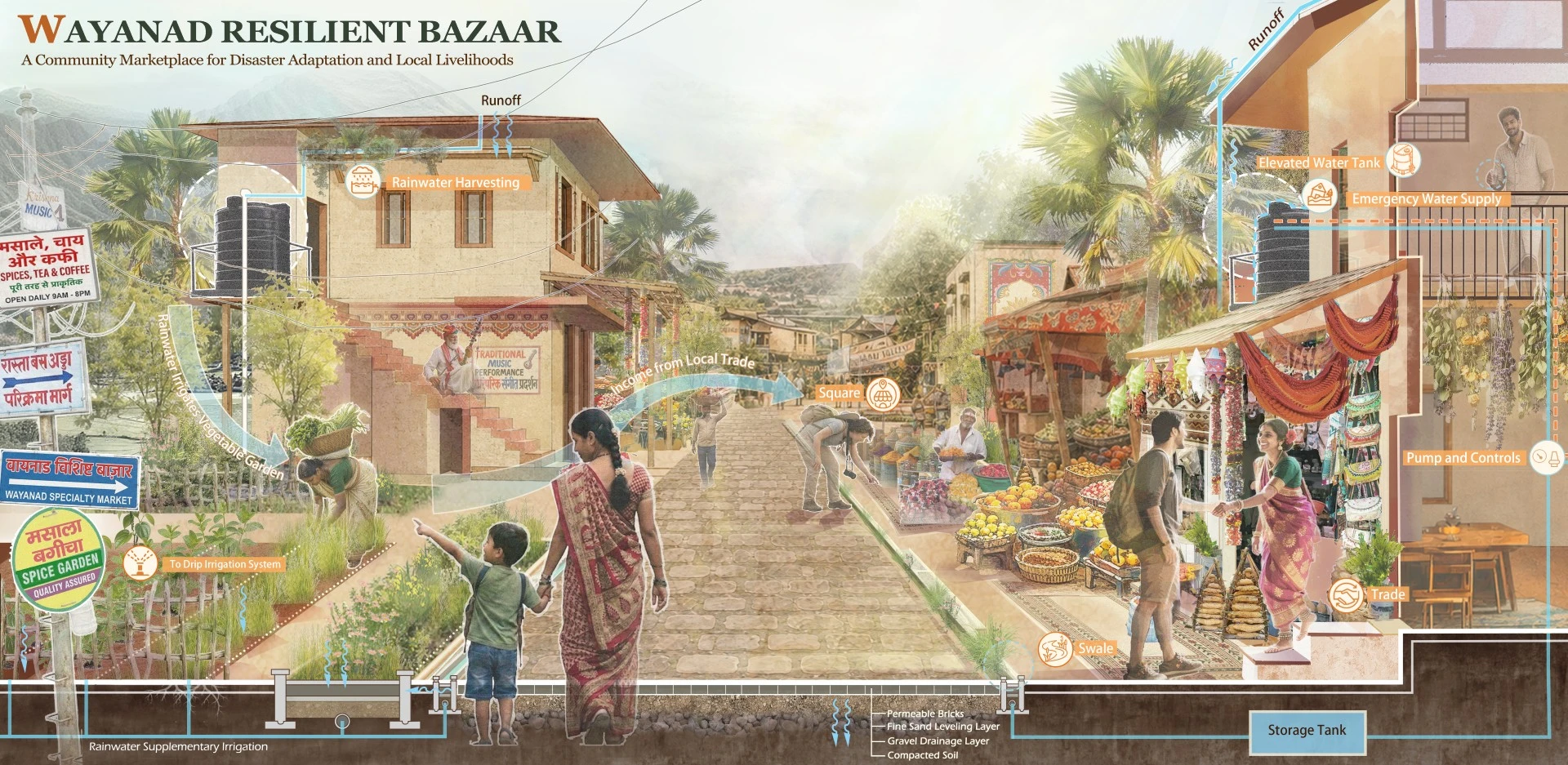
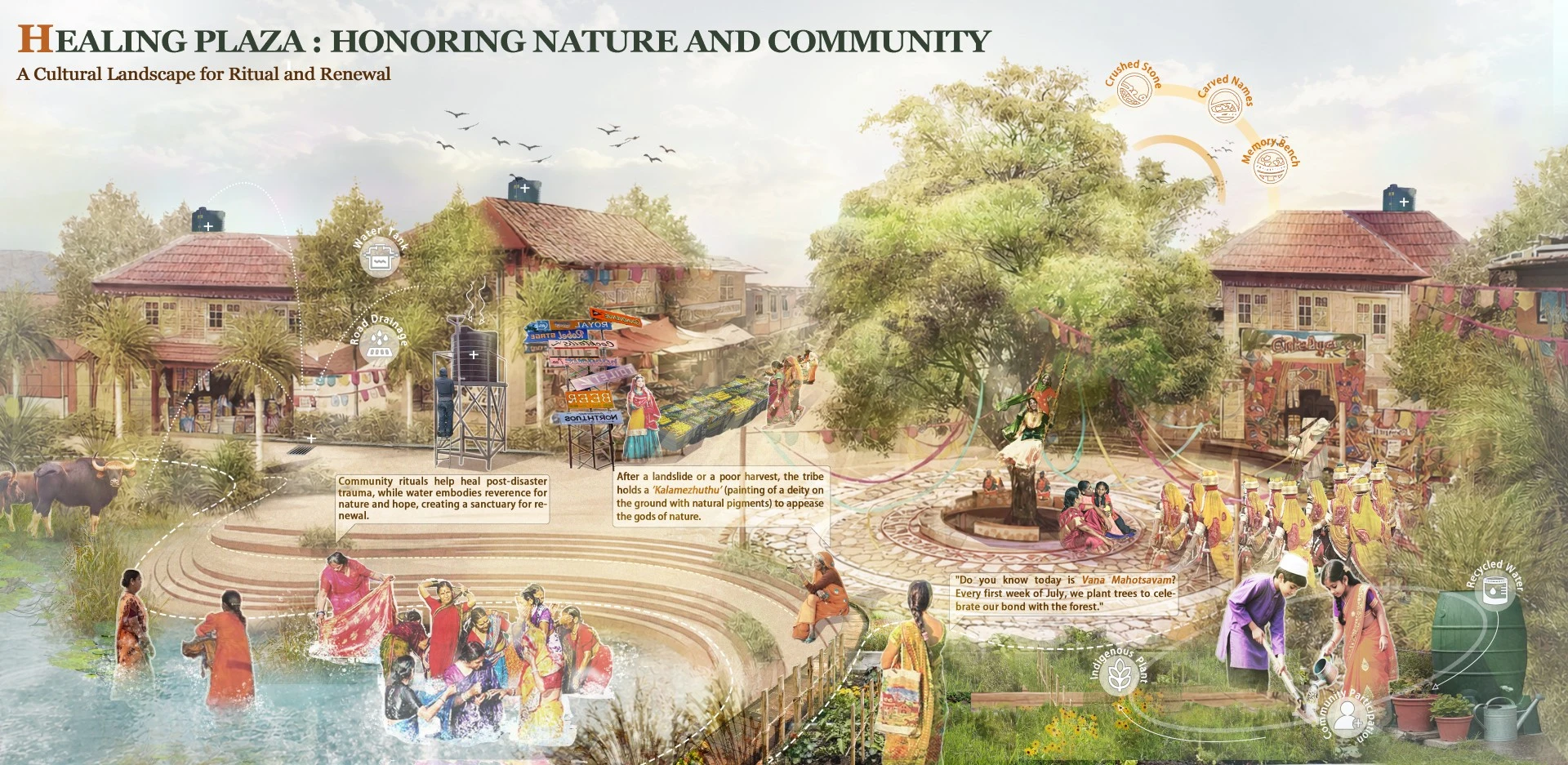
Low-susceptibility zone strategy: Community water and recovery network — Strengthen safer settlement areas as everyday service hubs and disaster-response centers. A circular water system links water collection, storage, ecological treatment, emergency supply, and community nodes. In normal times, these spaces support markets, training, gathering, and local exchange. During and after disasters, they shift into evacuation, supply, shelter, and command spaces, while integrating healing functions for emotional recovery and collective memory.
The design envisions Wayanad's damaged slopes becoming a living mountain system, where restored forests, productive agroforestry, water networks, and resilient communities work together to hold the land, support local livelihoods, and reconnect people with nature.
-
- Terminalia paniculata
- Vateria indica
- Syzygium cumini
- Bamboo
- Kydia calycina
- Careya arborea
- Stereospermum colais
- Terminalia chebula
- Terminalia anogeissiana
- Dalbergia sissoo
- Elettaria cardamomum
- Zingiber officinale
- Black pepper
- Arecanut
- Syzygium aromaticum
- West Indian vanilla
- Jackfruit
- Mango
- Cashew
- Cassava
- Cacao tree
- Banana
- Tea plant
- Coconut
- Turmeric
- Vetiver Grass
- Tamarind
- Phyllanthus emblica
- Garcinia gummi-gutta
- Lemongrass
Advertisement
Related Awards
Award of Excellence, Analysis & Planning
H2Oquirrh: Regional Water Reform for a Resilient Salt Lake Valley
Location: Salt Lake City, UT
Firm: Design Workshop
Client: Wasatch Front Regional Council, Salt Lake County
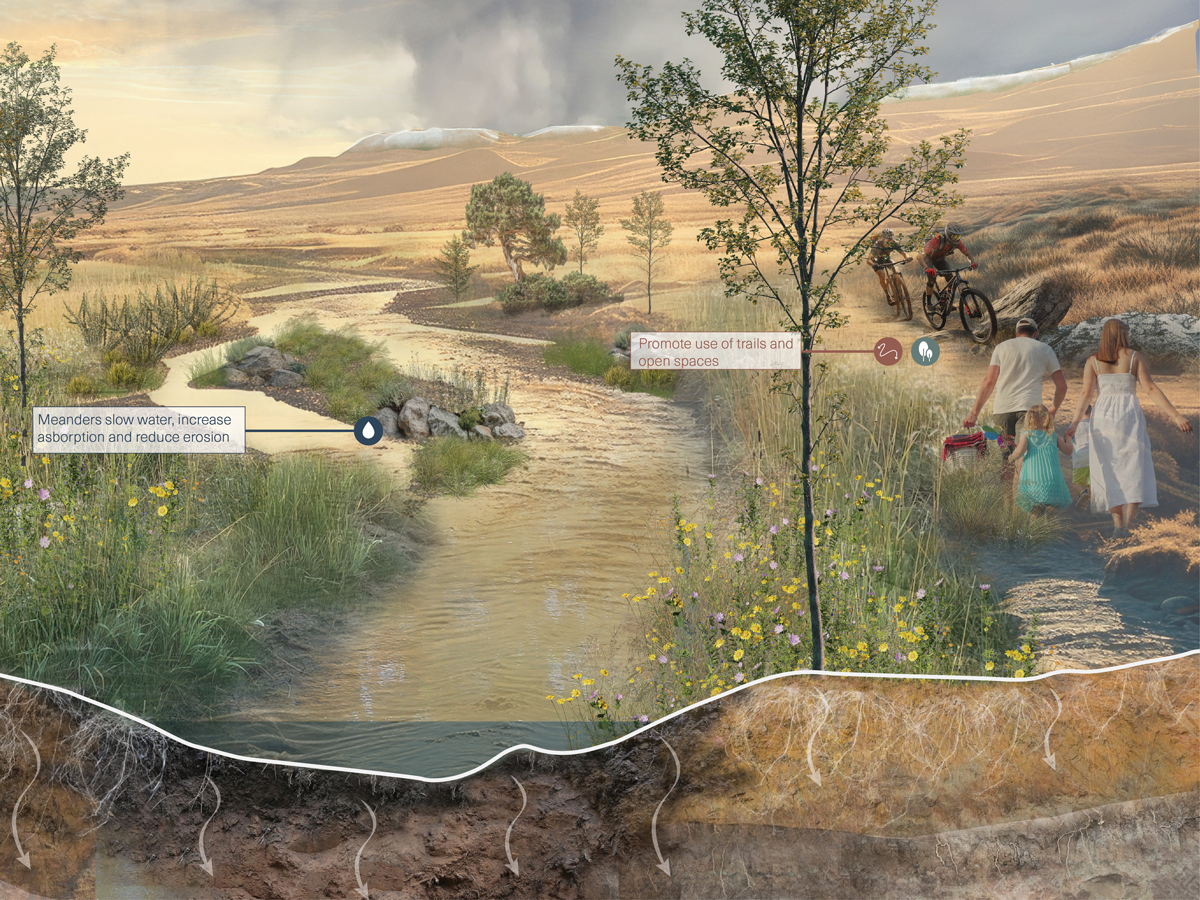
Water flowing from the Oquirrh Mountains is a critical contributor to the Great Salt Lake. Severe drought and human-caused decline threaten the lake’s viability, with cascading impacts on ecosystems and public health. This regional collaboration of seven jurisdictions, the H2Oquirrh Vision Plan, undertakes a large systems analysis of hydrologic cycles, land cover, and land-use decisions to identify site-specific interventions across nine creeks and washes. Led by landscape architects and water resource engineers, the study advances a deeper understanding of localized drivers of water loss and proposes innovative solutions through integrated landscape infrastructure design and policy.
-listing-img.webp?language=en-US)