
.webp?language=en-US)
.webp?language=en-US)
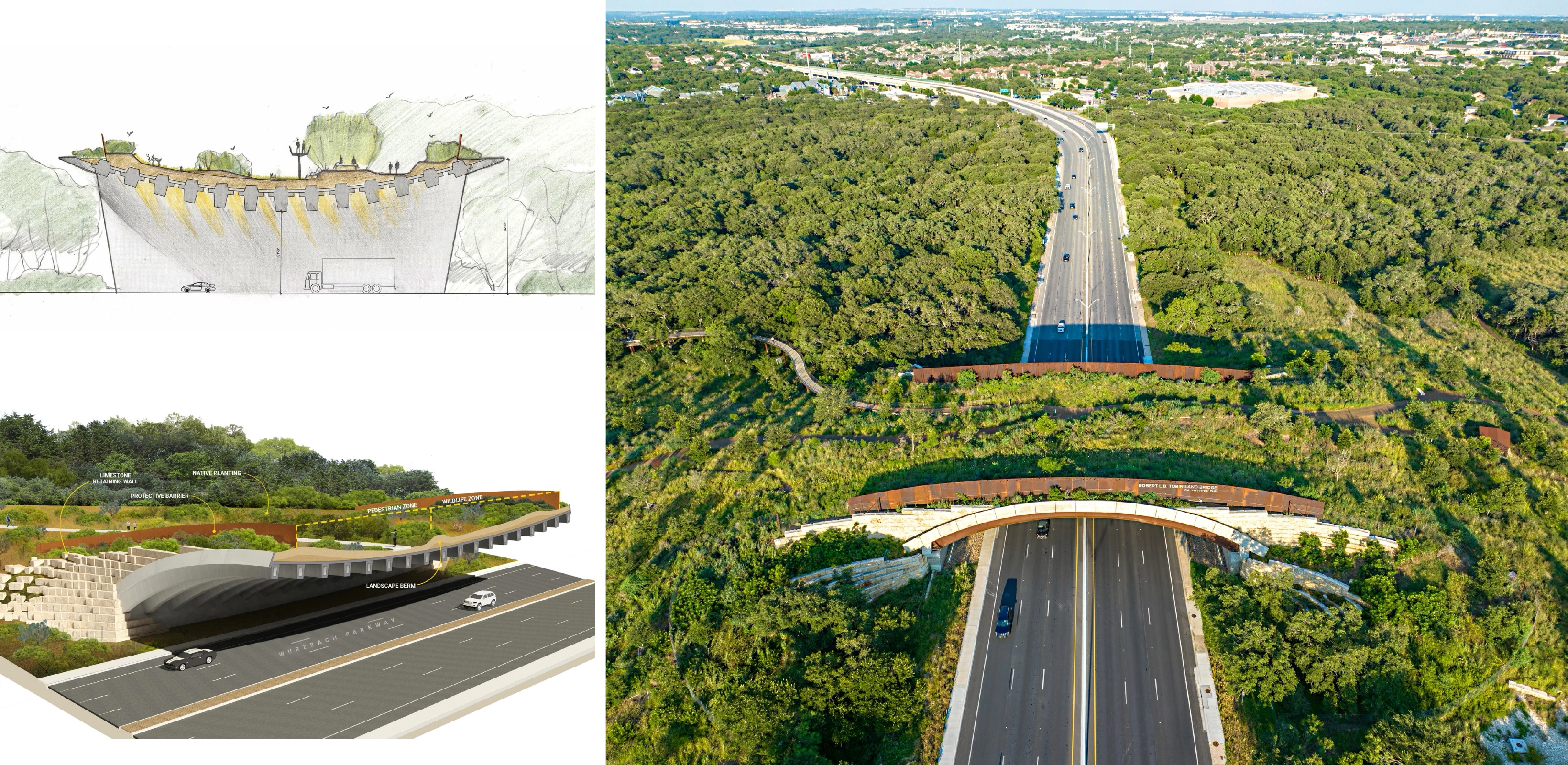
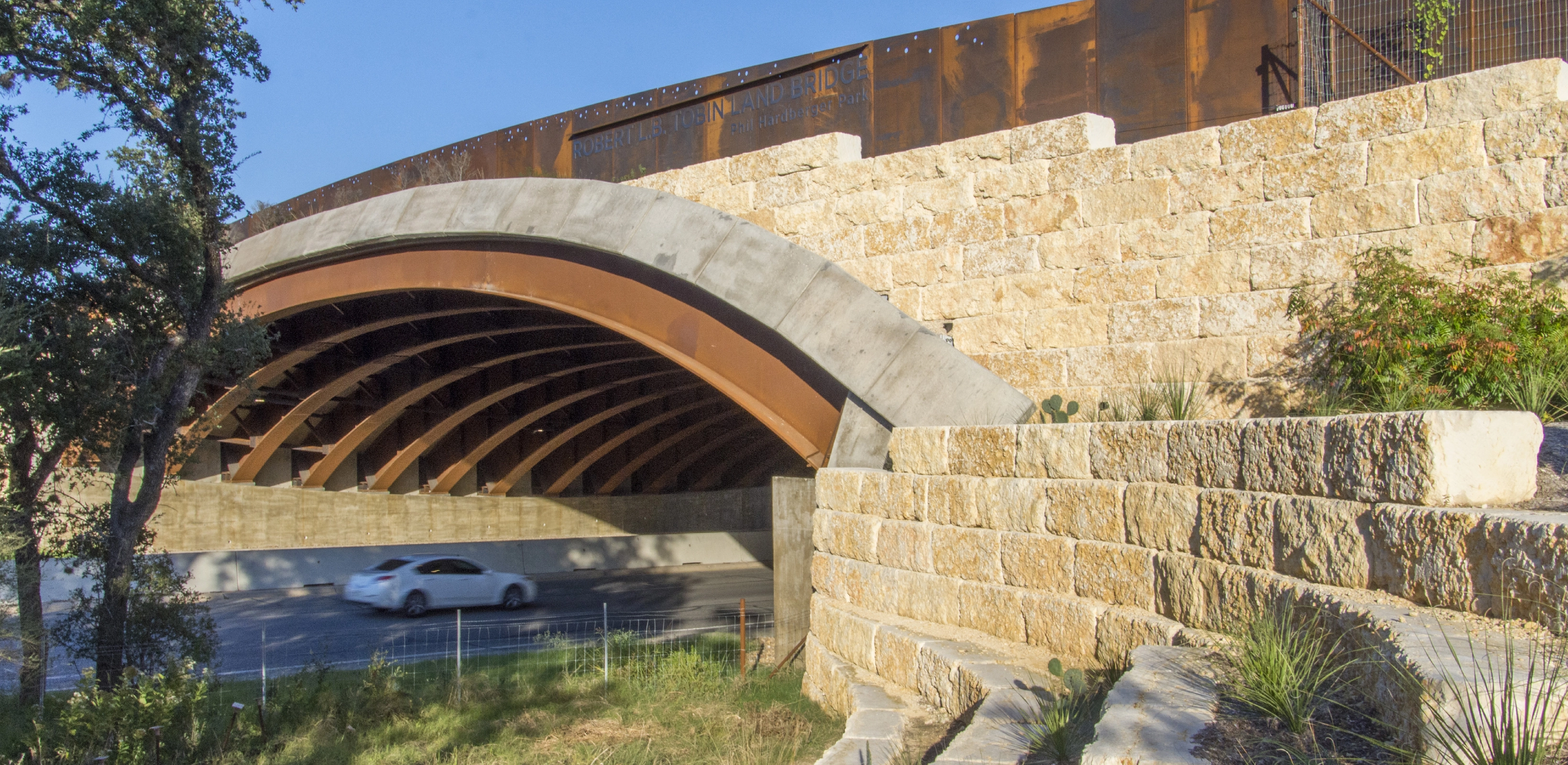
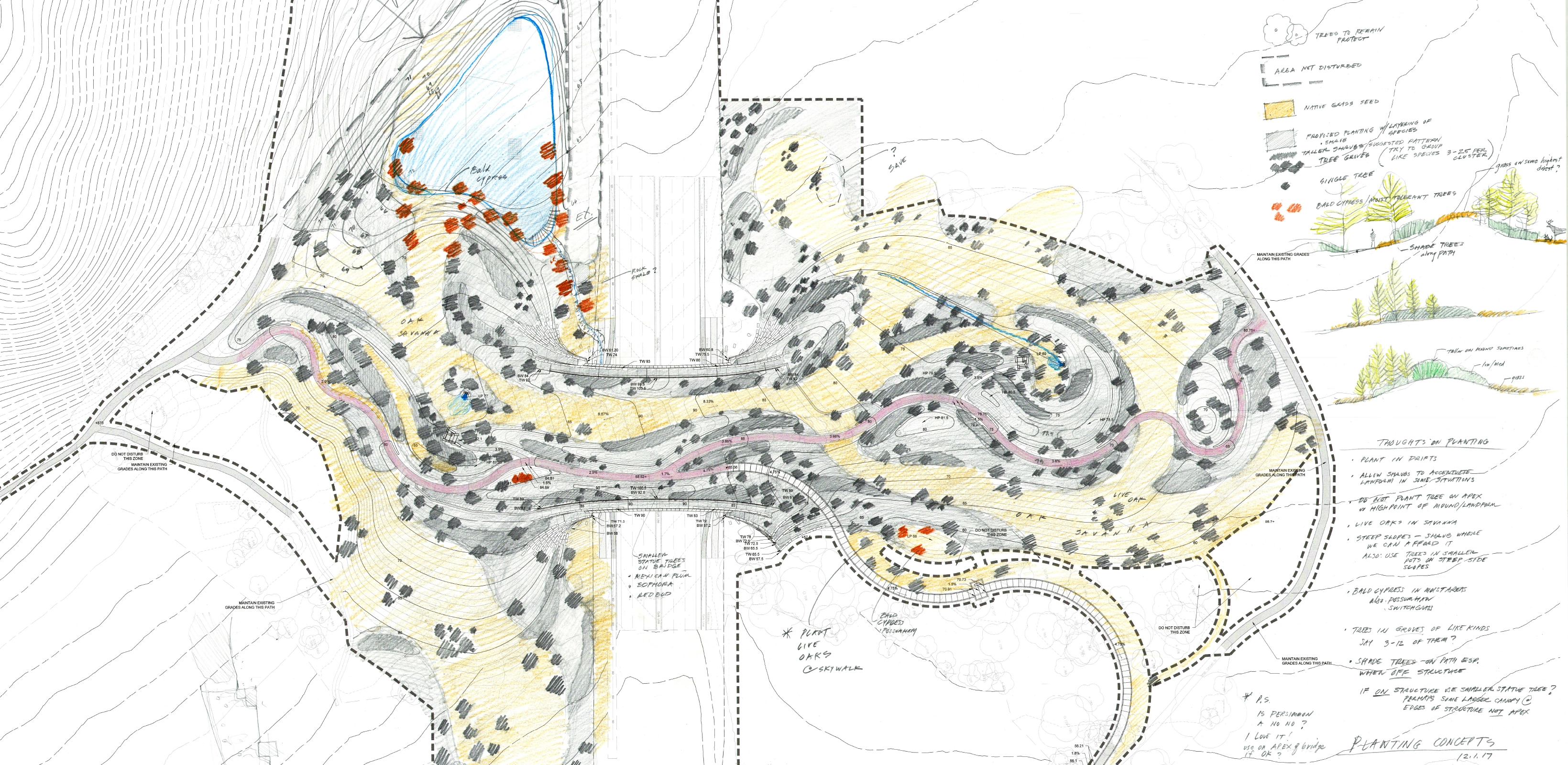
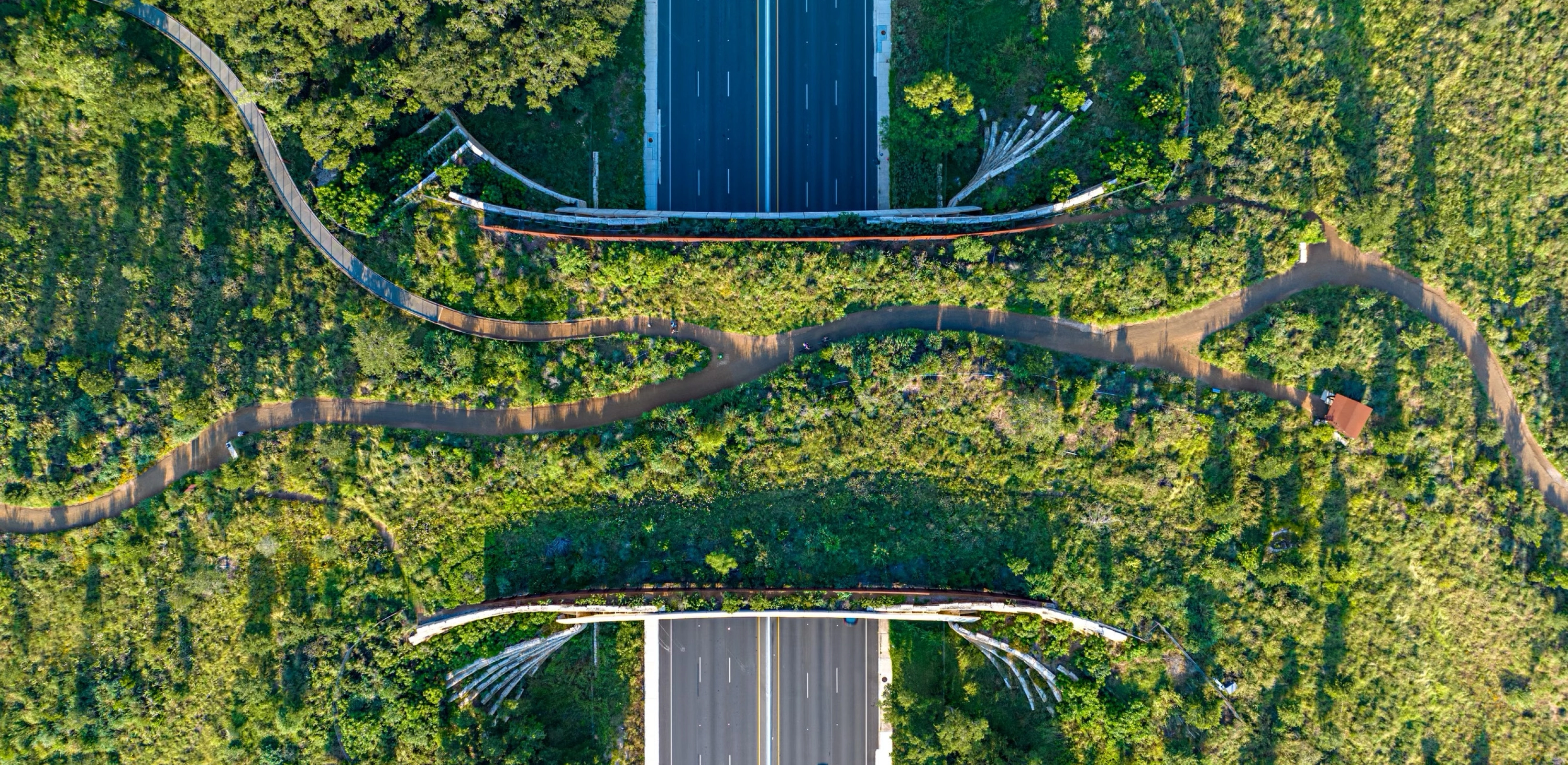
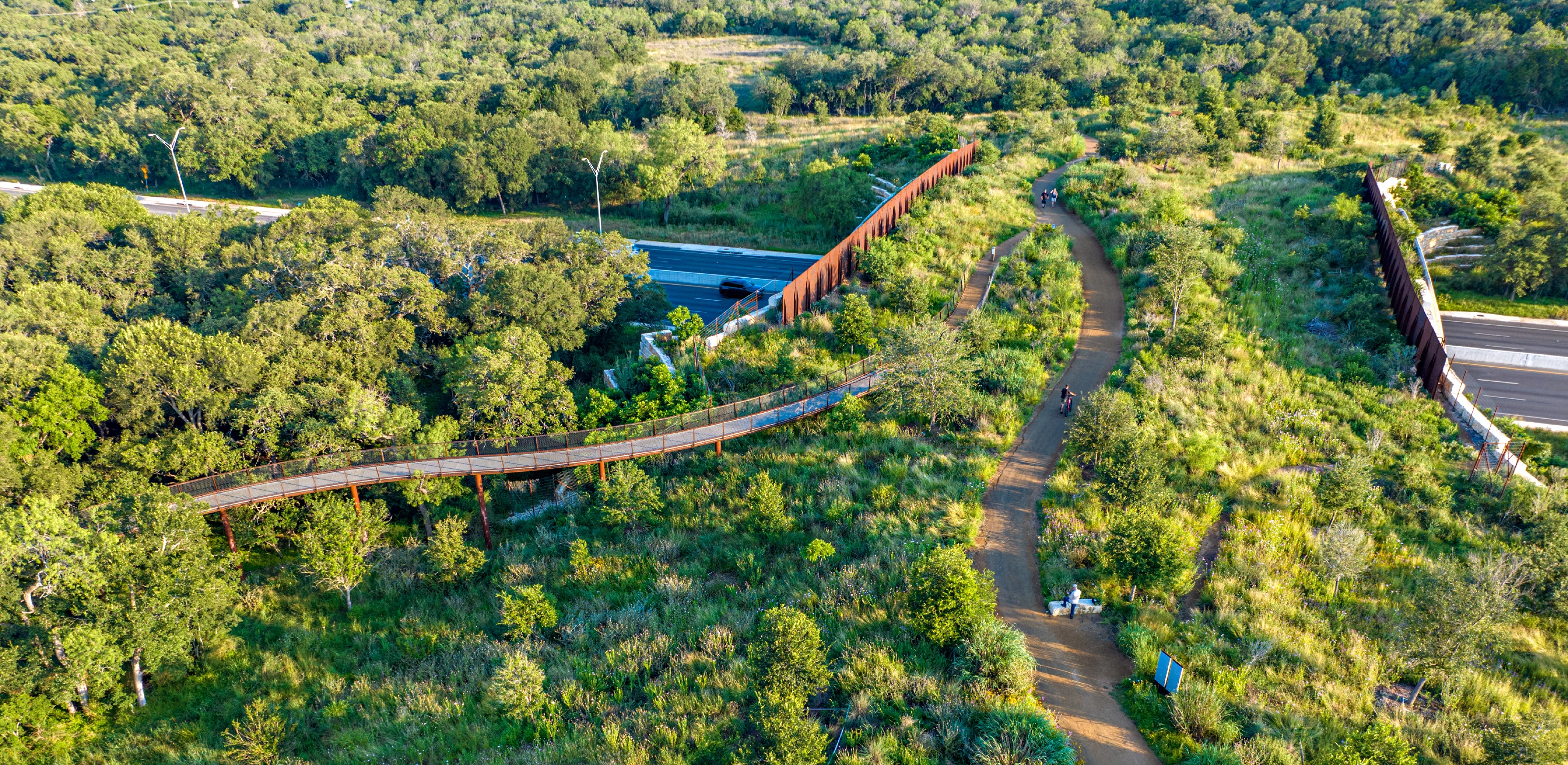
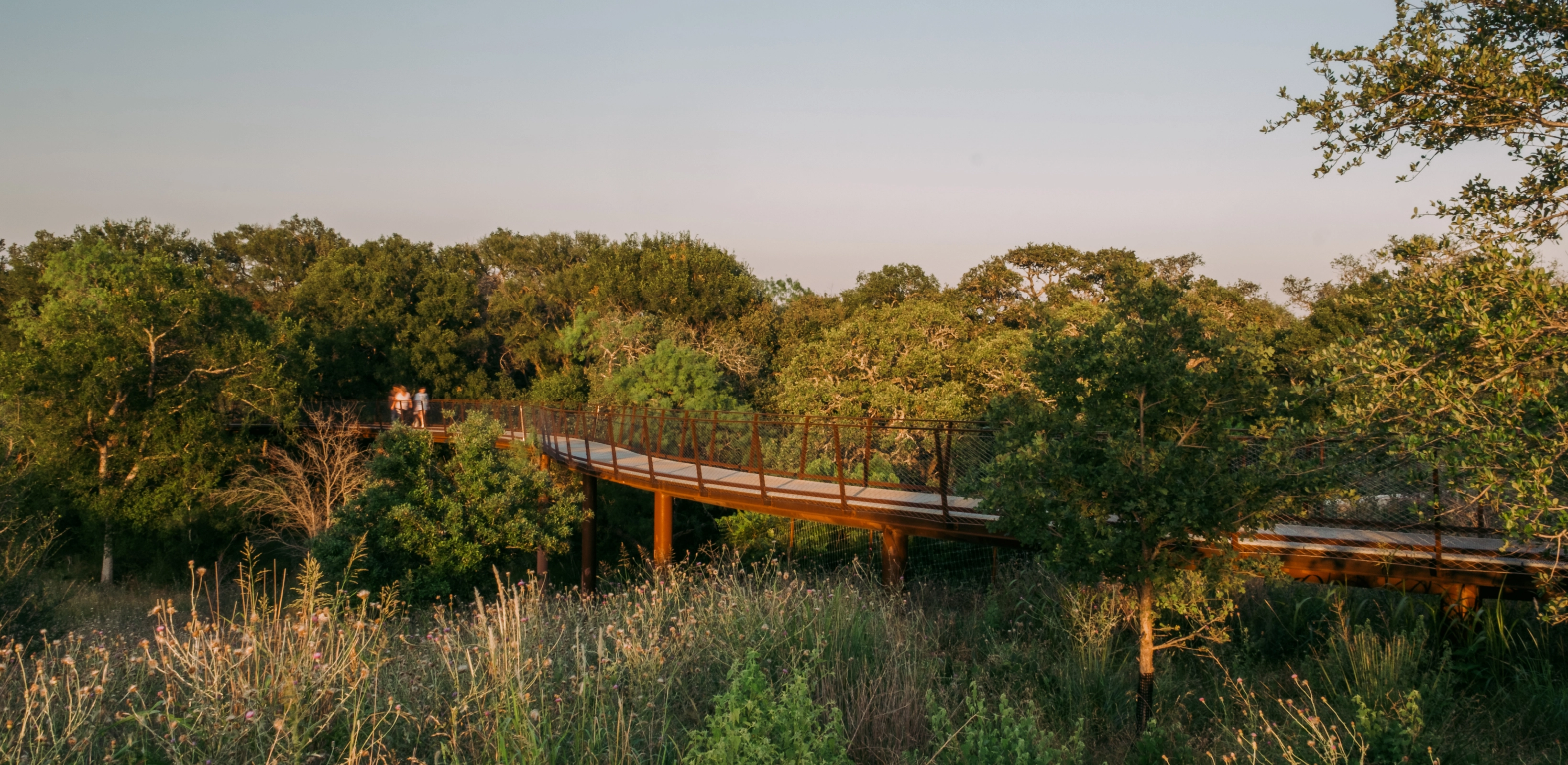
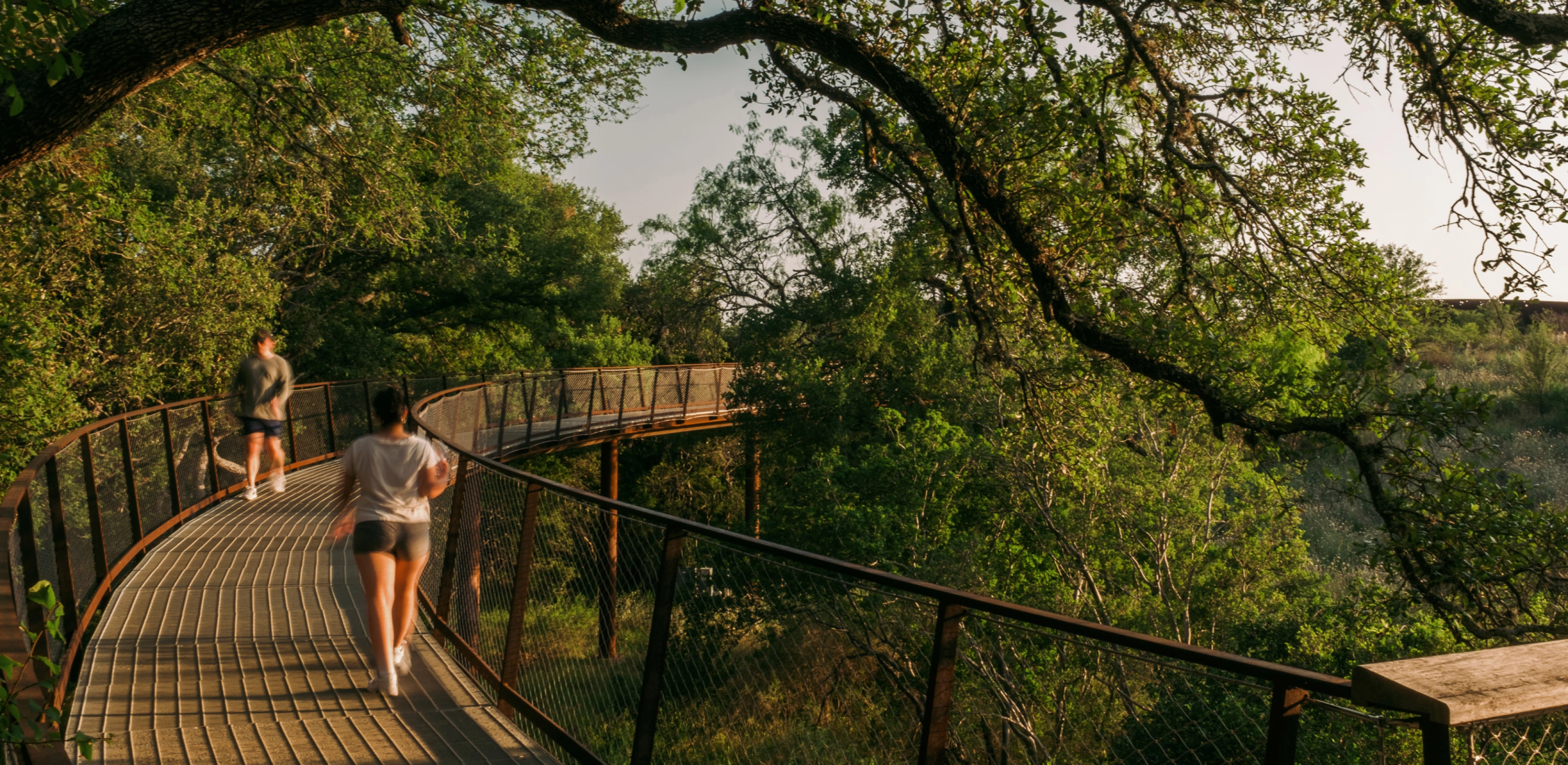
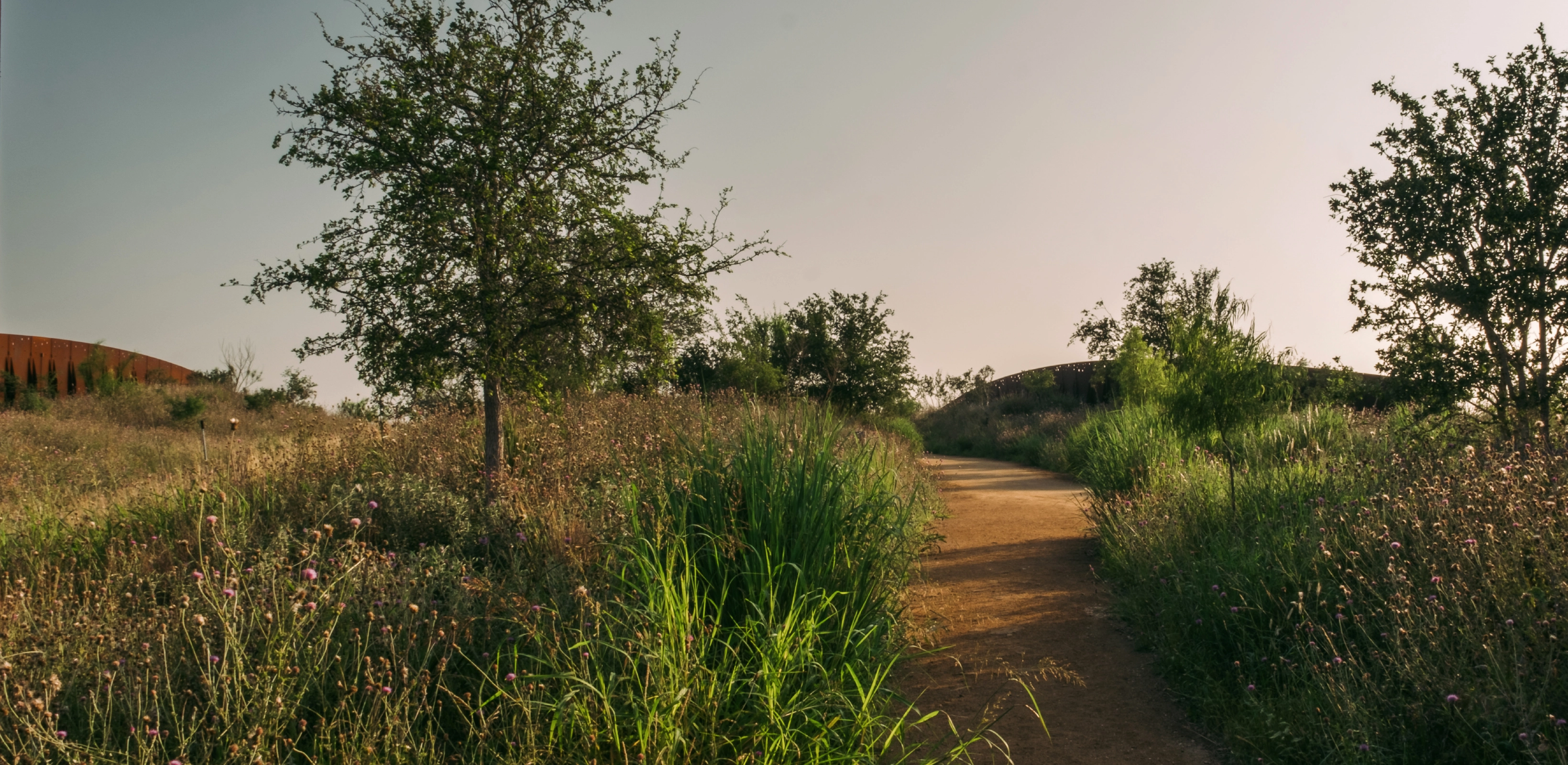
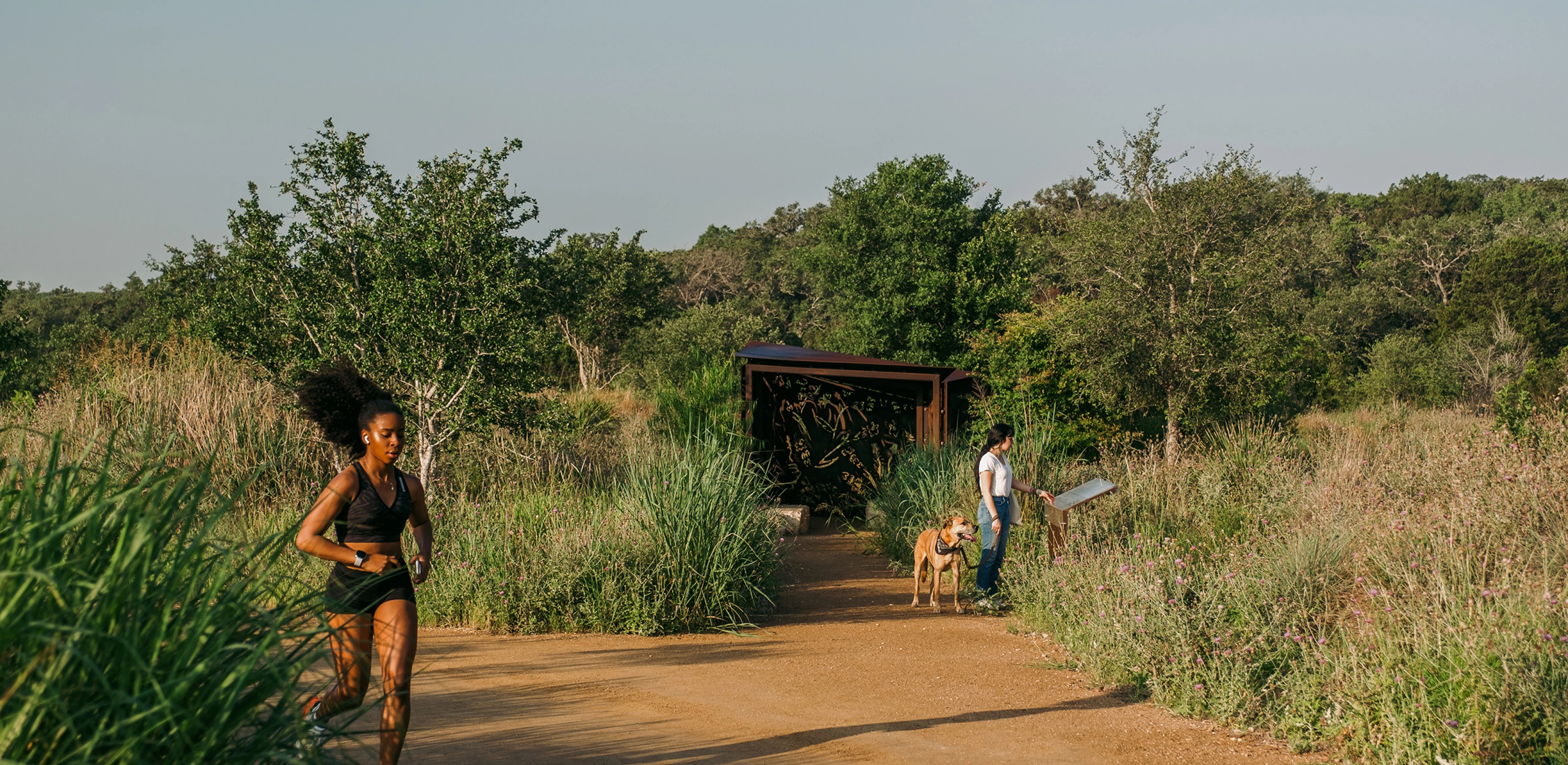
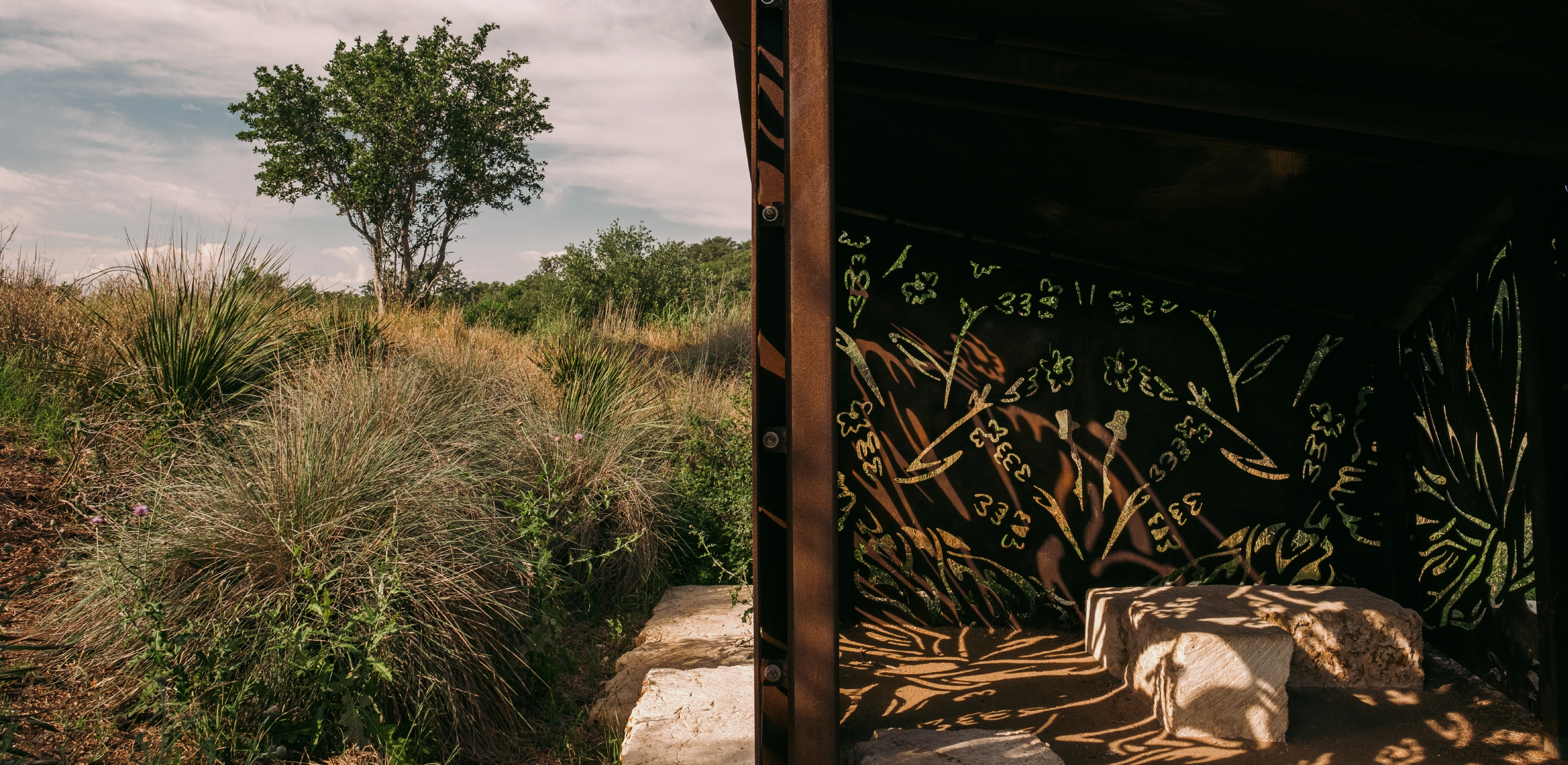
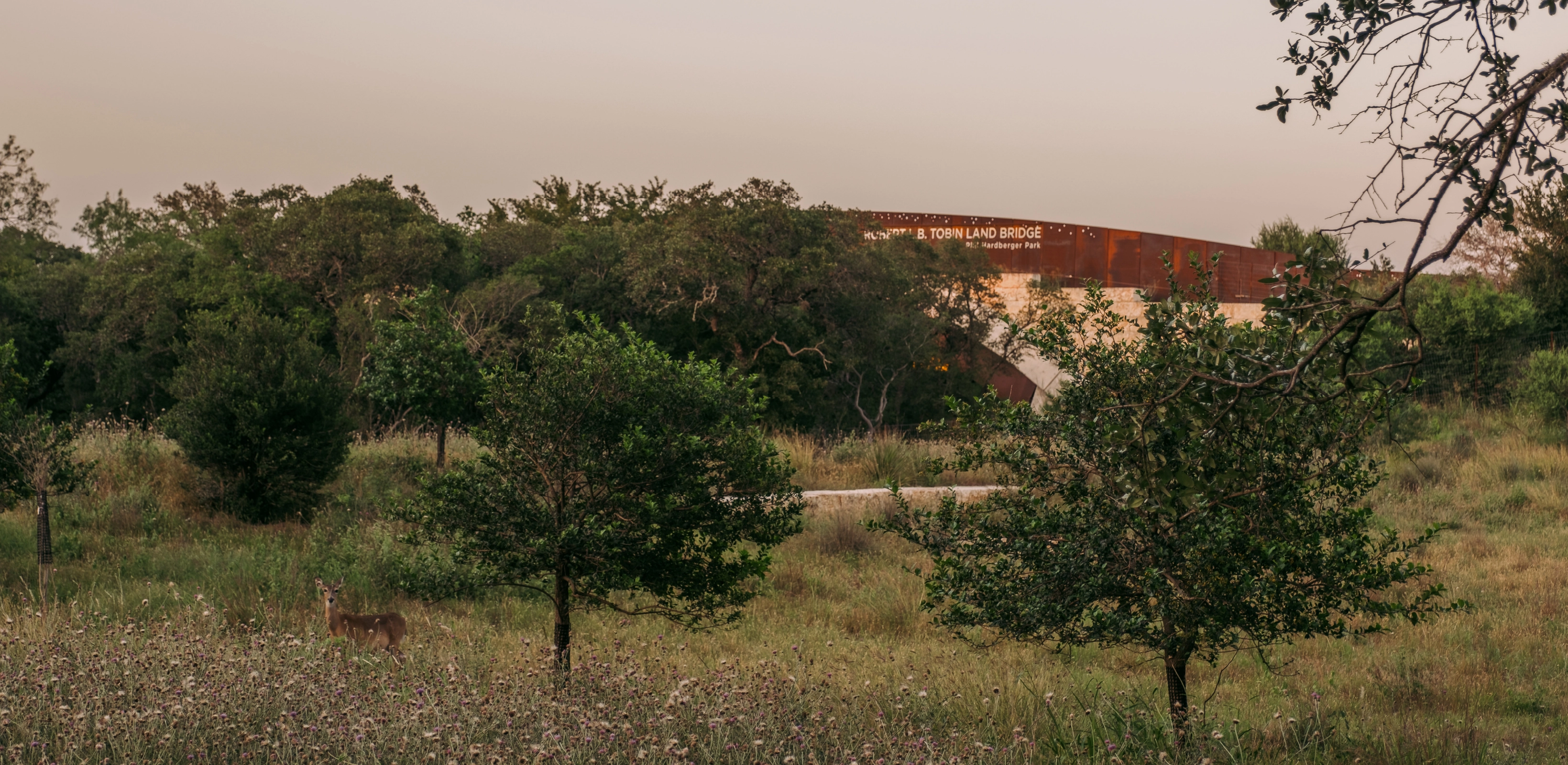
A great case study in possibilities. This project makes an incredibly difficult task of building a functional landscape on structure; creating a welcoming space over a highway; balancing the needs of humans and non-humans alike; and connecting ecological fragments look easy. This is an impressive ecological investment by the community, and a well-executed project by the Landscape Architect and design team. This is an amazing and successful project!
Awards Jury
-
The Robert L.B. Tobin Land Bridge of Phil Hardberger Park in San Antonio is the first land bridge of its kind, for both human and wildlife passage, in the United States. At a monumental environmental scale, the bridge reconnects a once bisected, mile-wide tract of natural area and public park. It restores a major ecological sanctuary for wildlife along the longest creek corridor in Bexar county, prioritizing wildlife passage alongside people. More than infrastructure, it is a continuation of the land itself, where the life of restored south Texas scrubland and savanna unfolds over a cityscape as a new model for urban wildness.
-
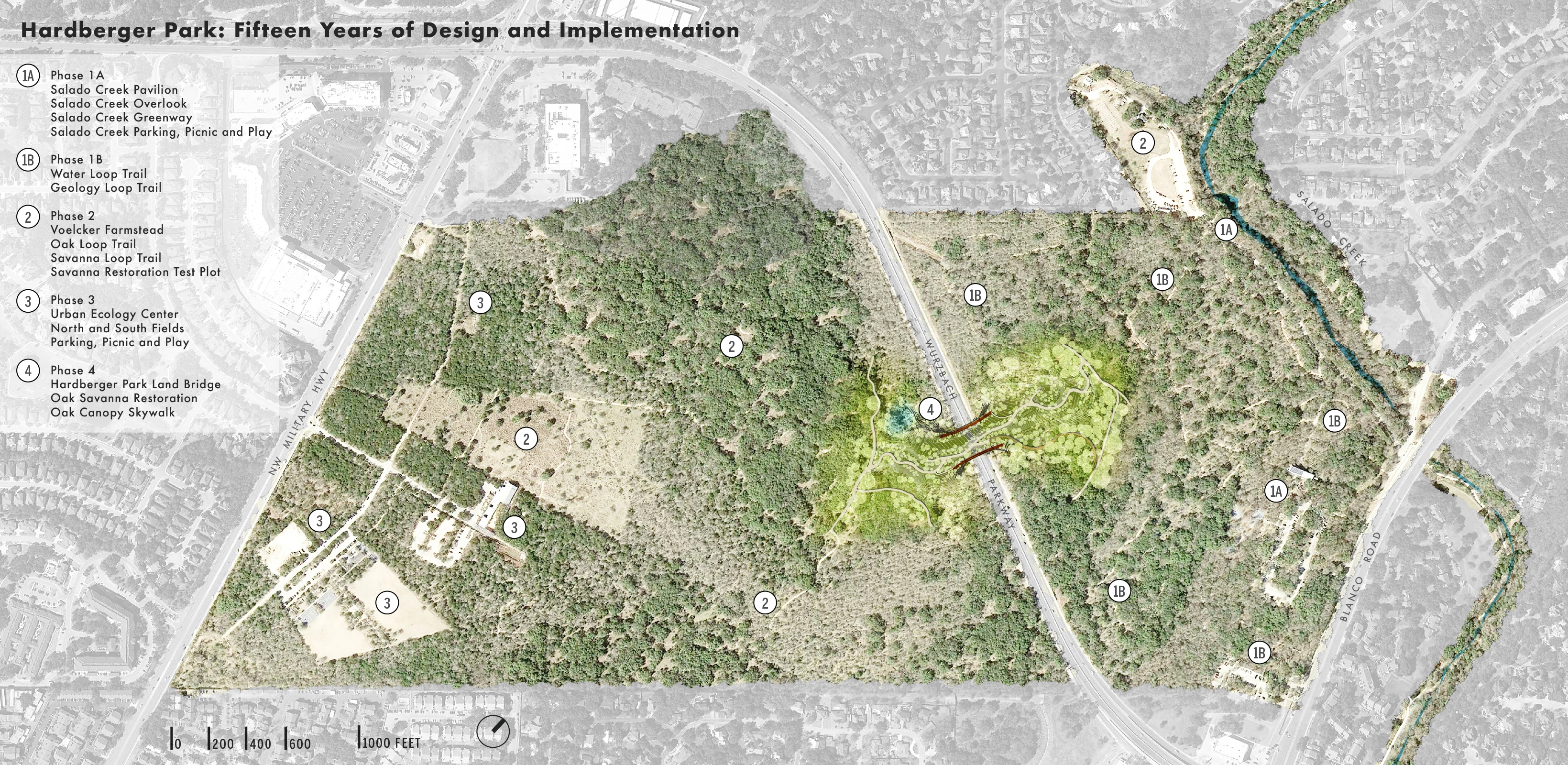
Phil Hardberger Park, is a 330-acre urban park in San Antonio, the 7th largest city in the United States. Designed in phases from 2007-2019, the park opened to the public in 2010 as a cultivated wild, where trails wind through preserved woodlands and restored savanna, with parking, picnic and play carved from scrubland. For over a decade, the park existed as two parcels and the last piece of the Comprehensive Plan, the land bridge, remained unrealized. Six lanes of Wurzbach Parkway severed the landscape, creating a barrier for humans and causing fatal collisions for wildlife migrating along the 38-mile-long Salado Creek. The land bridge was finally realized through a 2017 voter-approved city bond of $13 million and $10 million in grants and donations. It opened to the public in December 2020 and the park sustains 750-1,000 visitors per day. The project demonstrates a union of urban wildness and city-wide activism.
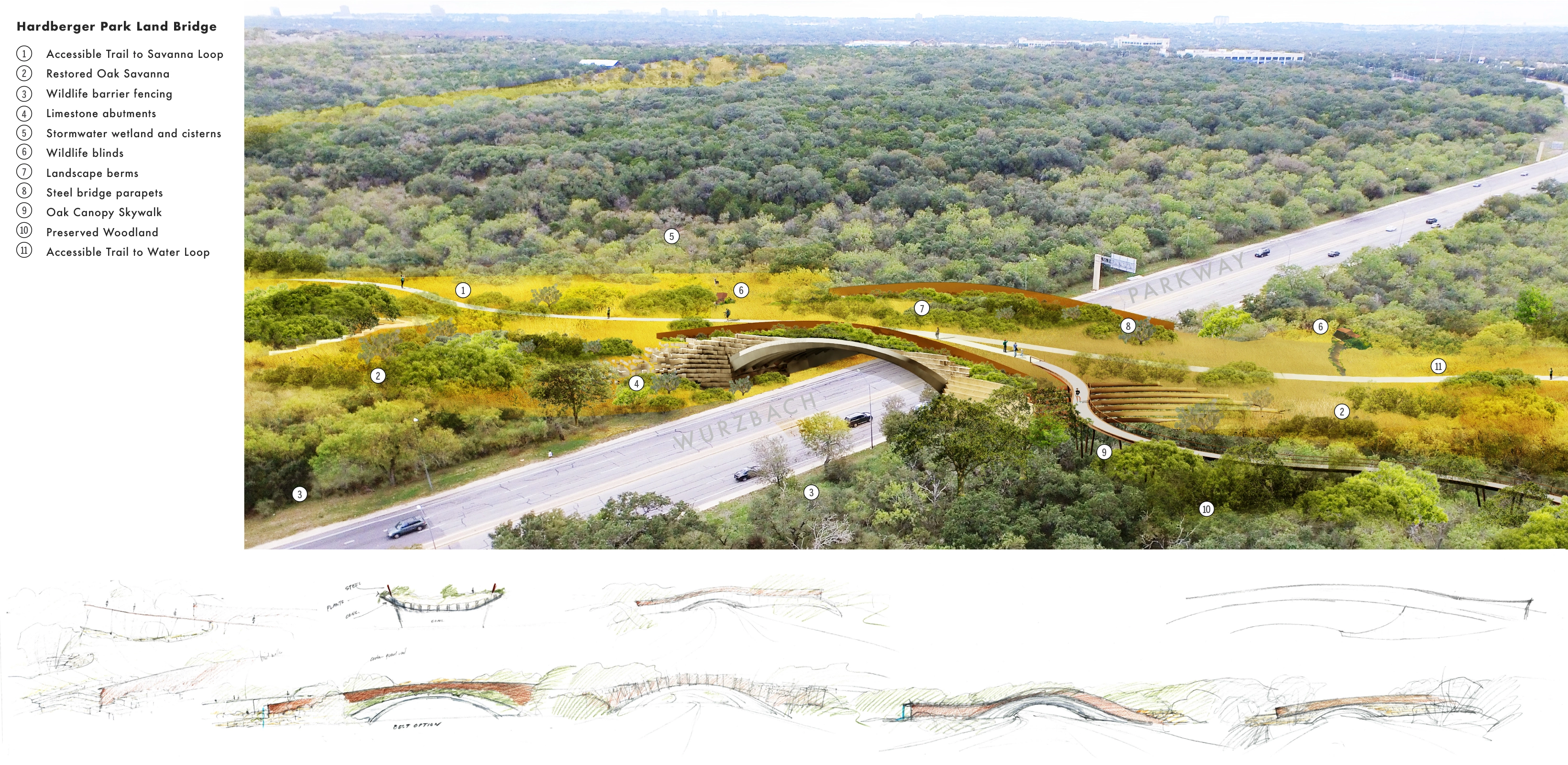
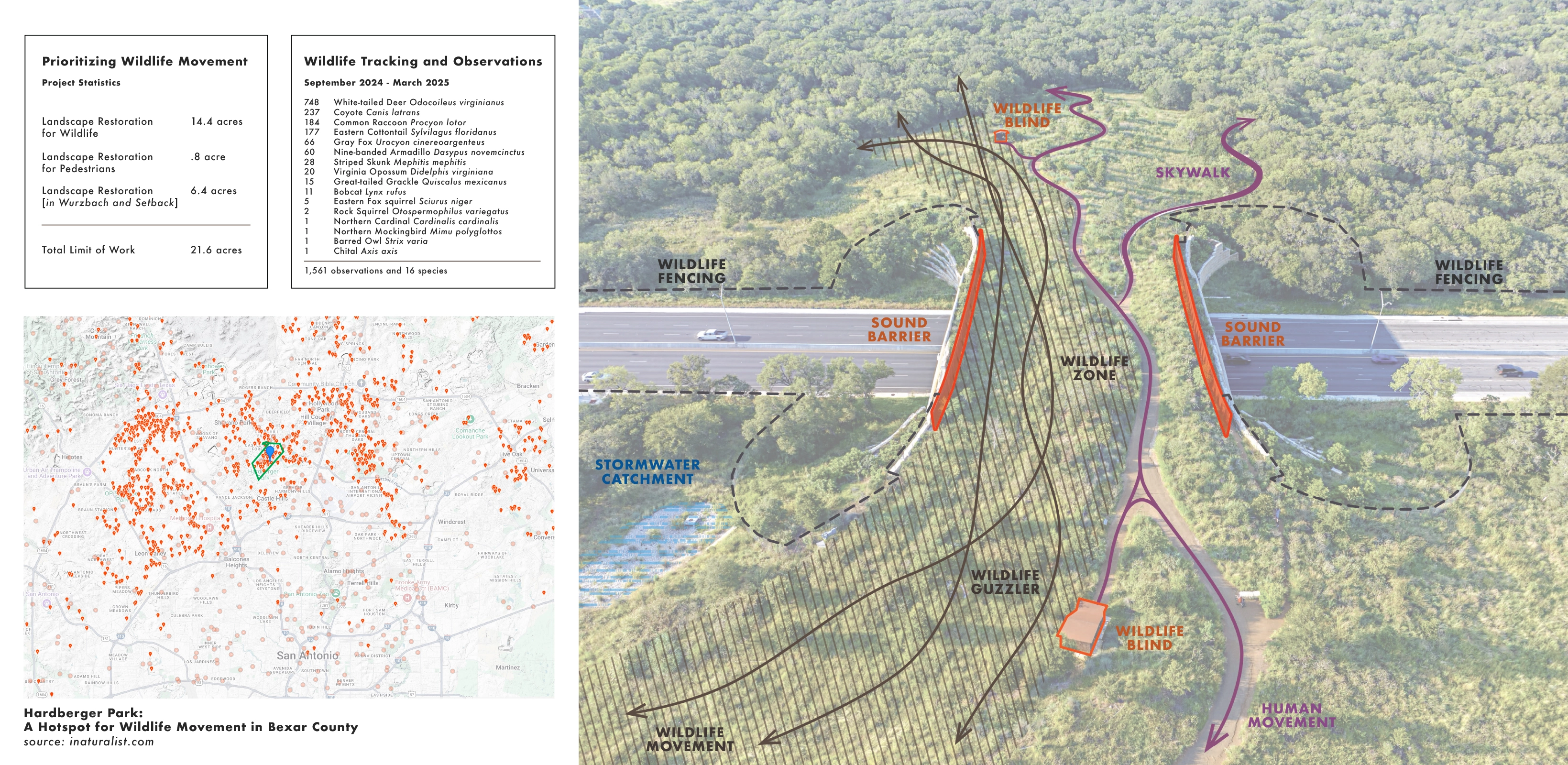
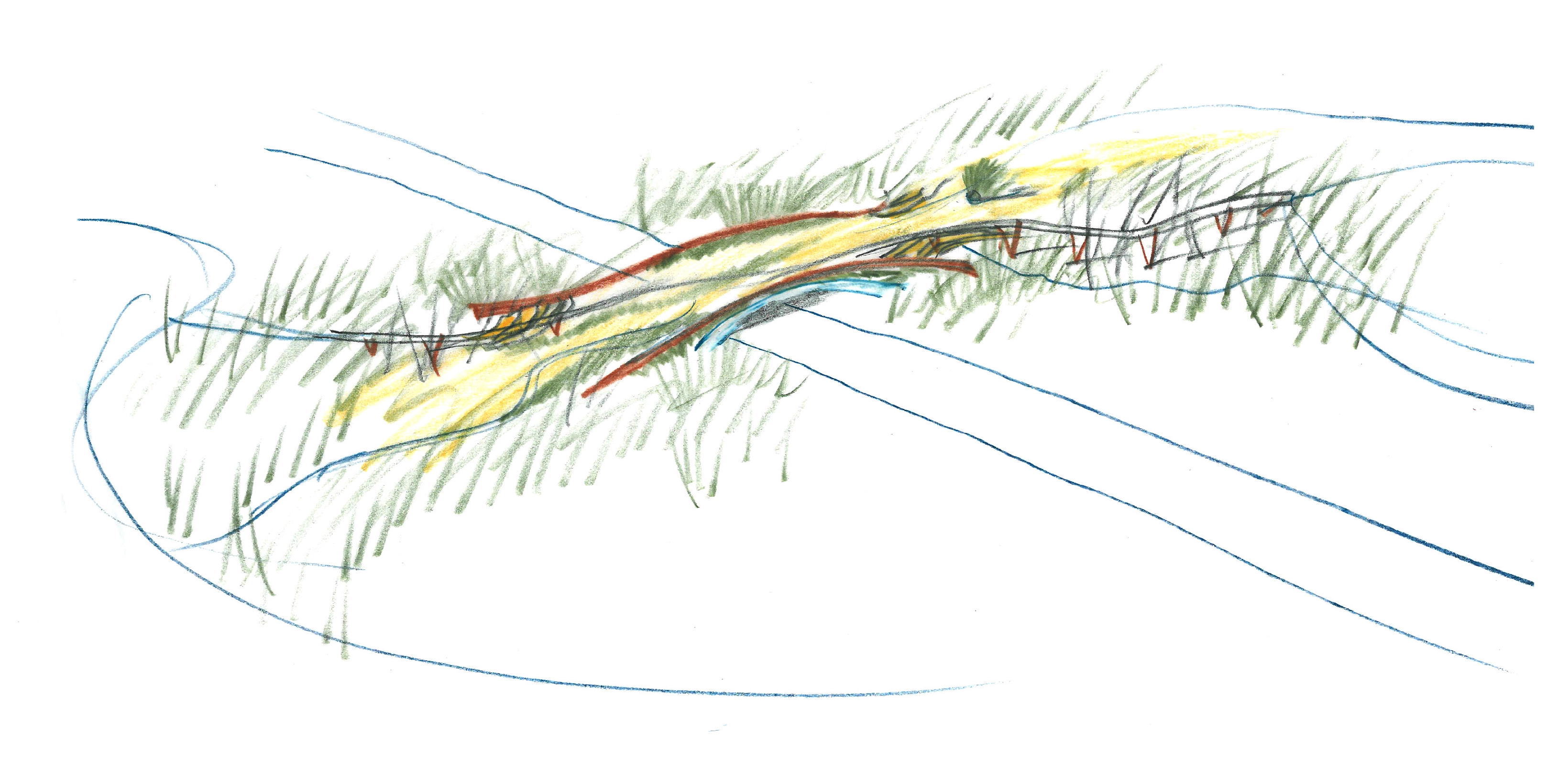
The bridge was conceived as a flowing extension of the land itself. Sculpted earth, layered with amplified savanna and scrubland, spans 175’ across Wurzbach Parkway and reconnects both sides of the park back to Salado Creek. The 160’ wide corridor of densely planted landscape is bermed along one edge for wildlife movement, while offering a narrower, accessible trail system for people. A 25 foot elevated skywalk of wood and steel sensitively winds through the tree canopy to the top of the land bridge. At the summit, steel parapet bridge walls create unexpected quietness, and the view extends for miles across the city. Wildlife blinds are sited at either end of the bridge, offering shade and a chance to observe animals at the water guzzlers. The perforated wall patterns take cues from the site’s flora and fauna, created by local artists and detailed by the landscape architects. All the materials, plants and forms of the bridge are responsive to the site and inspired by the region.
At over 20 acres, the project reused site soils and 120,000 cubic yards of earth, and recycled tons of cleared brush as mulch. Resting on 16 arched girders that stretch across the highway in a single span, there are no support columns and the structure’s bowed cross section and steel walls provide site and sound barriers from traffic below. Locally quarried limestone forms abutment walls that feather back into the planted slopes. Girders were craned into place at night to avoid road closures and the single span avoided highway repaving. Rainwater is collected in a 1-acre wetland that doubles as a wildlife watering hole. A 250,000-gallon underground cistern harvests rainwater, providing irrigation through San Antonio’s droughts.
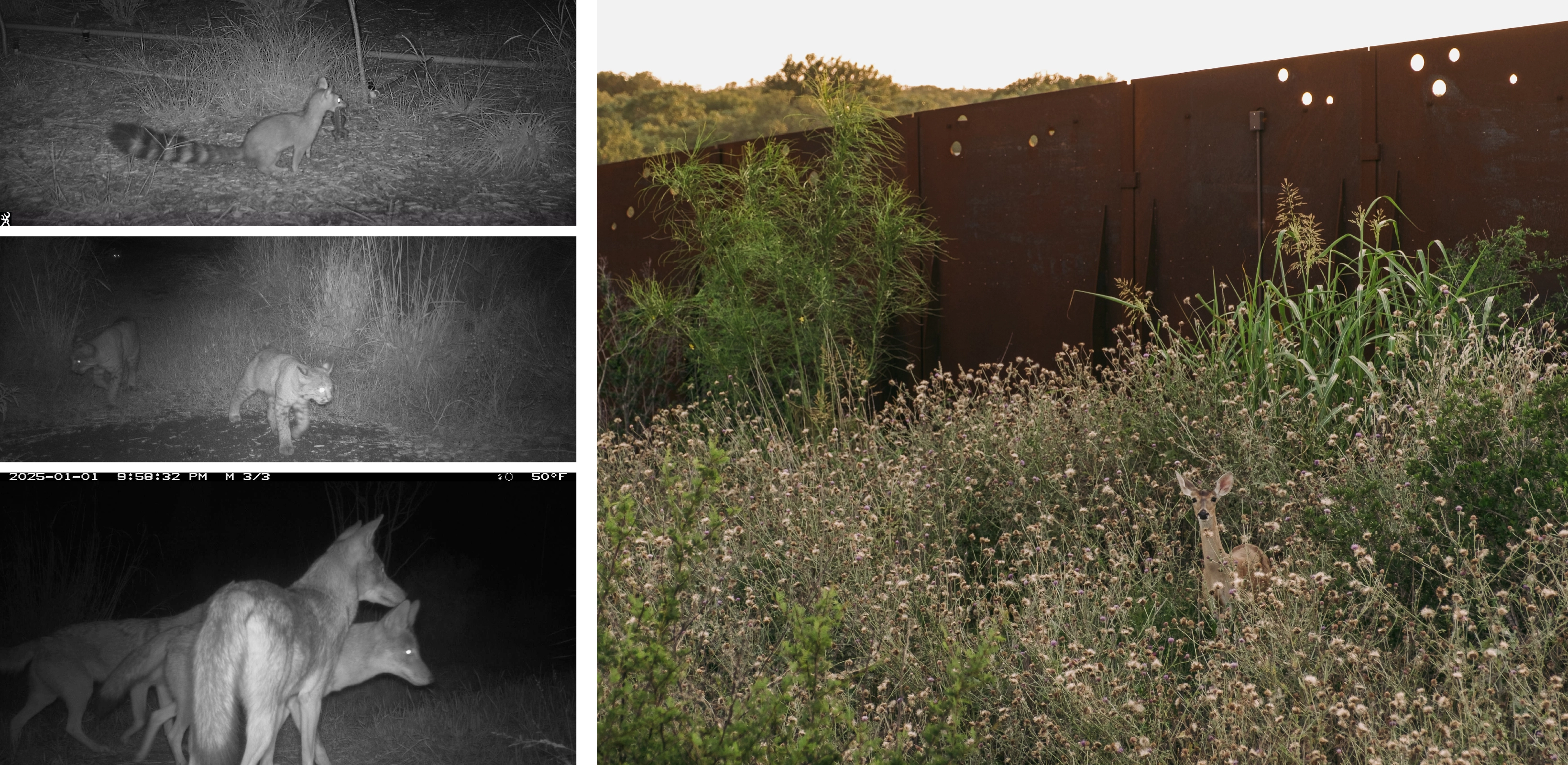
Wildlife biologists educated decisions on bridge dimensions and habitat requirements to maximize animal crossings. Passage is guided by 3,300 linear feet of barrier fencing along Wurzbach, directing animals upwards, while berms and plantings provide continuous cover across the structure. The bridge diversifies habitat with over 50 reintroduced species, many bearing fruits, providing shelter and supporting prey species. Before the first anniversary of the bridge, every mammal species known to reside within the park was captured on the land bridge’s trail cameras, including bobcat, white-tailed deer and ringtail cat.
The Robert L.B. Tobin Land Bridge demonstrates the ability of a landscape architect-led team to conceive and design large-scale, contextual infrastructure that prioritizes wildness in the urban realm.
-
- Arup - Structural Engineer
- SWCA Environmental Consultants - Wildlife Biology
- Cude Engineering - Civil Engineering
- Ashley Mireles - Artist, Wildlife Blind
- Cade Bradshaw - Artist, Wildlife Blind
-
- Anacua (Sandpaper Tree) Ehretia anacua
- Cedar Elm Ulmus crassifolia
- Texas Live Oak Quercus virginiana
- Texas Red Oak Quercus texana
- Dogwood (White) Cornus drummondii
- Lacey Oak Quercus glaucoides
- Texas Persimmon Diospyrus texana
- Carolina Buckthorn Frangula caroliniana
- Texas Kidneywood Eysenhardtia texana
- Mountain Laurel Sophora secundiflora
- Possumhaw Ilex decidua
- Yaupon Holly Ilex vomitoria 'Pride of Houston'
- Agarita Berberis trifoliolata
- Fragrant Sumac Rhus aromatica
- Common Buttonbush Cephalanthus occidentalis
- Big Blue Stem Andropogon gerardii
- Cedar Sedge Carex planostachys
- Evergreen Sumac Rhus virens
- Flameleaf Sumac Rhus lanceolata
- Indian Grass Sorghastrum nutans
- Inland Sea Oats Chasmanthium latifolium
- Little Bluestem Schizachyrium scoparium
- Lindheimer Muhly Muhlenbergia lindheimeri
- Beargrass Nolina Texana
- Prickly Pear Opuntia lindheimeri
- Purple Threeawn Aristida purpurea
- Sideoats Gramma Bouteloua curtipendula
- Sotol Dasylirion texana
- Switchgrass Panicum virgatum
- Twisted Leaf Yucca Yucca rupicola
Advertisement
Related Awards
Honor Award, General Design
Houston Arboretum & Nature Center
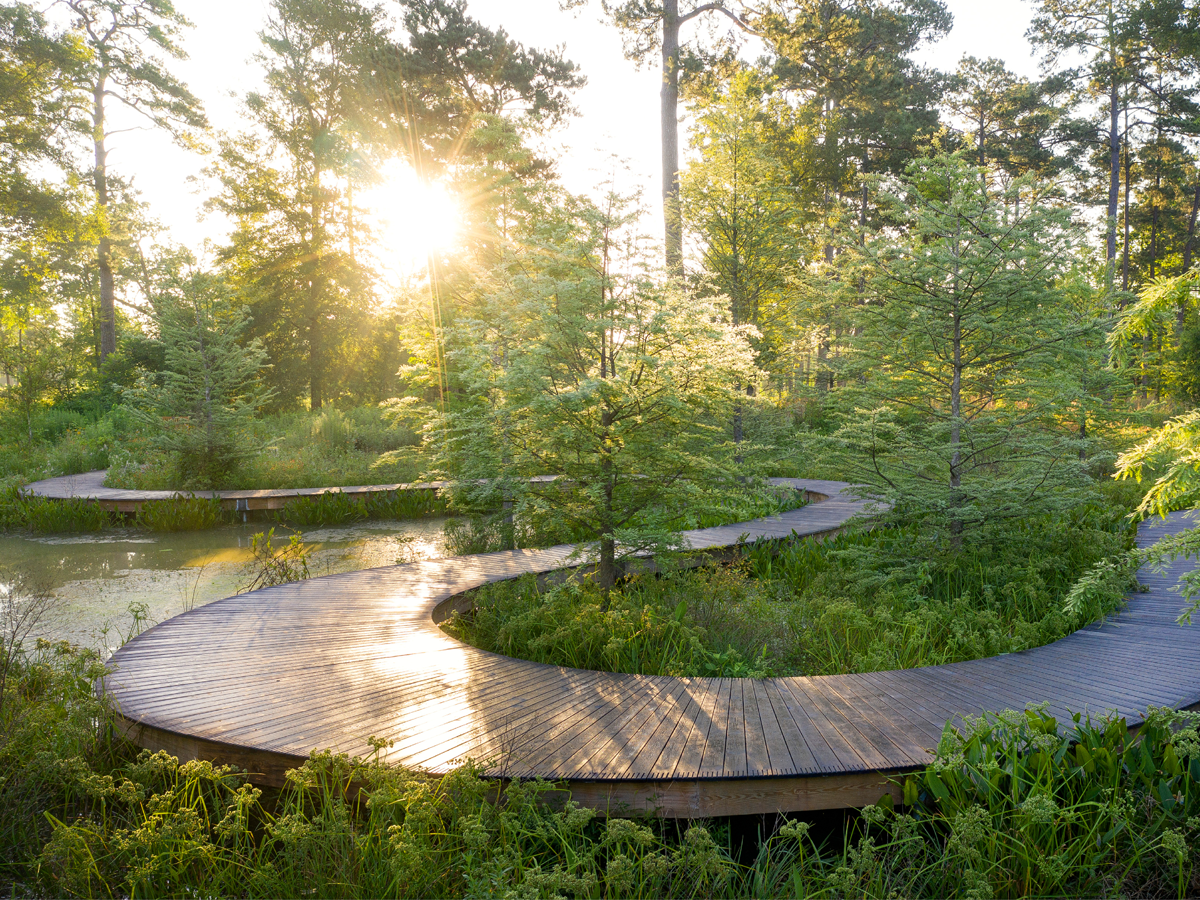
The Houston Arboretum & Nature Center sits within Memorial Park, one of the largest urban parks in the United States, in one of the nation's fastest growing and most climate-challenged cities. The site's story is one of repeated loss and deliberate reinvention. Hurricane Ike in 2008 and a severe drought in 2011 destroyed much of the Arboretum's tree canopy, exposing the limits of conventional reforestation in a city defined by flooding, heat, and ecological volatility.
Related Articles
ASLA Fund
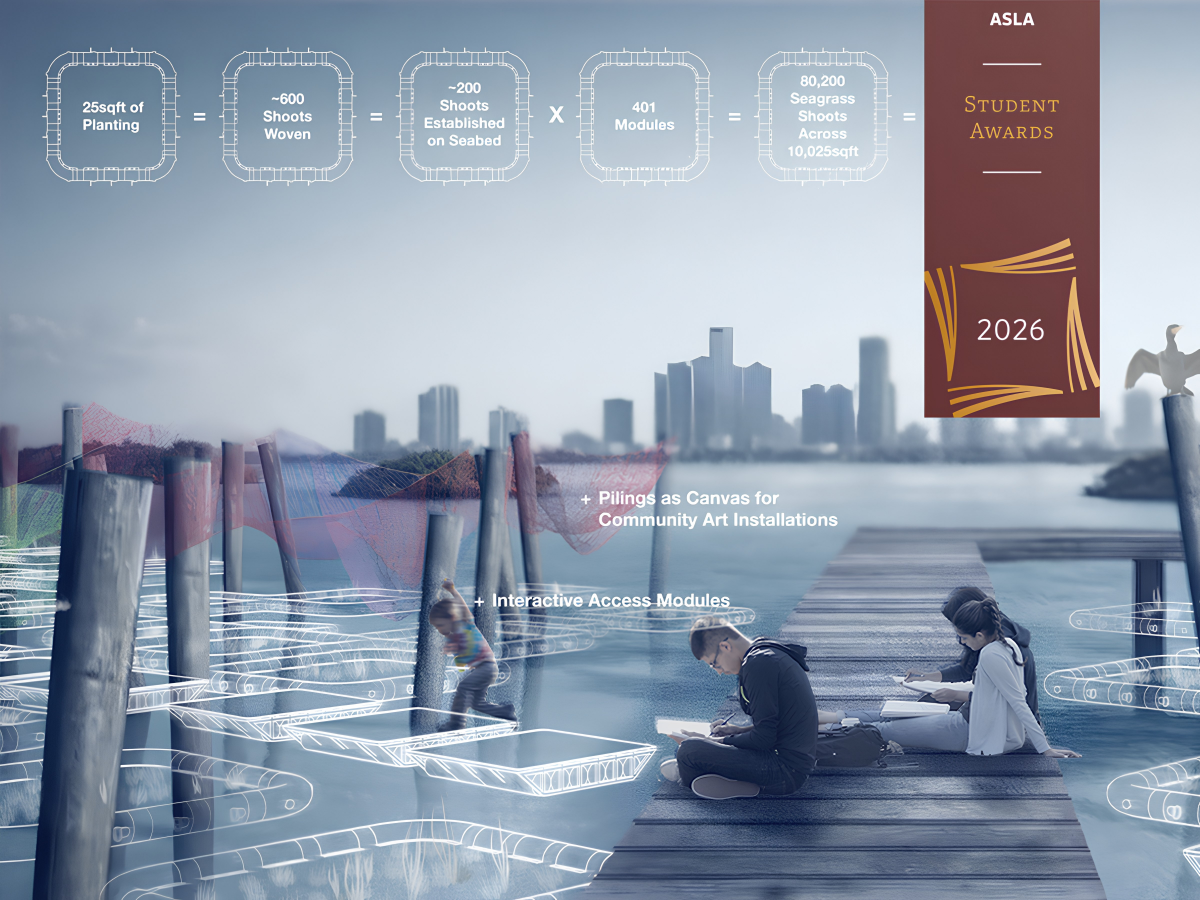
American Society of Landscape Architects Announces its 2026 Student Awards
39 Student Award winners elevate the future of the landscape architecture profession
Aug 24 2026