
.webp?language=en-US)

.webp?language=en-US)
Just Land
Justin Hailey, Associate ASLA
-
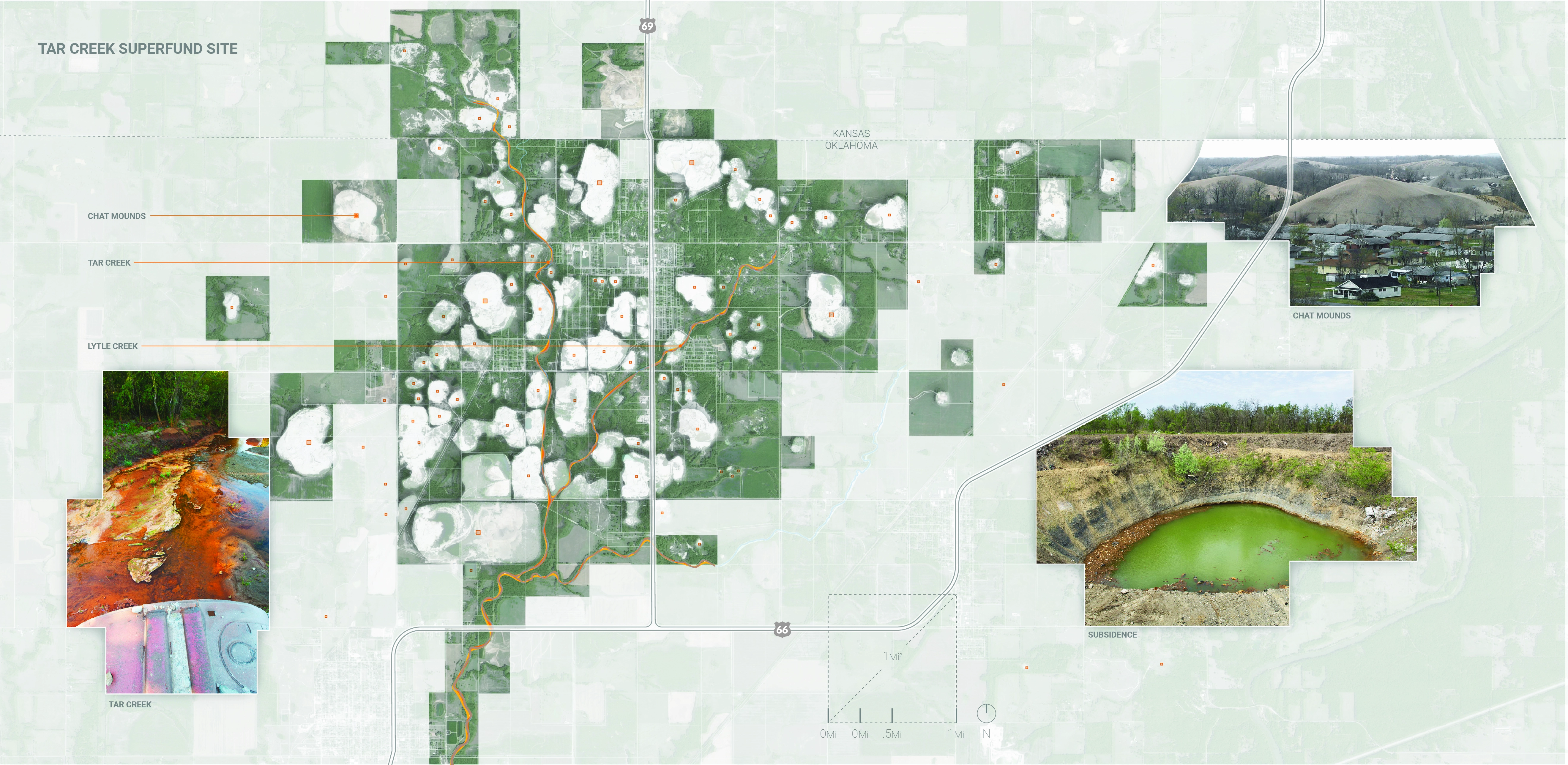
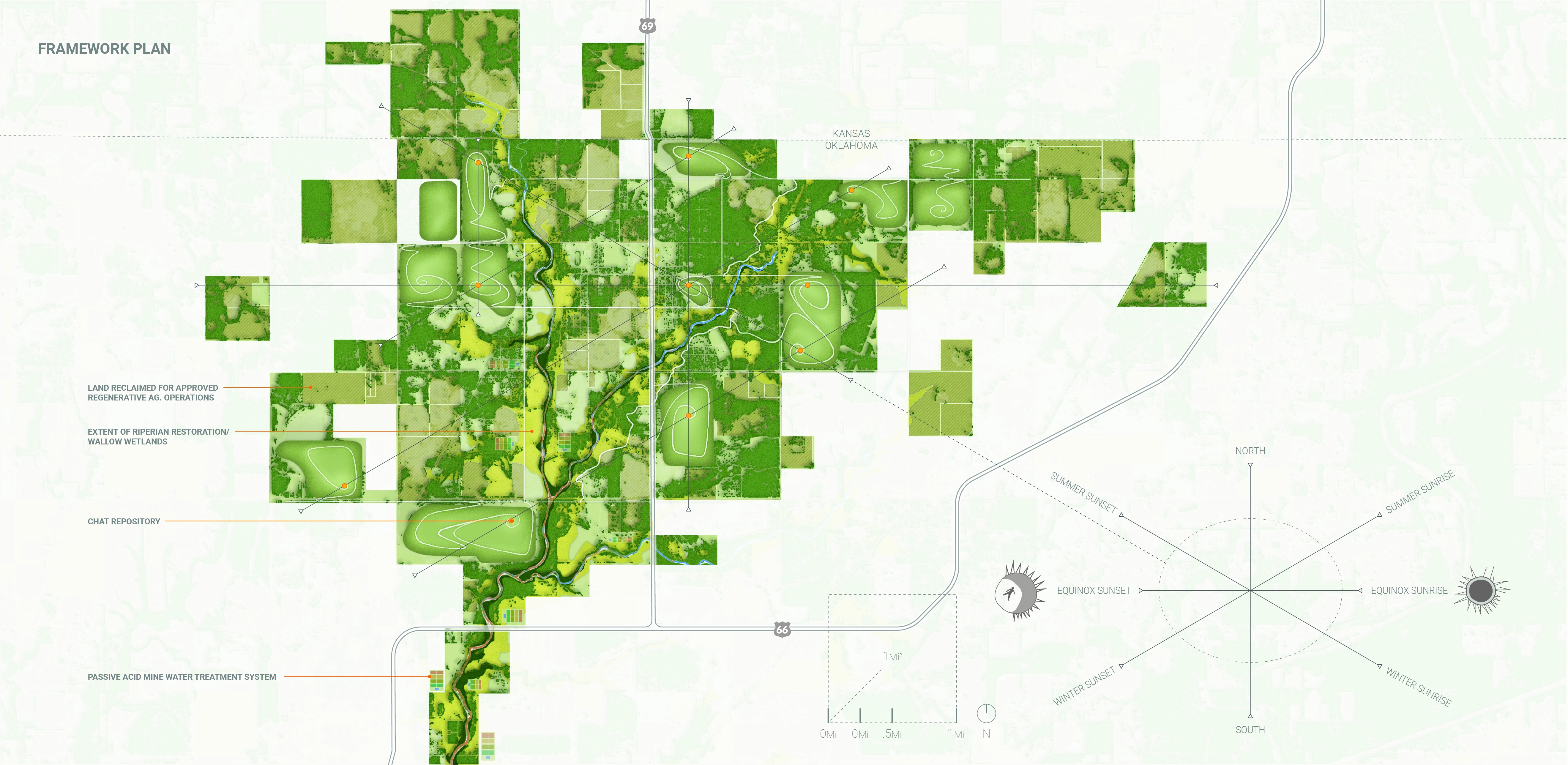
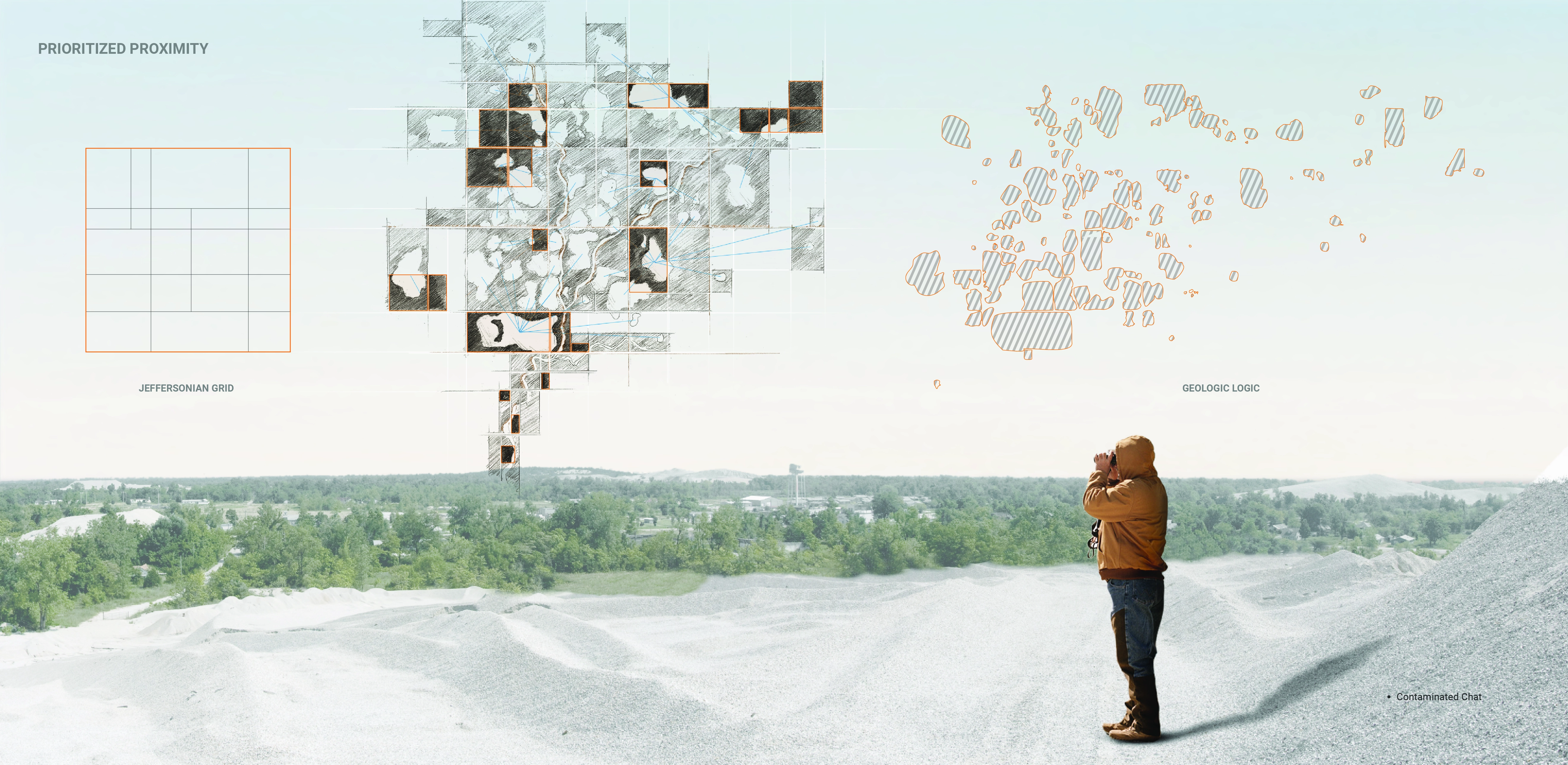
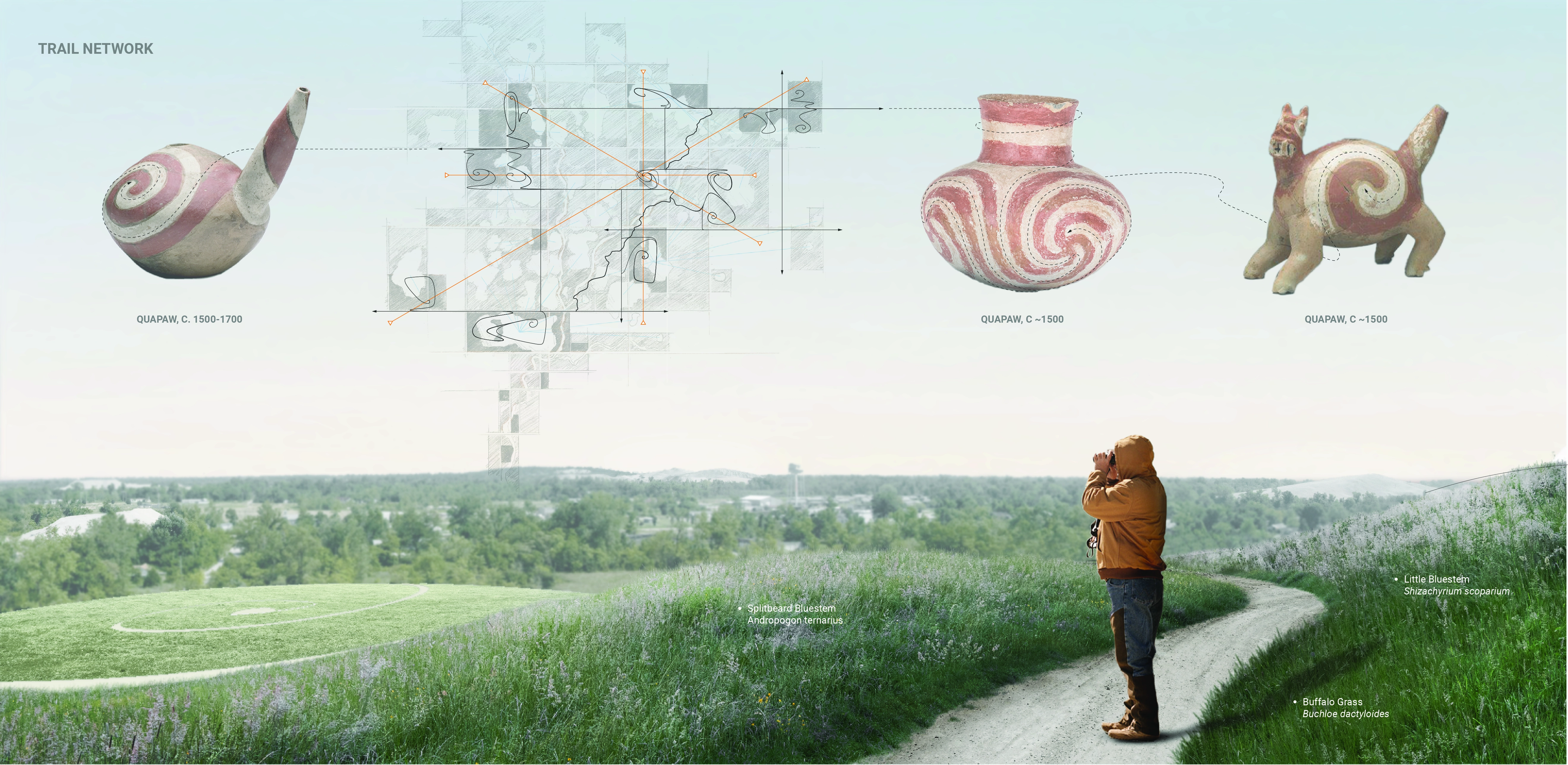
The Tar Creek Superfund Site is among the most polluted landscapes in the country. Just Land repositions ongoing efforts to remediate toxic mining waste into repositories as the foundation for a regional landscape gesture. Taking into consideration areas of cultural significance to Quapaw Nation, the design proposes a careful alignment of future repositories along a specific celestial orientation as well as the reintroduction of a managed native canebrake ecosystem tied together by a trail network. Just Land aims to consider environmental regeneration as a framework for the reclamation of both culture and land with respect to the 10 tribes that call Ottawa County home and provides a model for decolonialization through environmental justice.
-
O-ga-xpa, Quapaw Nation
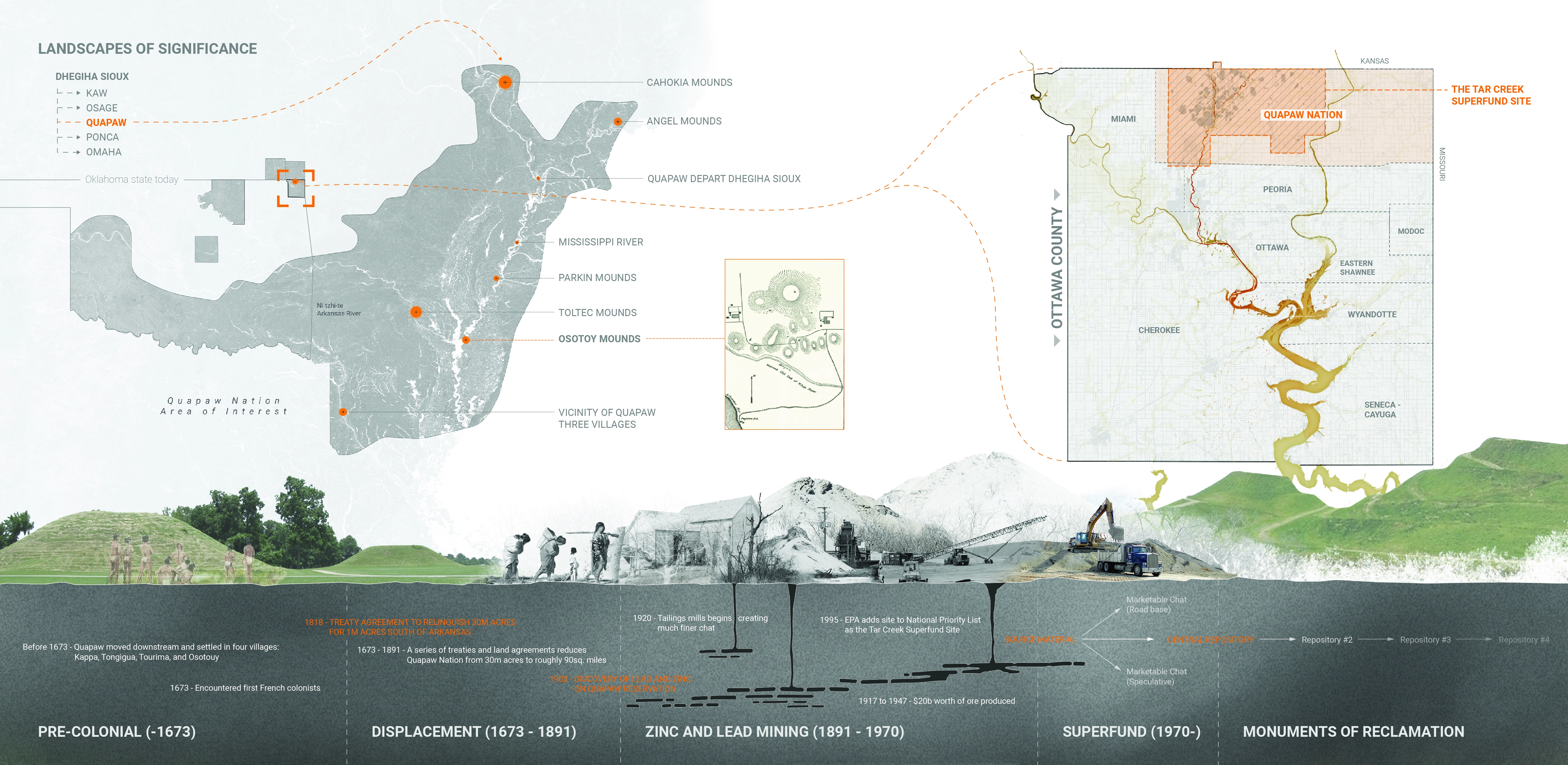
The Tar Creek Superfund Site lies within Quapaw Nation of Ottawa County, Oklahoma. Here, federal relocation efforts have condensed ten tribal nations into Ottawa County: Cherokee, Miami, Seneca-Cayuga, Wyandotte, Ottawa, Eastern Shawnee, Modoc, Peoria, and Quapaw. Today, nearly half of Quapaw Nation’s land is engulfed by the Tar Creek Superfund Site Operable Unit 4, the core cleanup area for chat, a toxic lead and zinc mining byproduct.
Groundsetting
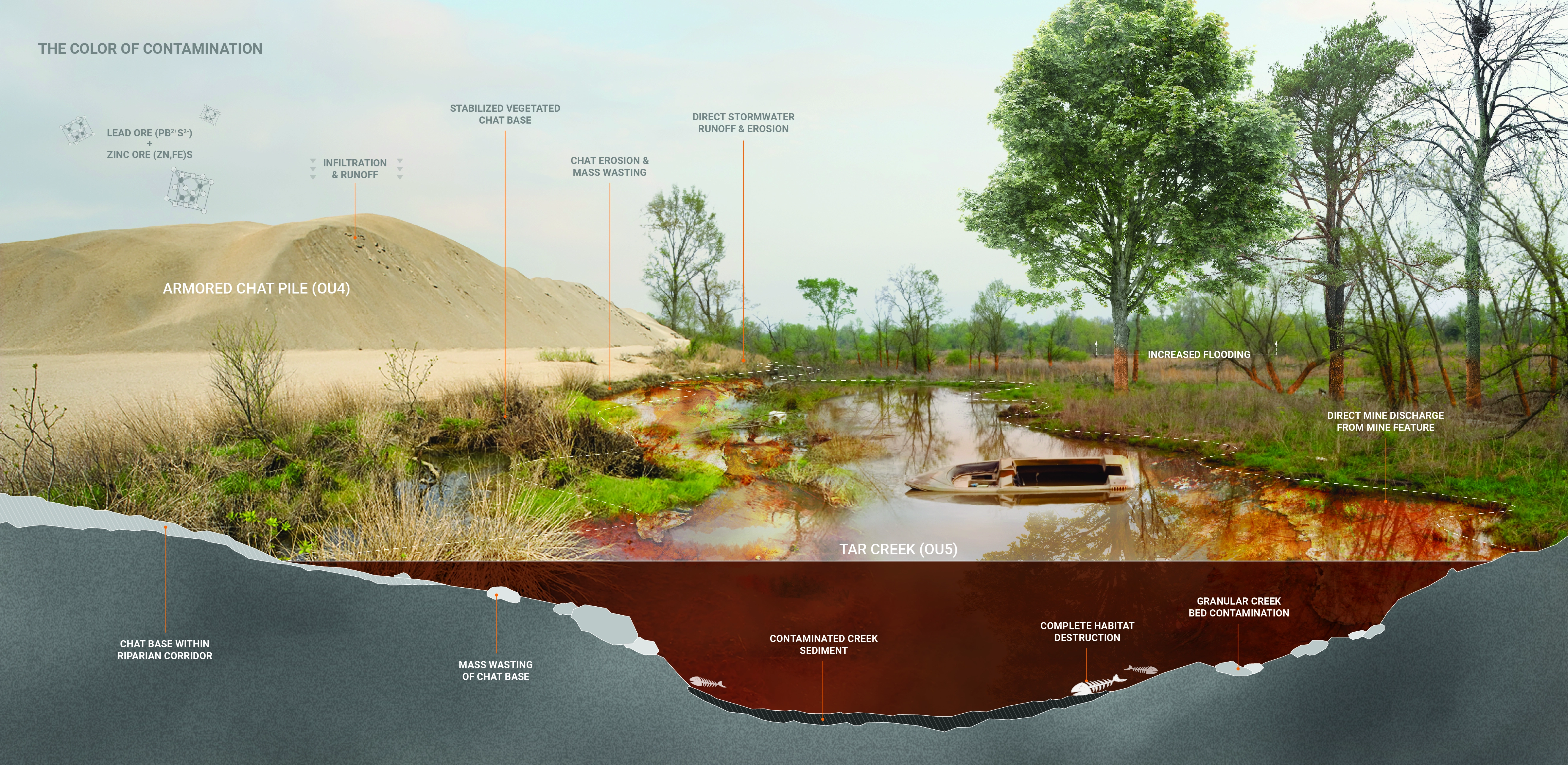
"Chat" a local term to the Tri-State Mining District, denotes lead and zinc mining residue. Laden with lead, zinc, and cadmium, chat blankets the landscape, embodying an environmental crisis overlooked by governing bodies and regulatory agencies. Historical mining operations have resulted in polluted water, air, soil, and tragic side effects in former inhabitants, especially children. Toxicity studies prompted an EPA superfund designation, marking the beginning of the first tribal-led superfund cleanup. Despite significant efforts underway, the environmental condition will take generations to heal, and the work has just begun.
Just Mounds
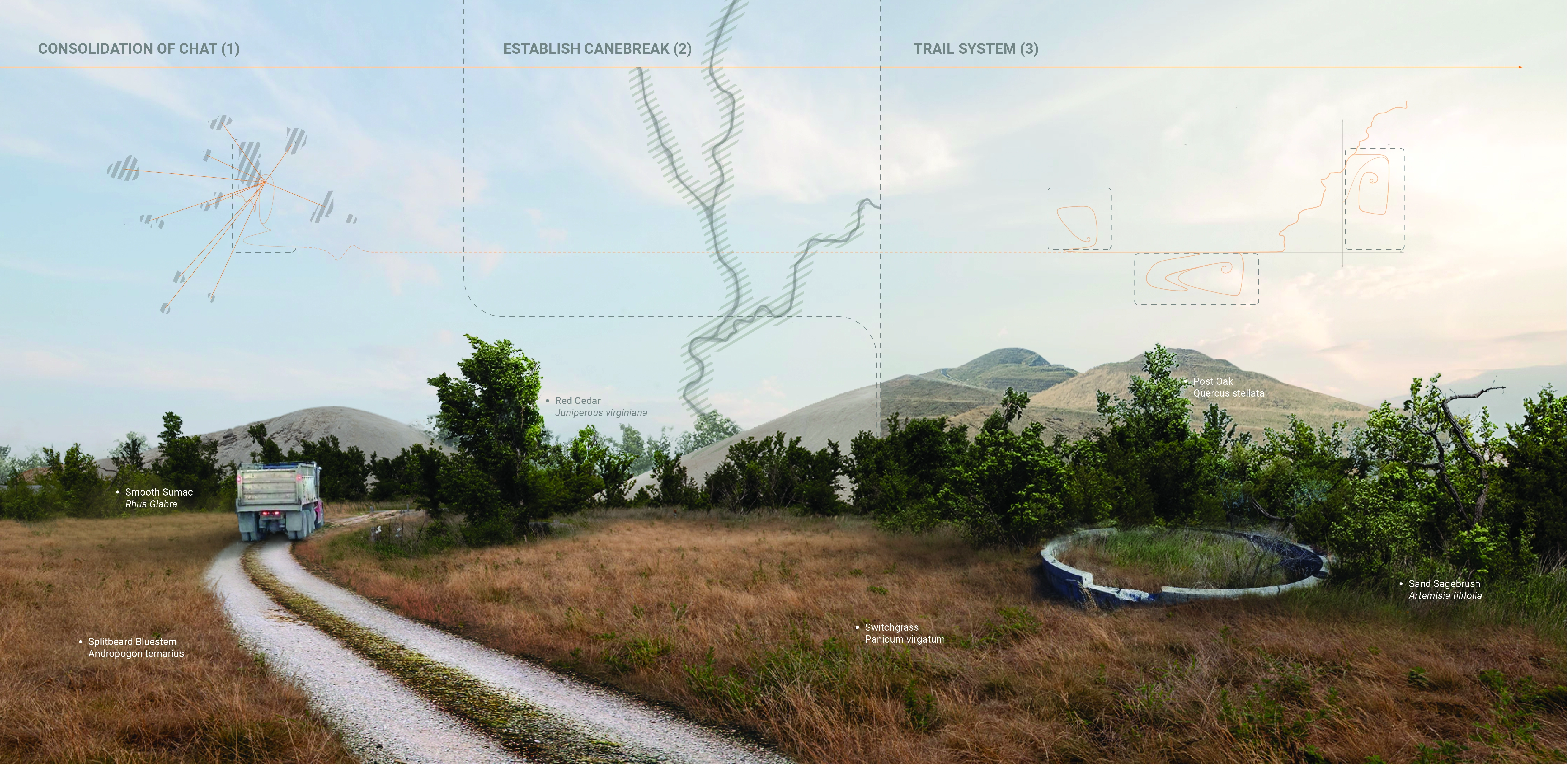
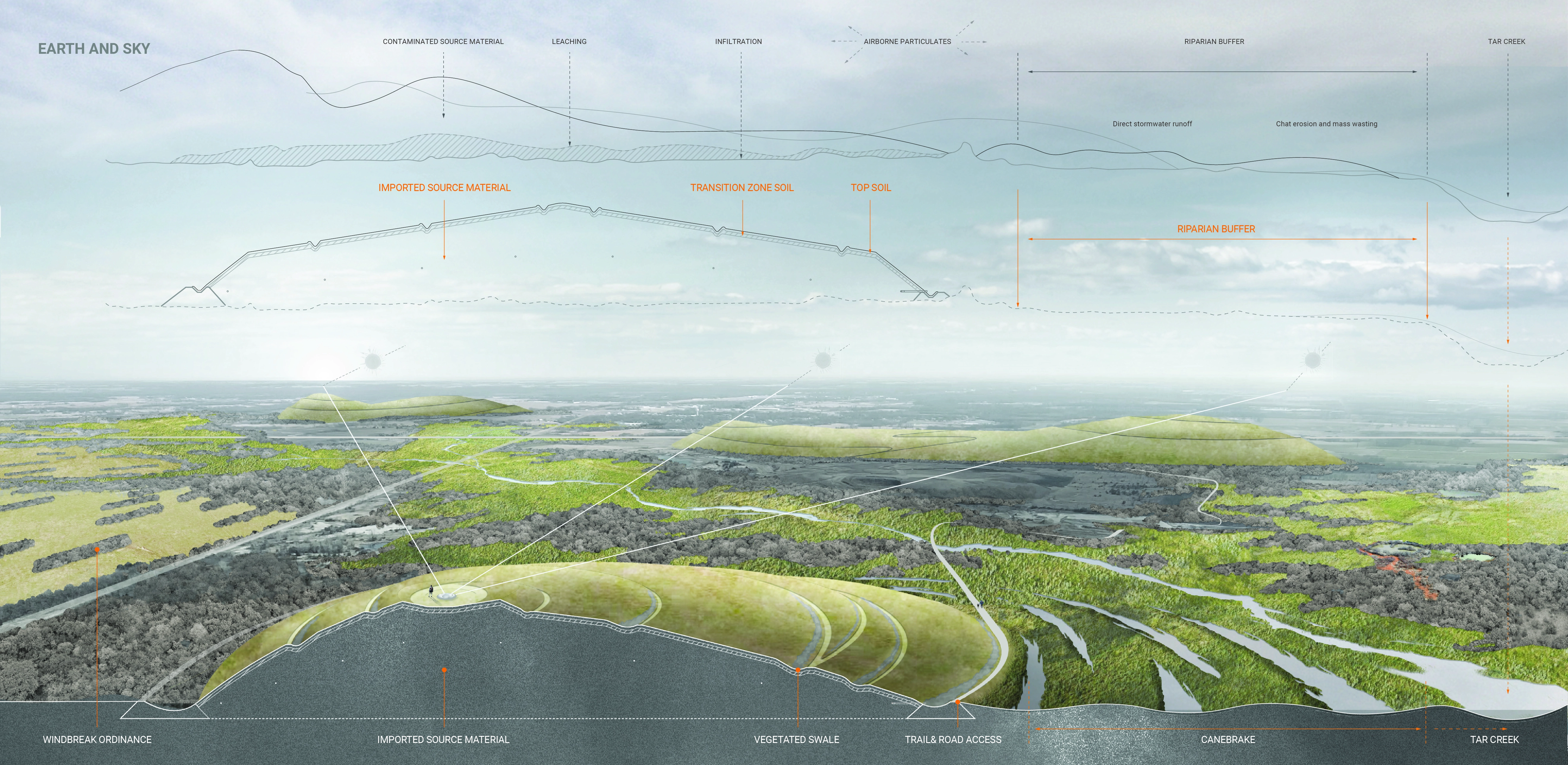
Just Land adapts existing strategies outlined by Quapaw Nation and the EPA, reimagining chat remediation as a cornerstone of landscape design. Twelve proposed repositories will store the 30 million tons of chat, reshaping the Quapaw landscape. Aligning with Quapaw tradition, these repositories will be carefully oriented, reflecting celestial patterns significant to the tribe. By integrating trail access and commemorative elements, Just Land transforms otherwise banal landfilled repositories into cultural landmarks.
Phytoremediation Strategy
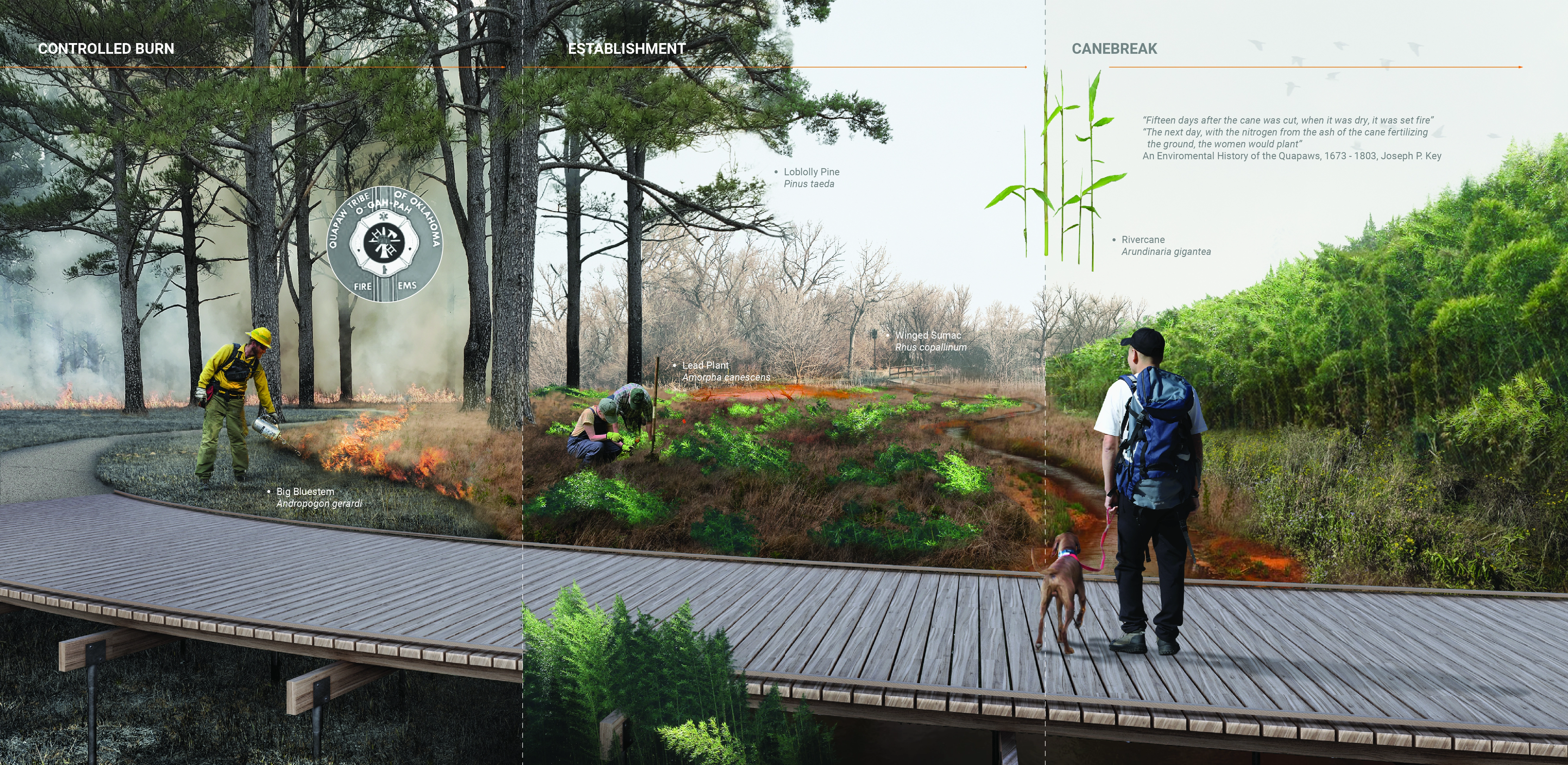
Rivercane (Arundinaria gigantea), integral to Southeastern indigenous communities, holds immense cultural and ecological significance. Just Land advocates for the reintroduction of a managed canebreak ecosystem to facilitate phytoremediation, stabilize soil, and delineate hazardous areas. Historically managed by controlled burns, rivercane offers traditional uses and instills cultural value within ecological restoration.
Water Is Life
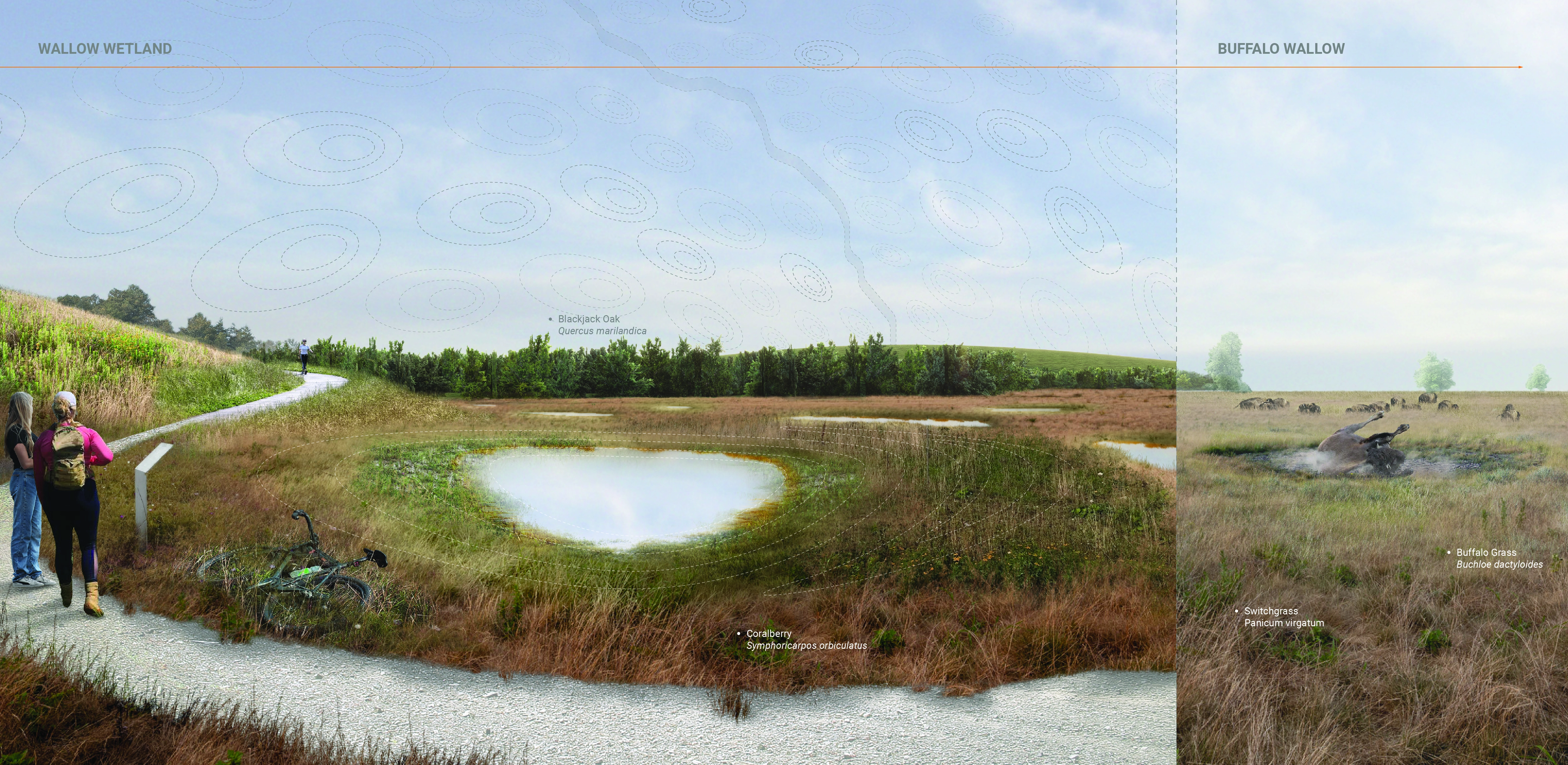
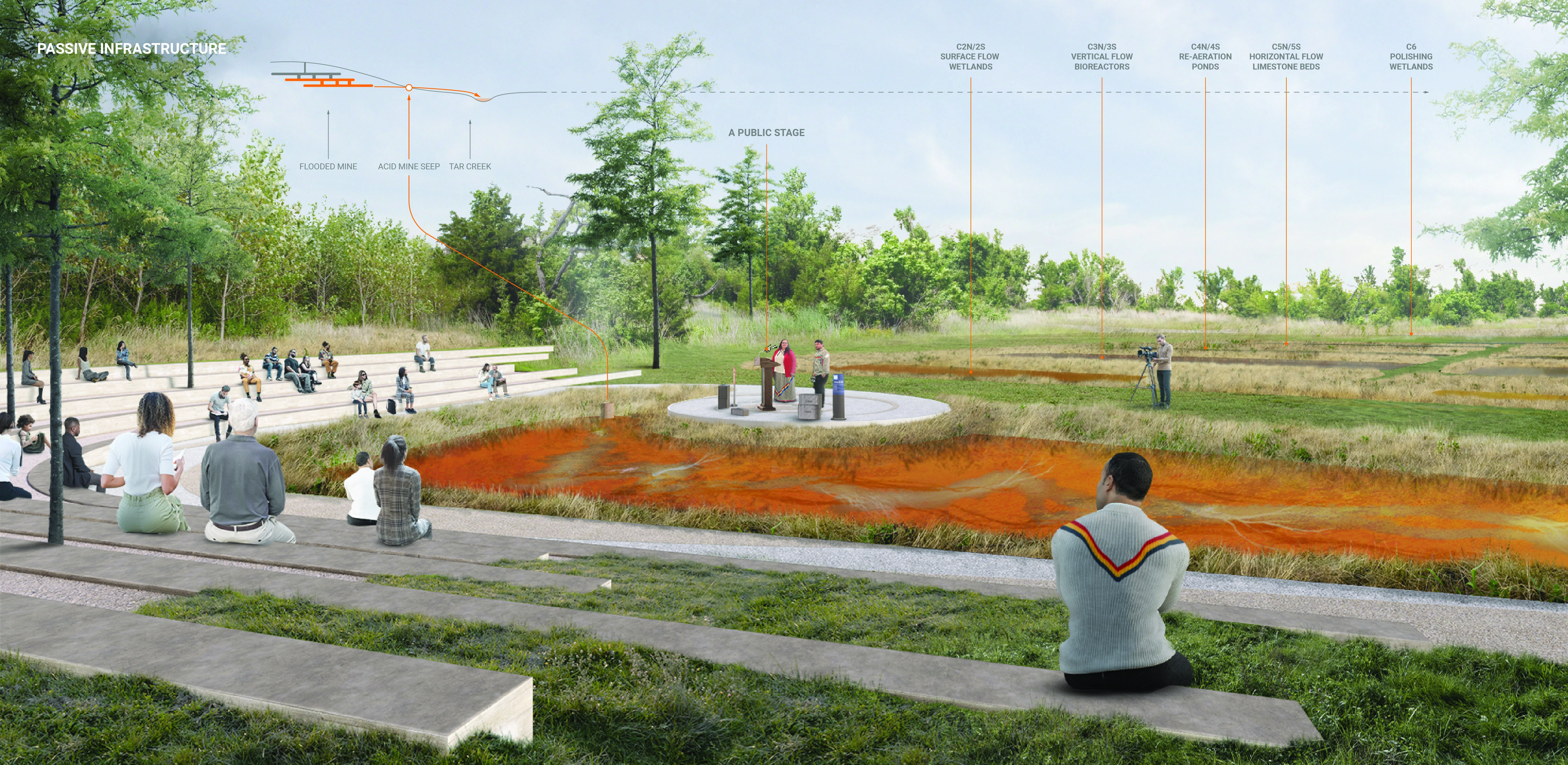
Tar Creek's contamination stems from acid mine drainage and chat runoff. Just Land proposes a two-pronged approach: passive mine drainage systems and wallow wetlands. Treatment ponds, based on the existing models of passive treatment on site today, intercept acid mine drainage. At a larger scale, wallow wetlands trap and hold floodwater, mimicking the natural water retention of buffalo wallows. By leveraging both natural processes and phenomena, Just Land begins to address water pollution in Tar Creek while enhancing ecological resilience in an age of increased storm and flooding events.
Memory in the Landscape
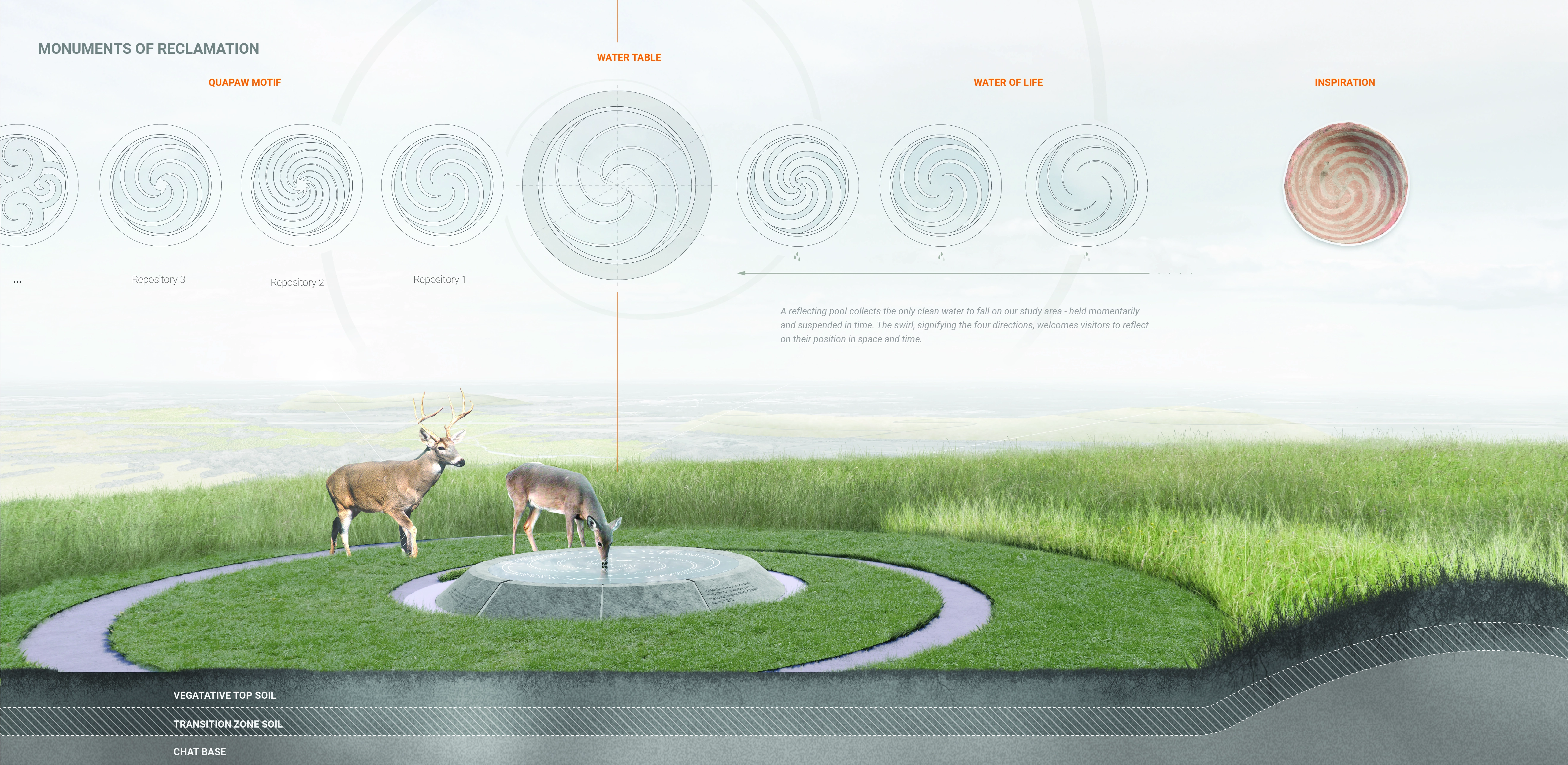
On top of each repository a simple reflecting pool will catch and hold rainwater, the only uncontaminated water in the region. Each pool will be carefully positioned within the path of the arcing sun on solstices and in direct relationship to each future repository. The relationship between earth and sky will be married at these moments in the landscape as a monument to the reclamation of both culture and land.
Sources
Quapaw Traditional Lifeways Scenario, (2008). Prepared by Barbara Harper, PhD
Following The Milky Way Path of Souls: An Archaeoastronomic Assessment of Cahokia’s Main Site Axis and Rattlesnake Causeway
An Environmental History of the Quapaws, 1673 – 1803, Joseph P. Key
Historic Area of Interest Guide, Quapaw Nation, Bandy, Lasiter
-
- Rebecca Jim - Consultant - Tar Creek Keeper and Executive Director L.E.A.D. Agency
- Joseph Byrd - Consultant - Former Chairman, Quapaw Nation
- Tim Kent - Consultant - Director, Quapaw Tribe Environmental Office
- Summer King - Consultant - Environmental Scientist, Quapaw Nation Environmental Office
- Ed Keheley - Consultant - Historian, Tri-State Mining Operations
- Martin Lively - Consultant - Grand Riverkeeper, L.E.A.D. Agency
-
- Rivercane - Arundinaria gigantea
- Blackjack Oak - Quercus marilandica
- Big Bluestem - Andropogon gerardi
- Blue Grama - Bouteloua gracilis
- Buffalo Grass - Buchloe dactyloides
- Coralberry - Symphoricarpos orbiculatus
- Curly Mesquite - Hilaria belangeri
- Indian Grass - Sorghastrum nutans
- Inland Sea Oats - Chasmanthium latifolium
- Lead Plant - Amorpha canescens
- Little Bluestem - Shizachyrium scoparium
- Loblolly Pine - Pinus taeda
- Post Oak - Quercus stellata
- Prairie Dropseed - Sporobolus heterolepis
- Red Cedar - Juniperous virginiana
- Sand Sagebrush - Artemisia filifolia
- Side Oats Grama - Bouteloua curtipendula
- Smooth Sumac - Rhus Glabra
- Splitbeard Bluestem - Andropogon ternarius
- Switchgrass - Panicum virgatum
- Winged Sumac - Rhus copallinum
Advertisement
Related Awards
Honor Award, General Design
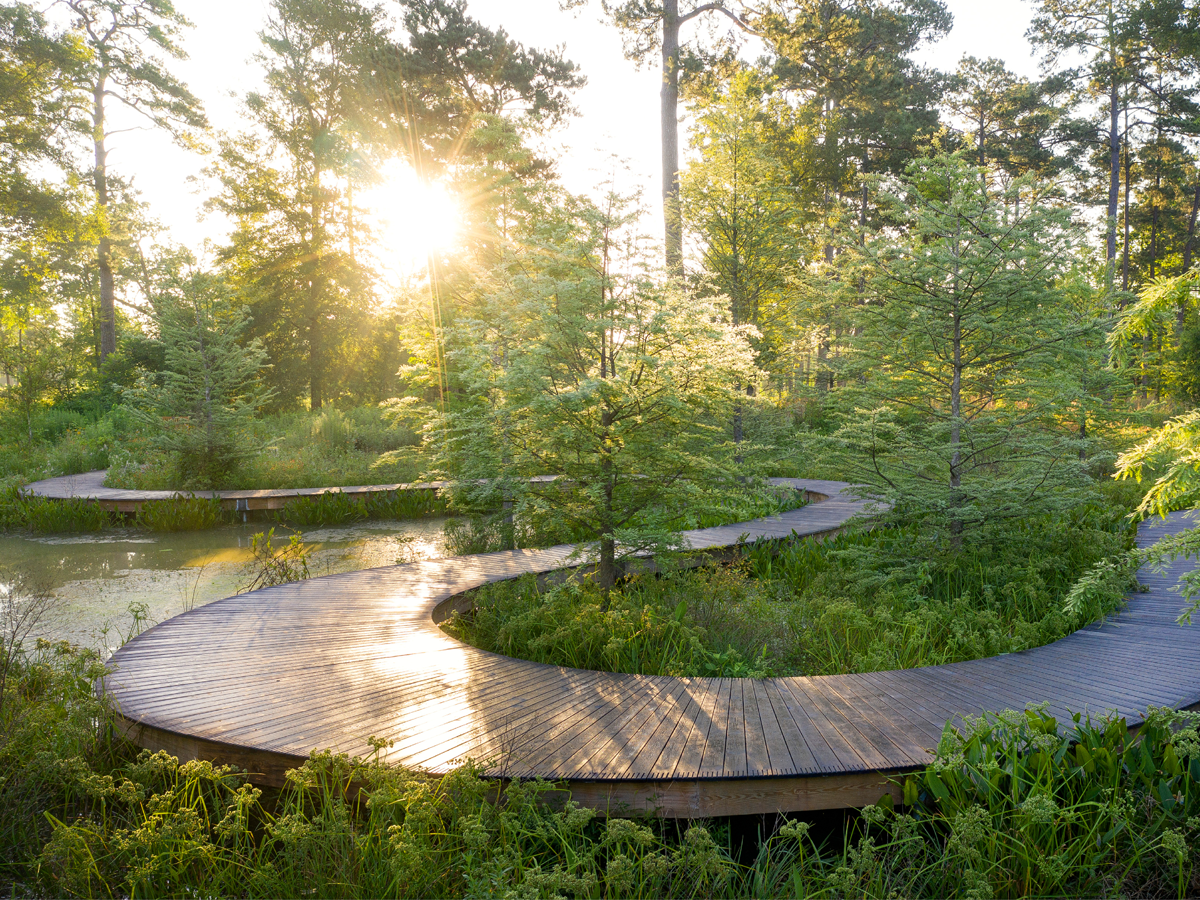
Houston Arboretum & Nature Center
The Houston Arboretum & Nature Center sits within Memorial Park, one of the largest urban parks in the United States, in one of the nation's fastest growing and most climate-challenged cities. The site's story is one of repeated loss and deliberate reinvention. Hurricane Ike in 2008 and a severe drought in 2011 destroyed much of the Arboretum's tree canopy, exposing the limits of conventional reforestation in a city defined by flooding, heat, and ecological volatility.
Related Articles

ASLA Fund
American Society of Landscape Architects Announces its 2026 Student Awards
39 Student Award winners elevate the future of the landscape architecture profession
Aug 24 2026