

.webp?language=en-US)

.webp?language=en-US)
Advertisement
2014 ASLA Student Awards
Explore:
General Design Category
Honor Awards
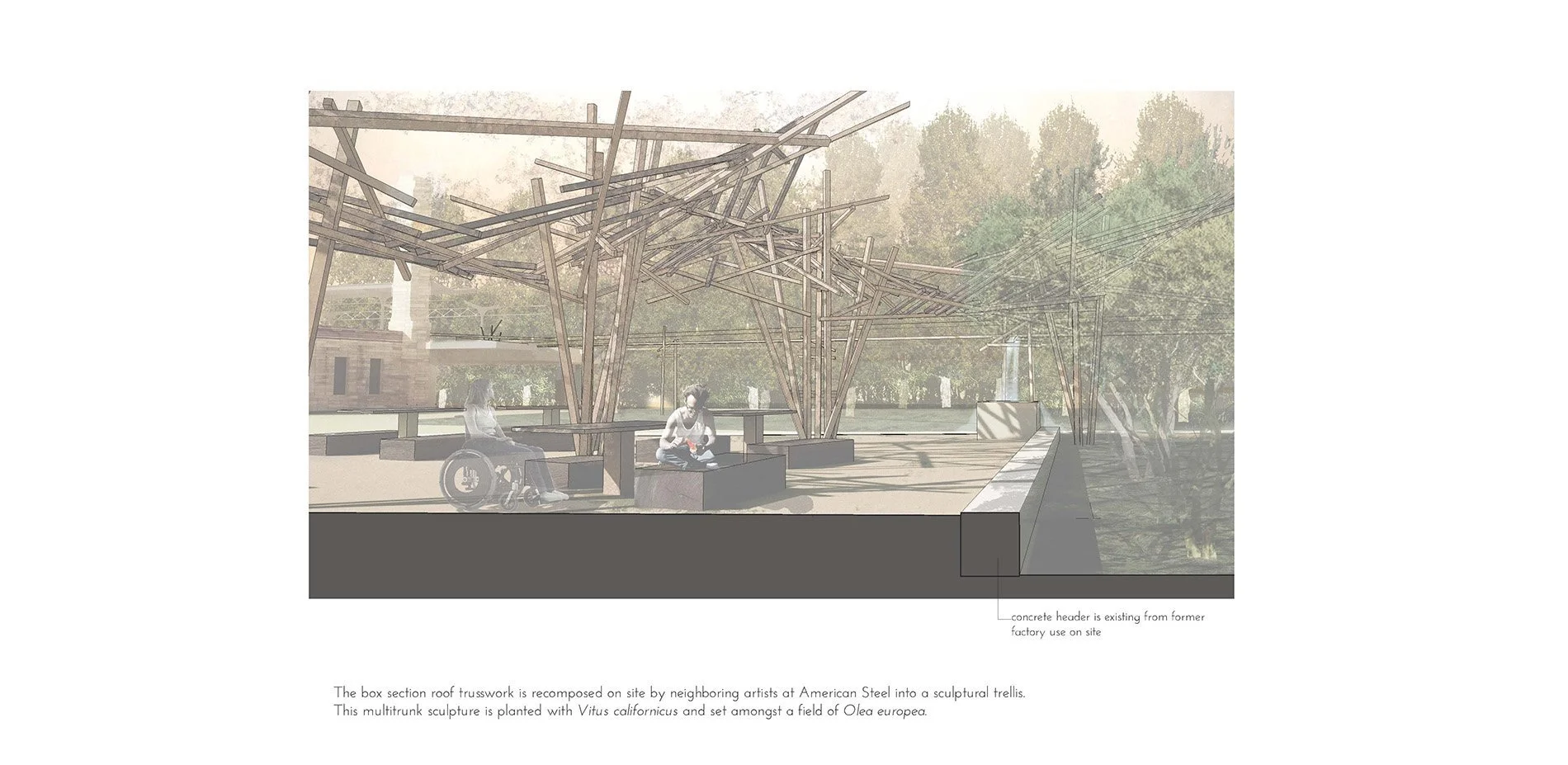
16th Street Station
Landscape architecture must help our communities confront the coming challenges of our era even with decreasing municipal financial resources. Respect, restraint, and honesty should be valued above the panacea approach which has been the trend of practice in recent years. The project is for a site in a neglected corner of poverty-striken West Oakland. Here, disenfranchised communities are suffering displacement to accommodate a growing high income tech workforce while sea level rise and parti
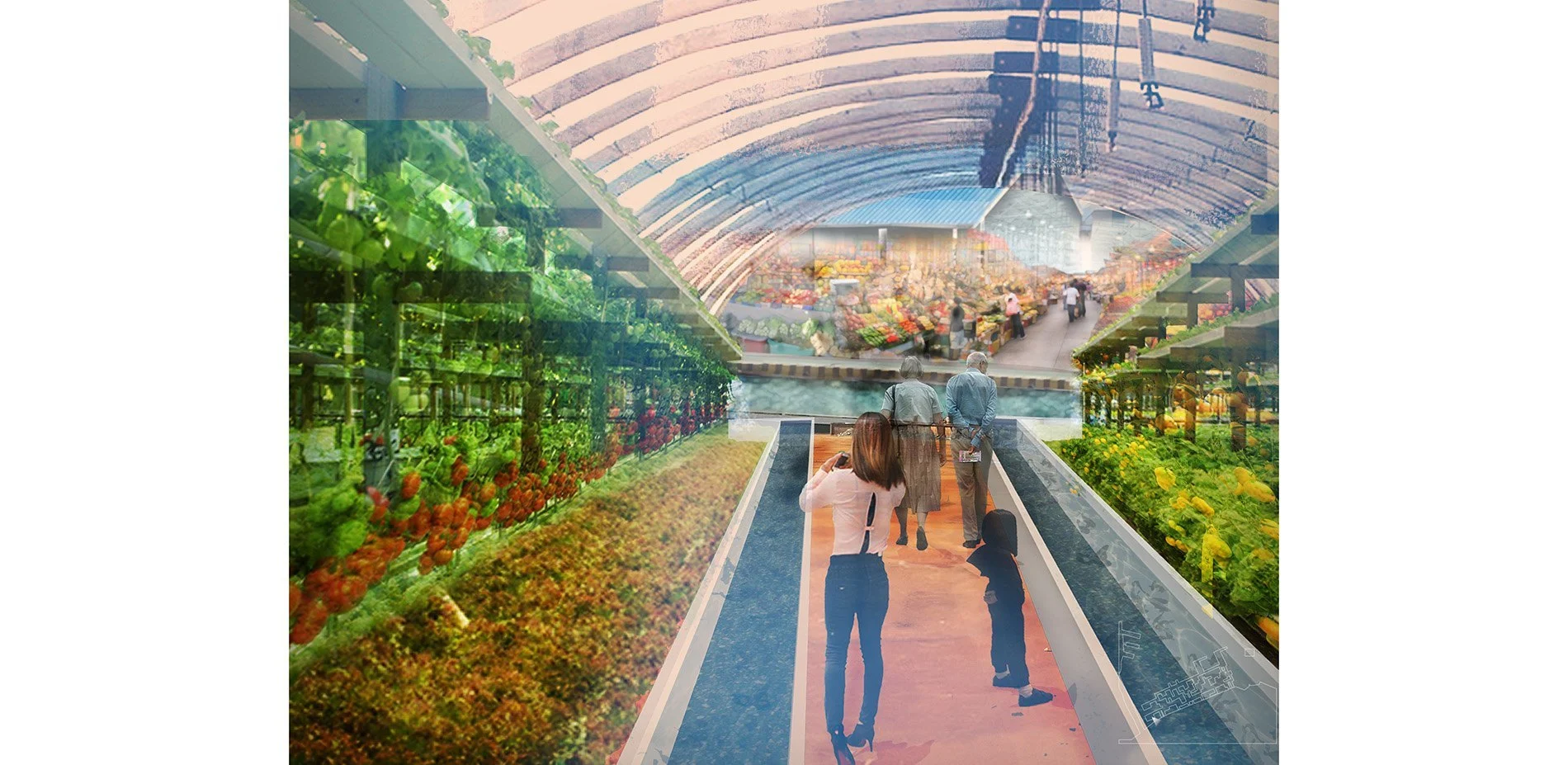
34,000 Tons of Miracles
Dreadger and barges were once in great demand but they now degenerated one of troublesome things which spoil aesthetic landscape of a port city. This rusty 34,00 ton will make miracle for social, economic, environmental and recreational sustainability. The proposal also challenges the role of landscape architecture to link up between downtown areas and residential areas. This project as a flagship plays a pivotal role in the regional regeneration.
Advertisement
Residential Design Category
Honor Awards
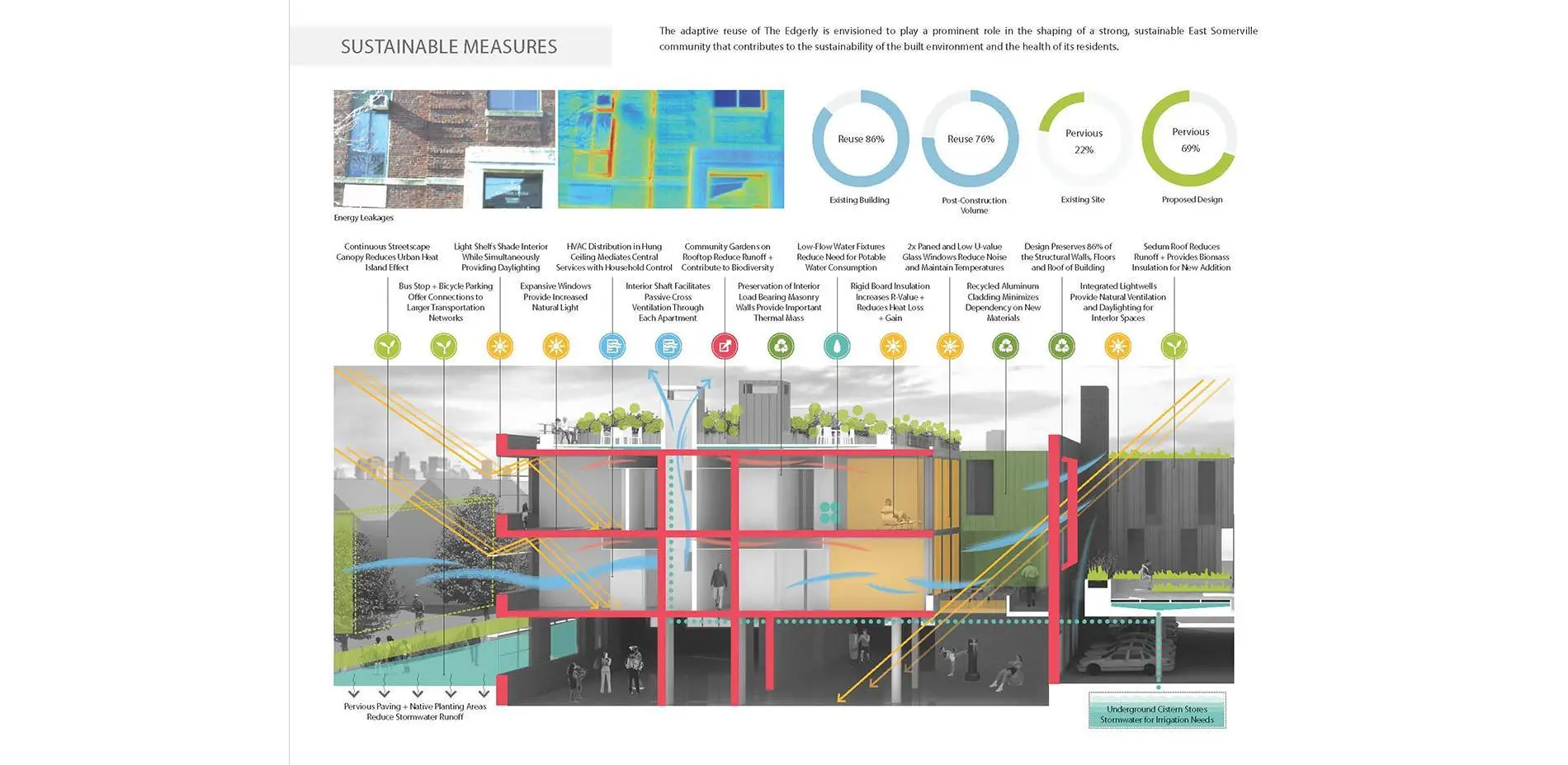
The Edgerly: The Next Generation of a Community Anchor
Extending the legacy of learning, youth development, and cultural exchange, the adaptive reuse project addresses a community’s pressing need for affordable housing and an arts-oriented community space. Three reclaimed public spaces foster social interaction, productive landscapes and education while alleviating existing physical inefficiencies. Addressing aspects of stakeholder engagement, zoning, historic preservation, sustainability and real estate finance, the proposal provides a comprehen
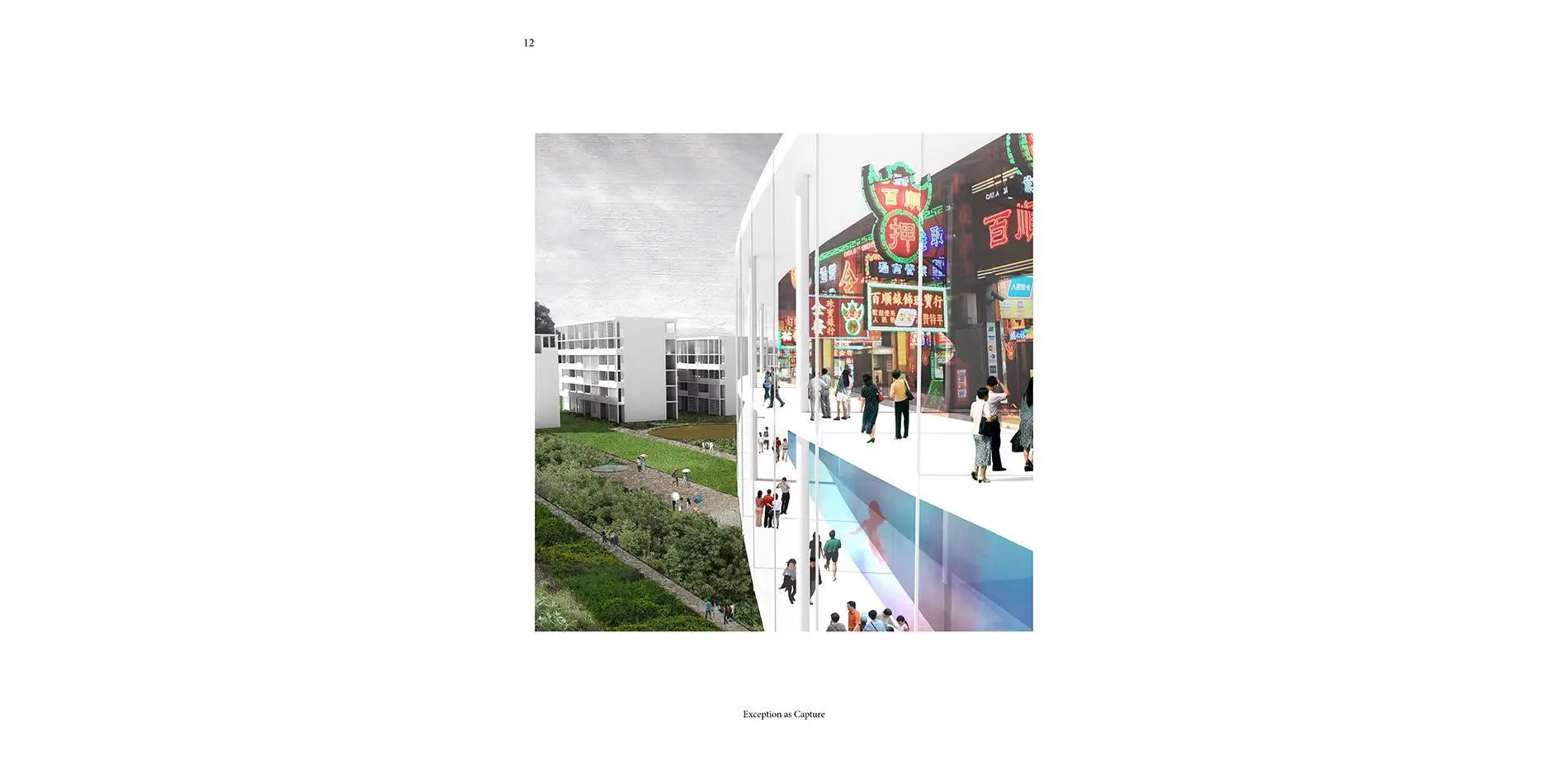
Spaces of Exception: Housing as a Common Framework
Spaces of Exception introduces a new framework for future development in Macau. The proposal intends to diminish the struggle of the city with the power and subjugation of the gambling industry through housing and landscape. The concept is achieved by large exception zone, where casino are allowed to operate, carved out of the large patterns of housing and landscape for the city. Collective grounds are restored by a large framework providing social and economic sustainable development for Mac
Analysis and Planning Category
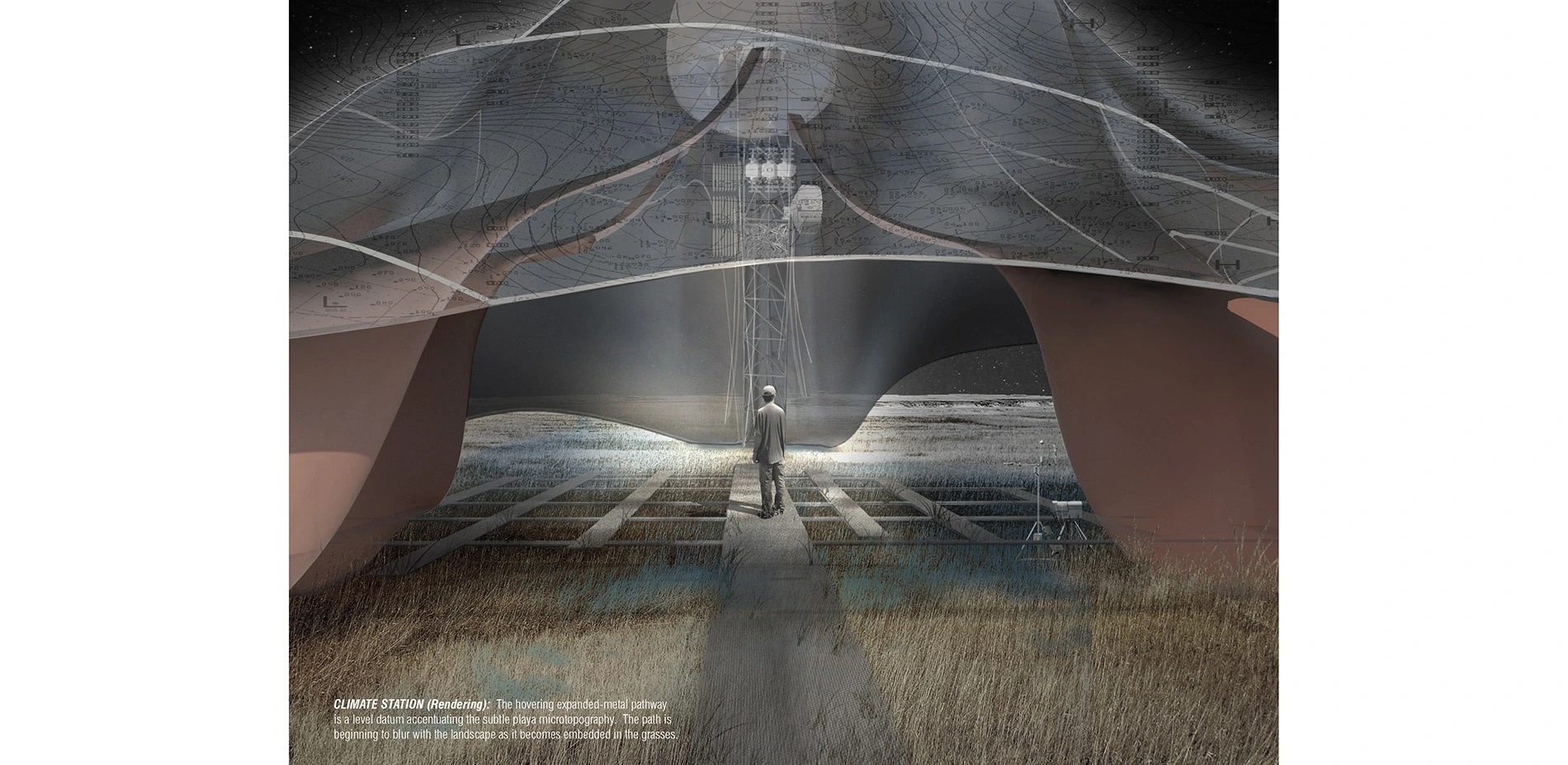
Meridian of Fertility
With current models predicting aquifer depletion as early as 2050, the Great Plains region approaches a critical threshold that will test the resilience of its productive landscape. In response, this project challenges the Jeffersonian grid by speculating that the future landscape will be annually reorganized by hyper-local climate prediction that responds to microtopography and soil typologies. A series of dynamic landscape infrastructures collect and interpret data to define a Meridian of Fertility where short grass prairie ends and insurable productivity begins.
Analysis and Planning
Honor Awards
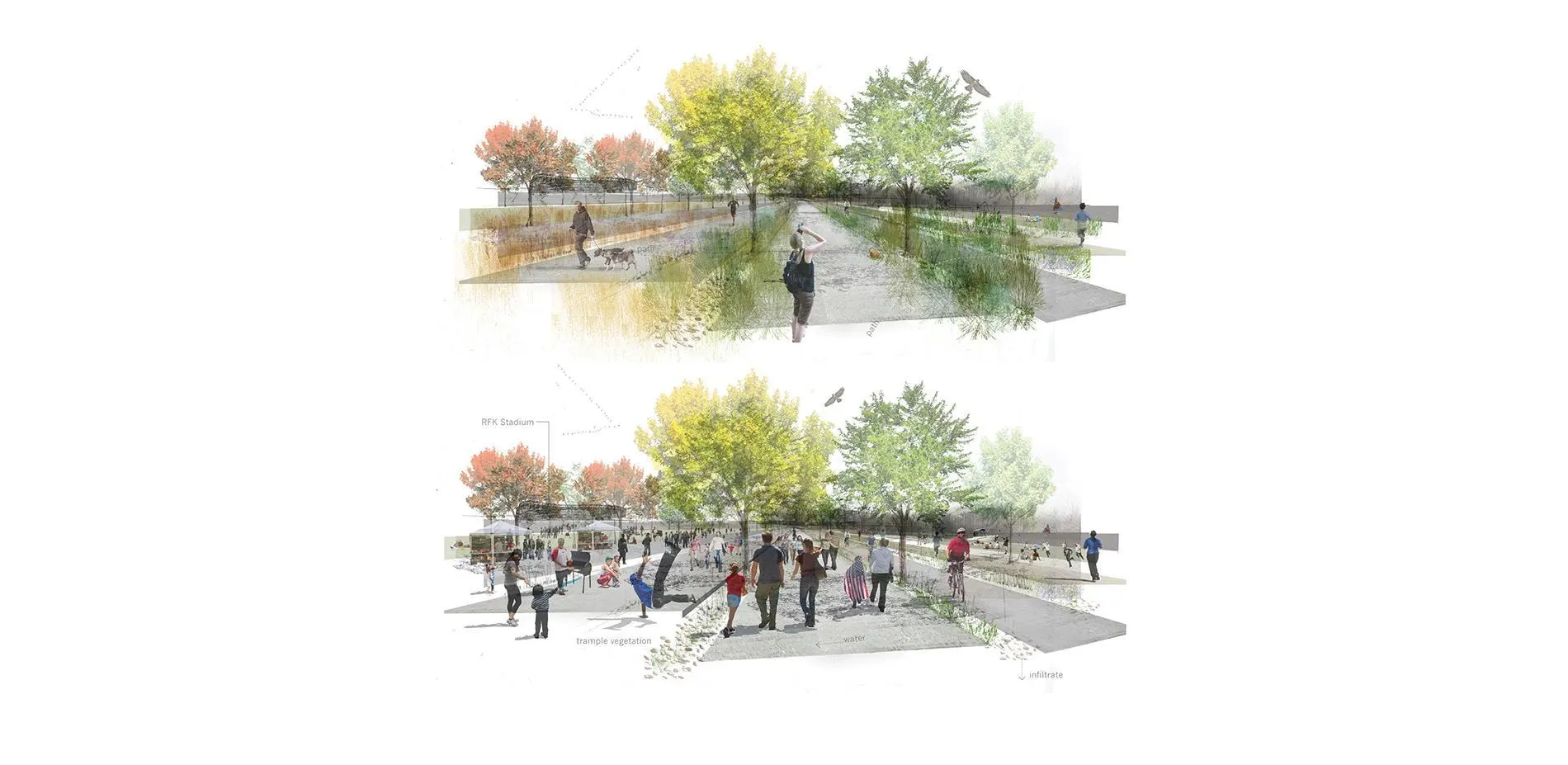
The Wild Anacostia: cultivating a thick edge typology through everyday experience
Many of today’s urban rivers are “thin parks,” spatially separated from their surrounding communities. This design thesis harnesses the momentum of urban park initiatives and the narratives associated with Anacostia River in Washington DC, to cultivate a “thick edge” typology for urban rivers. Drawing on everyday activities, the thick edge is expressed as an immersive trail, walk, and path network and acts as a guide for discovering and fostering a stronger, reciprocal relationship with the u
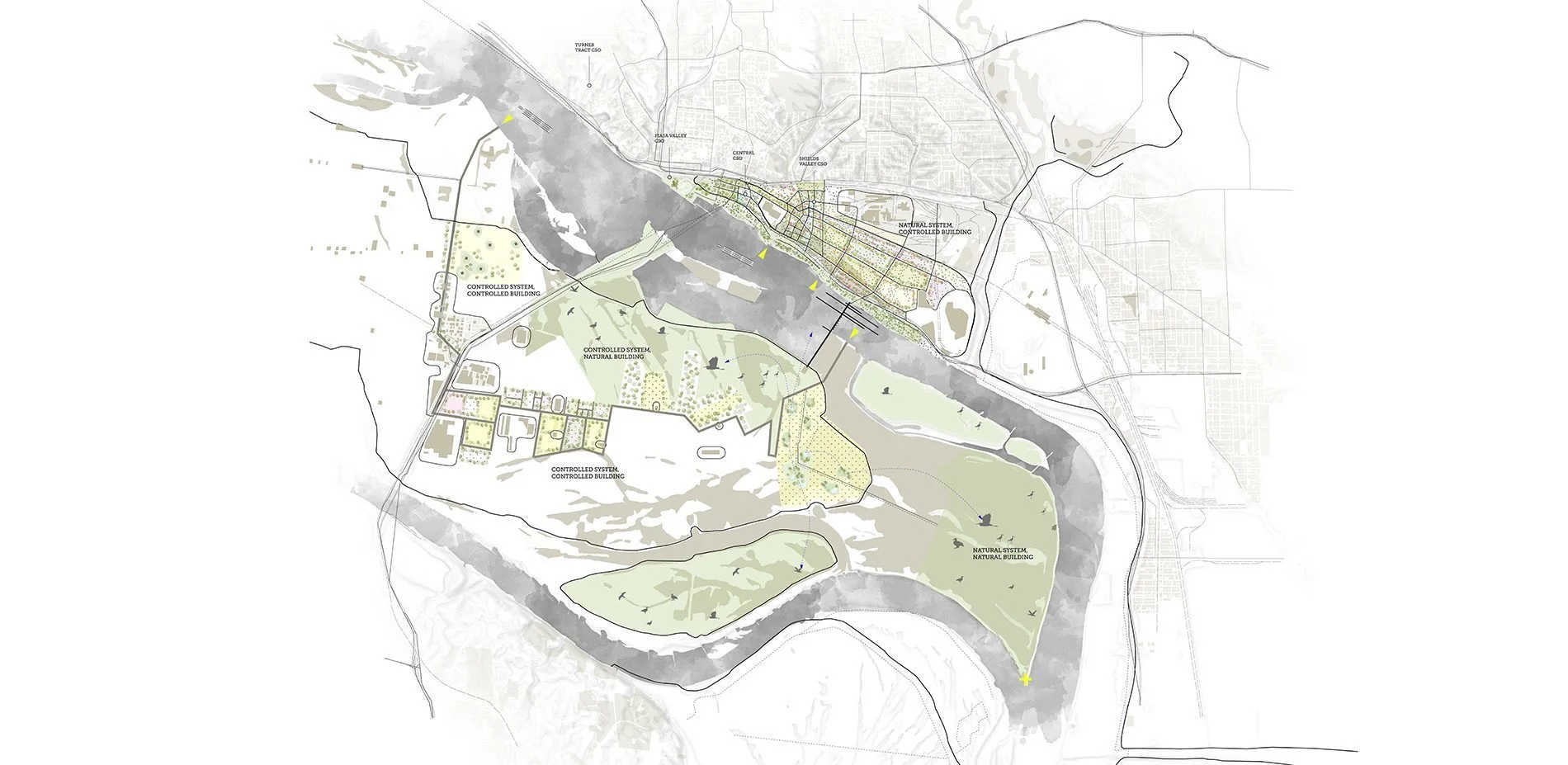
Migratory Lands Demonstration Project
We live in a world where most of our greatest waterways are highly engineered for human use, but problems of flooding and environmental degradation have prompted cities to start to rethink the ways we build and live along our rivers. Alton is a small post-industrial city that sits at the edge of one of these great rivers, right above the confluence where three continental rivers (Mississippi, Missouri, Illinois) come together. Its strategic location next to a dam, dramatic topography of bluff
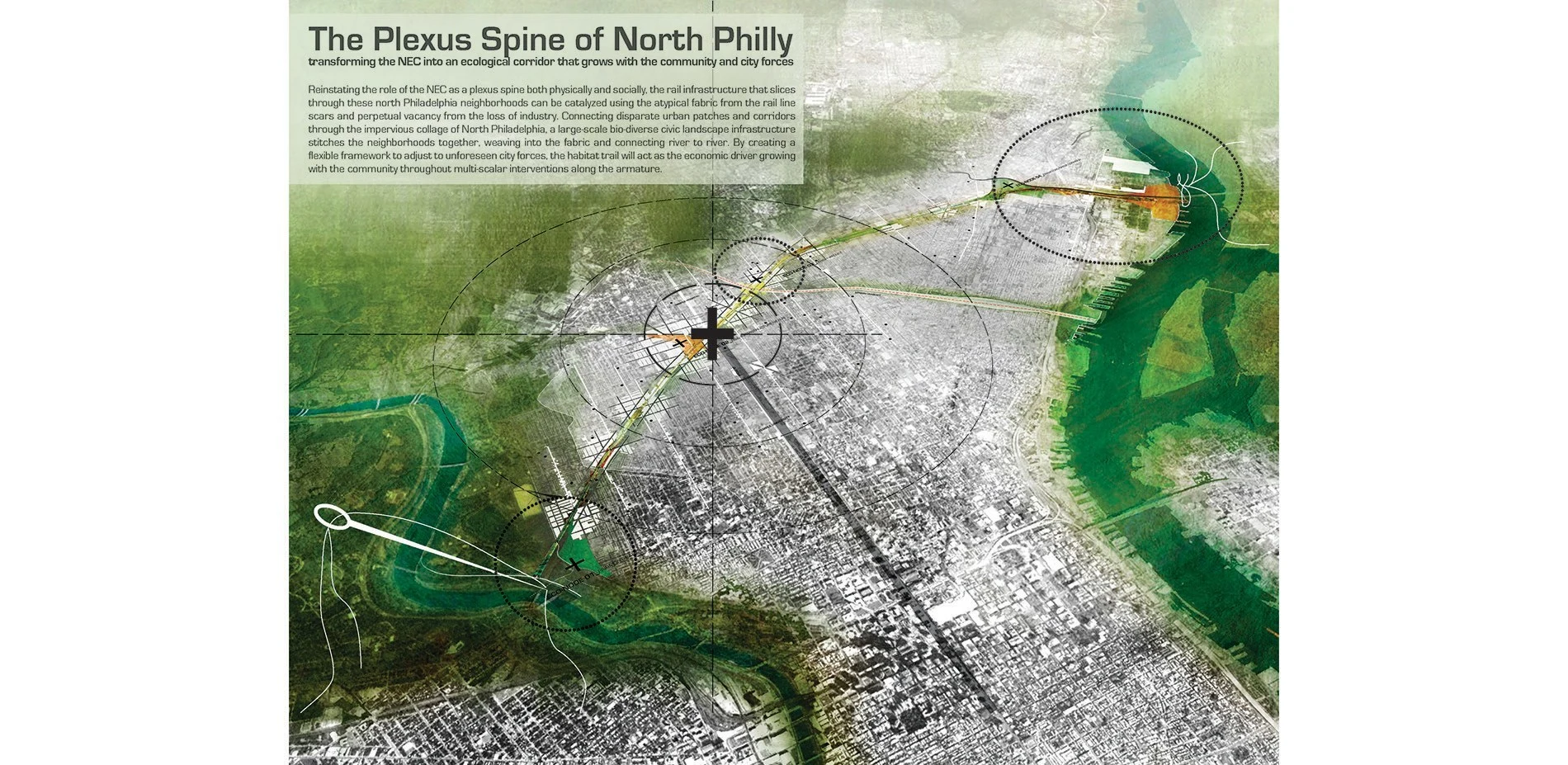
The Plexus Spine of North Philly
Reinstating the role of the Northeast Corridor as a plexus spine both physically and socially, the rail infrastructure is catalyzed using the latent potential of the atypical fabric and perpetual vacancy. A large-scale civic landscape stitches the neighborhoods together, weaving into the fabric, connecting river to river. Creating a flexible framework adjusting to city forces, the stimulant of the habitat trail acts as the development driver growing with the community throughout multi-scalar
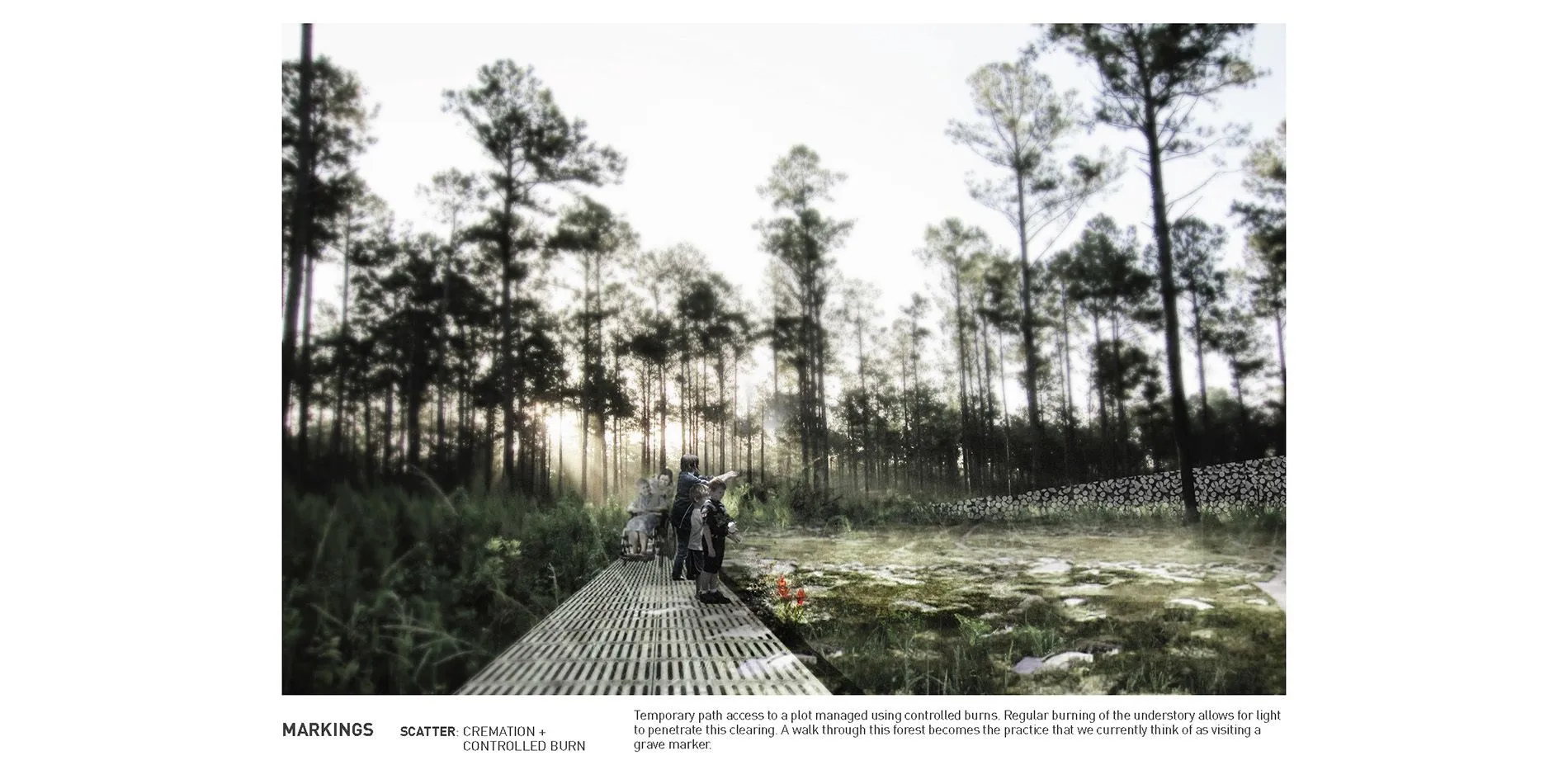
Markings
In death, we become substance; carbon, nitrogen, substance of the land. This cemetery returns that substance to the land. Disposition practices that re-integrate body and bone into biogeochemical cycles amplify regrowth and regeneration following a devastating wildfire in the Bastrop Lost Pines ecoregion of Texas.
This of view death and disposition situates itself within a growing movement away from unsustainable burial practices and towards the cemetery as ex-urban green infrastructu
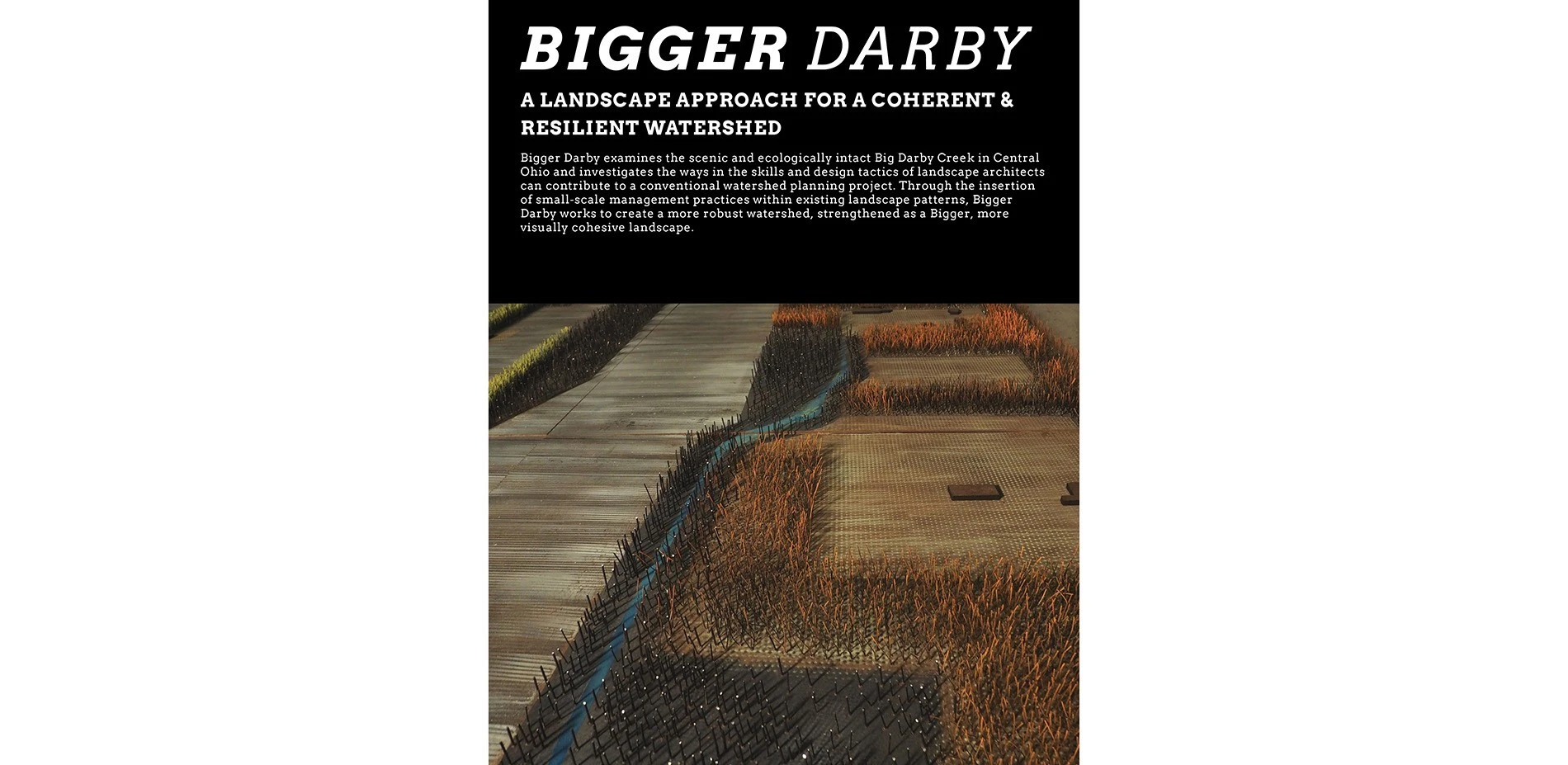
Bigger Darby: A Landscape Approach for a Coherent & Resilient Watershed
Bigger Darby examines the scenic and ecologically intact Big Darby Creek in Central Ohio and investigates the ways in the skills and design tactics of landscape architects can contribute to a conventional watershed planning project. Through the insertion of small-scale management practices, within existing landscape patterns, Bigger Darby works to create a more robust watershed, strengthened as a Bigger, more visually cohesive landscape.
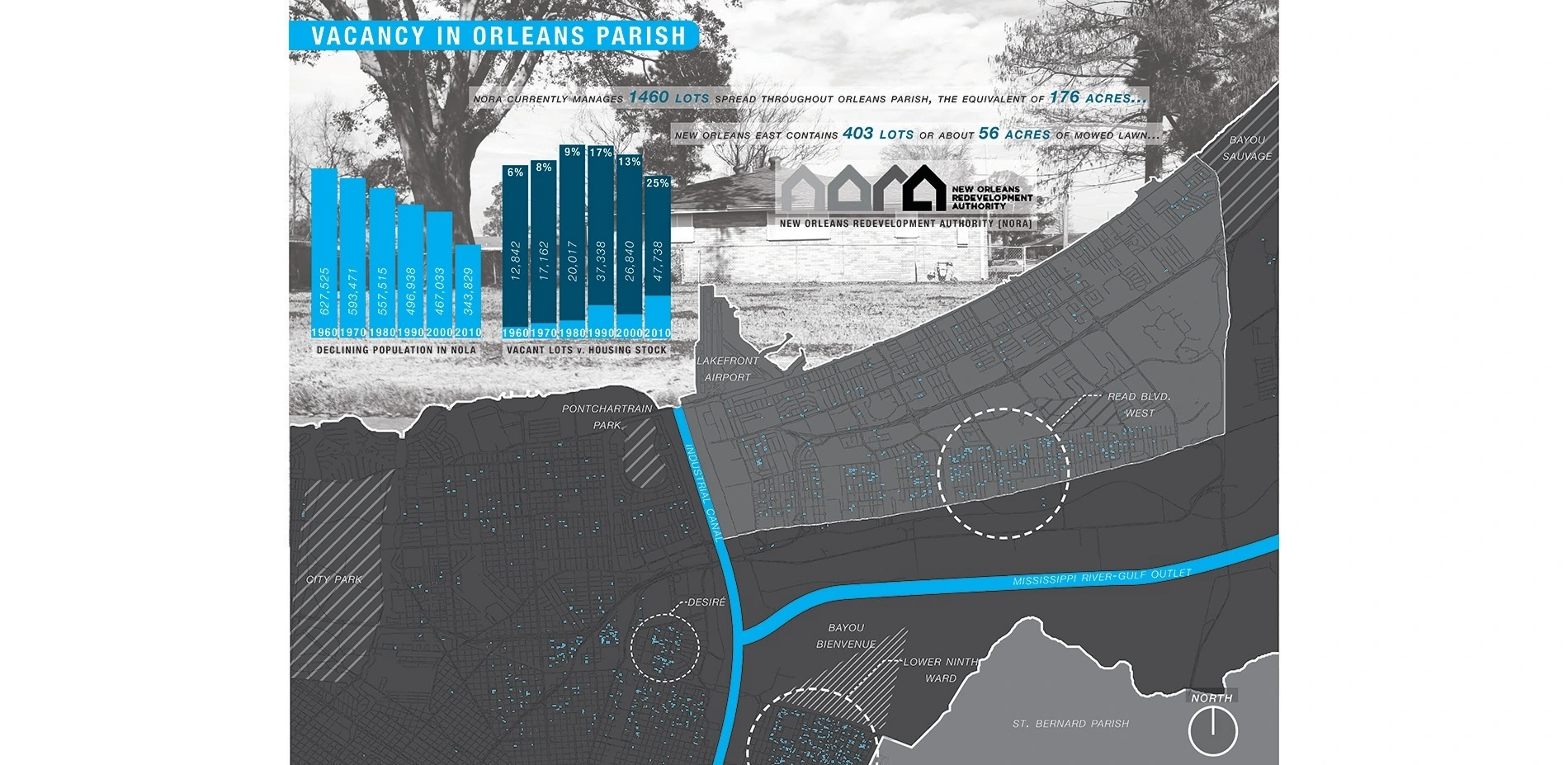
Beyond Turf: Reinterpreting the Ecological Management of Vacant Landscapes
New Orleans East, the loosely defined suburban neighborhood of Orleans Parish has been battling increasing residential vacancies scattered throughout the area and continues to worsen. Currently, all publically owned vacant lots in the parish are homogenously turfed with scheduled mows. Beyond Turf seeks to maximize the ecological benefits of the lots by a native plant palette that will improve the on-site ecosystems of these dispersed lots and create a new framework for managing vacancy.
Communications Category
Honor Awards
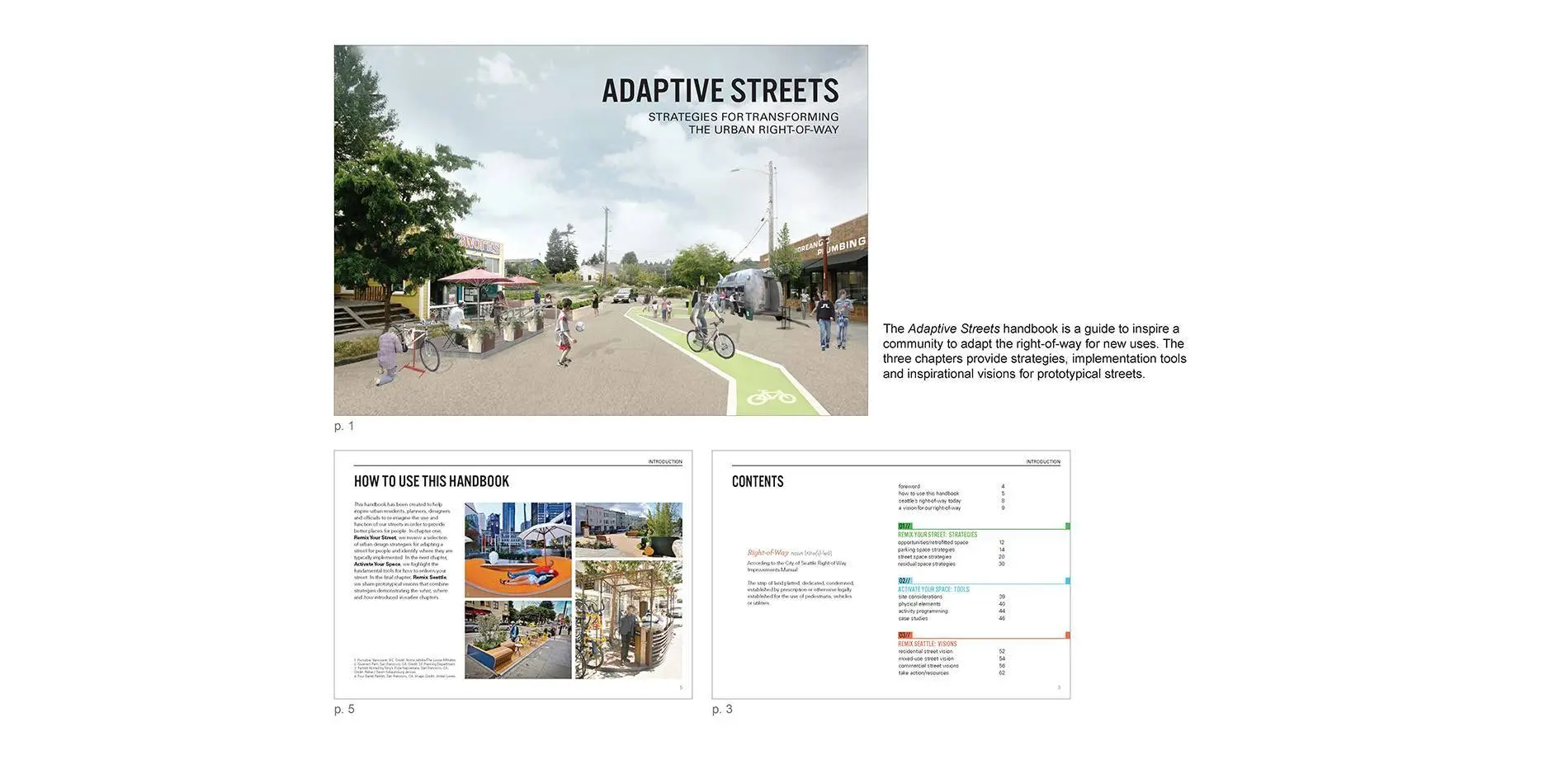
Adaptive Streets: Strategies for Transforming the Urban Right-of-Way
Adaptive Streets: Strategies for Transforming the Urban Right-of-Way is an illustrated handbook to inspire and guide citizens, planners and officials to re-imagine how our streets can be adapted to increase utility and delight as well as enhance human and environmental health. The book presents a collection of strategies, demonstrating how they can be implemented in prototypical streets. Adaptive Streets can be used as a community empowerment tool to create new visions to transform the right-
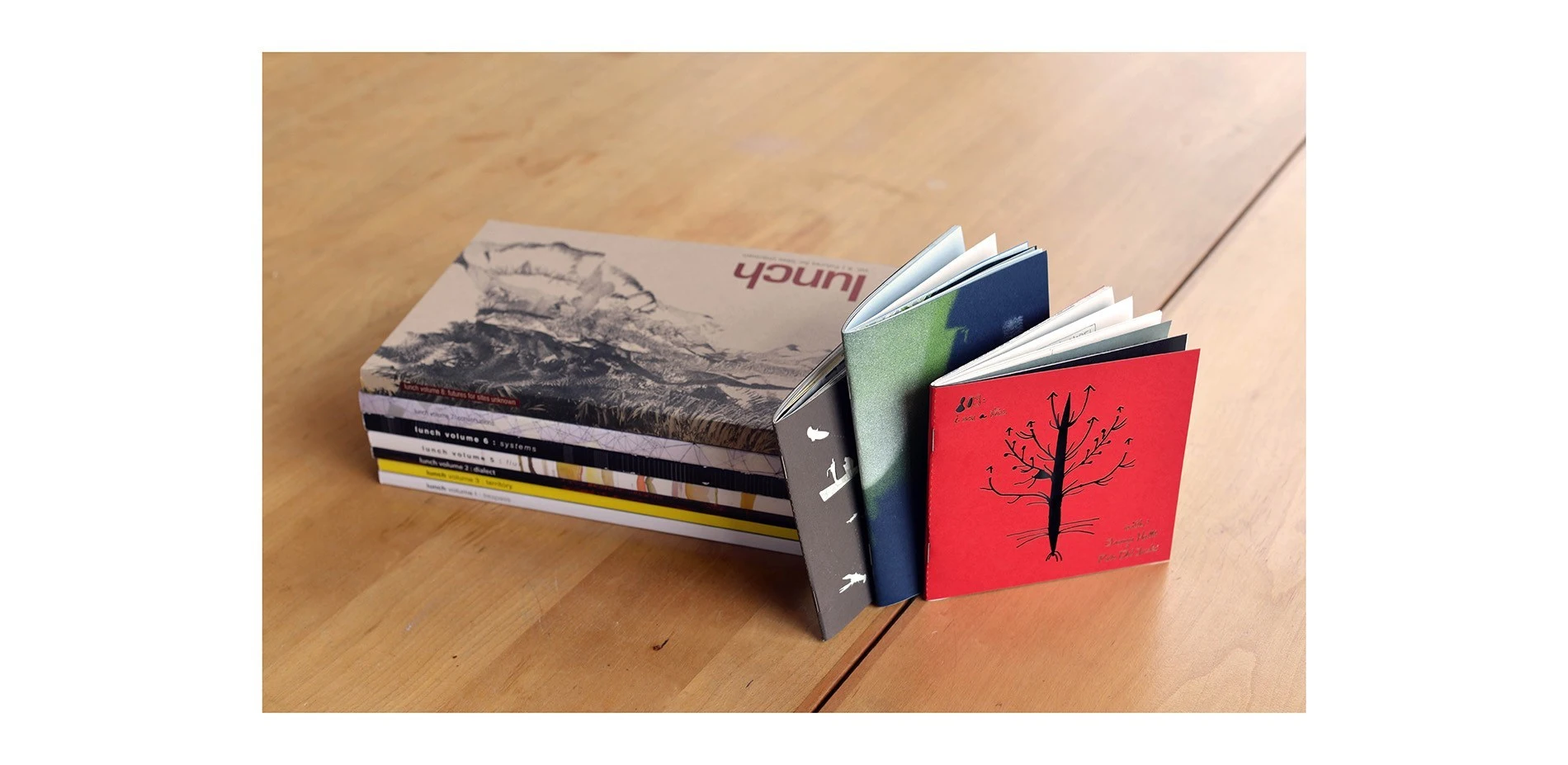
SNACKs
SNACKs are a unique project of the student design journal at our University. Akin to monographs, these serial short-run publications are produced throughout the year and thus quickly respond to much-needed coverage of the impressive array of internationally known speakers that visit and present workshops at our School. SNACKs create opportunities for students to get involved with publishing as well as offer a venue for material experimentation.
Research Category
Honor Awards
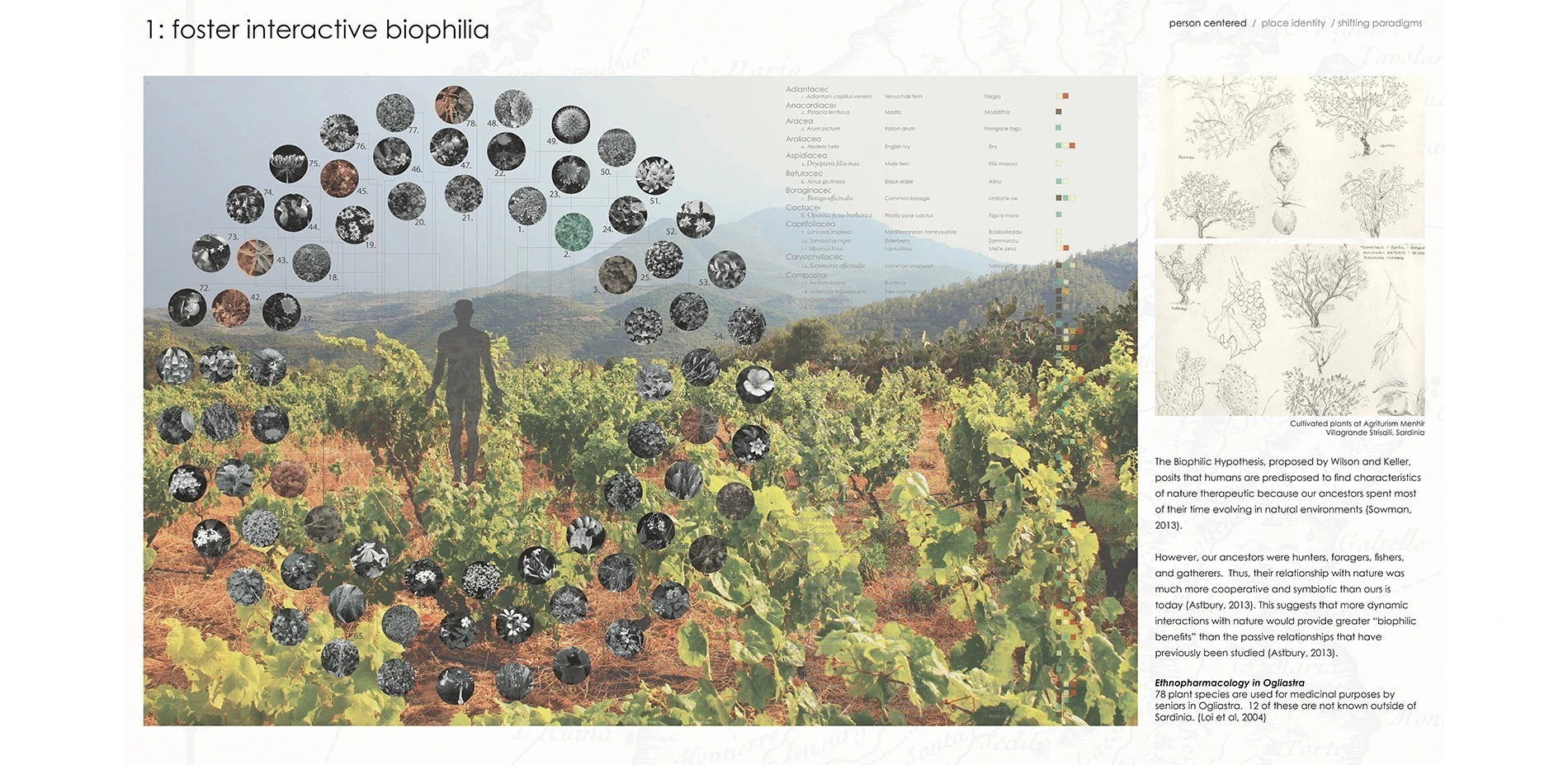
A Spatial Analysis of the Uncharted Territory of Growing Old
This research explores the link between healthy longevity and place attachment in regions of extraordinarily high longevity. Building off of on-site interviews from a previous project, I spatialized and tested themes gleaned on-site; synthesized them among existing interdisciplinary work in the fields of public health, social sciences and cultural geography; and developed a set of design principles for public landscapes that can foster cultures of health and holistic well-being. This synthesi
Student Collaboration Category
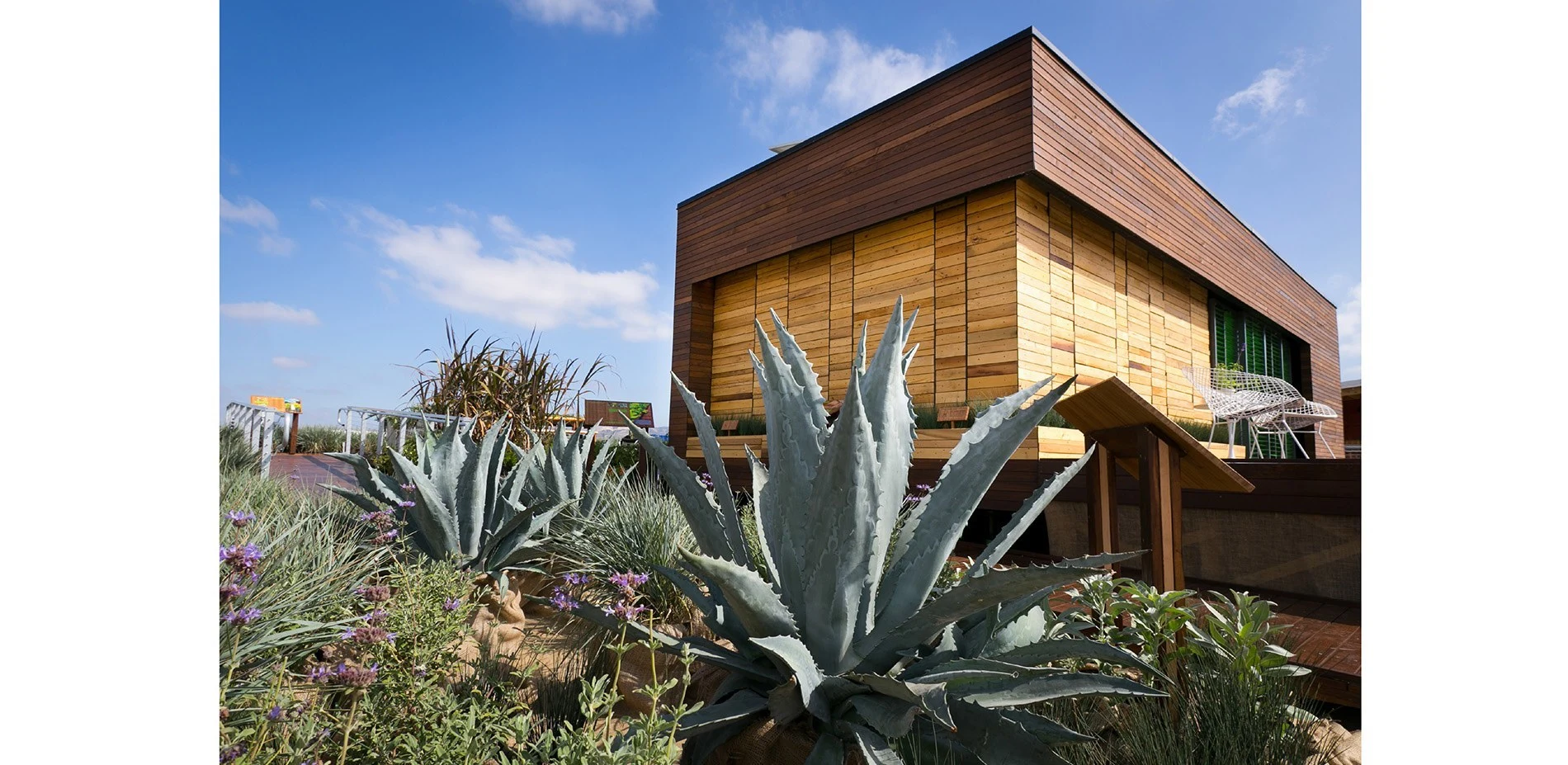
Harvest Home
The future of sustainable residential design requires a paradigm shift from ‘greenwashing’ to fusing function, aesthetics, and sound regenerative ecological principles that nurture the environment and the human spirit. Harvest Home, a 2013 Solar Decathlon entry, showcased an affordable zero-energy house that harvests sun, water and wind to promote experiential healing for a military veteran battling physical and emotional trauma. Each landscape element interacts with the architecture to foster reconnection to family, community, and Earth.
Student Collaboration
Honor Awards
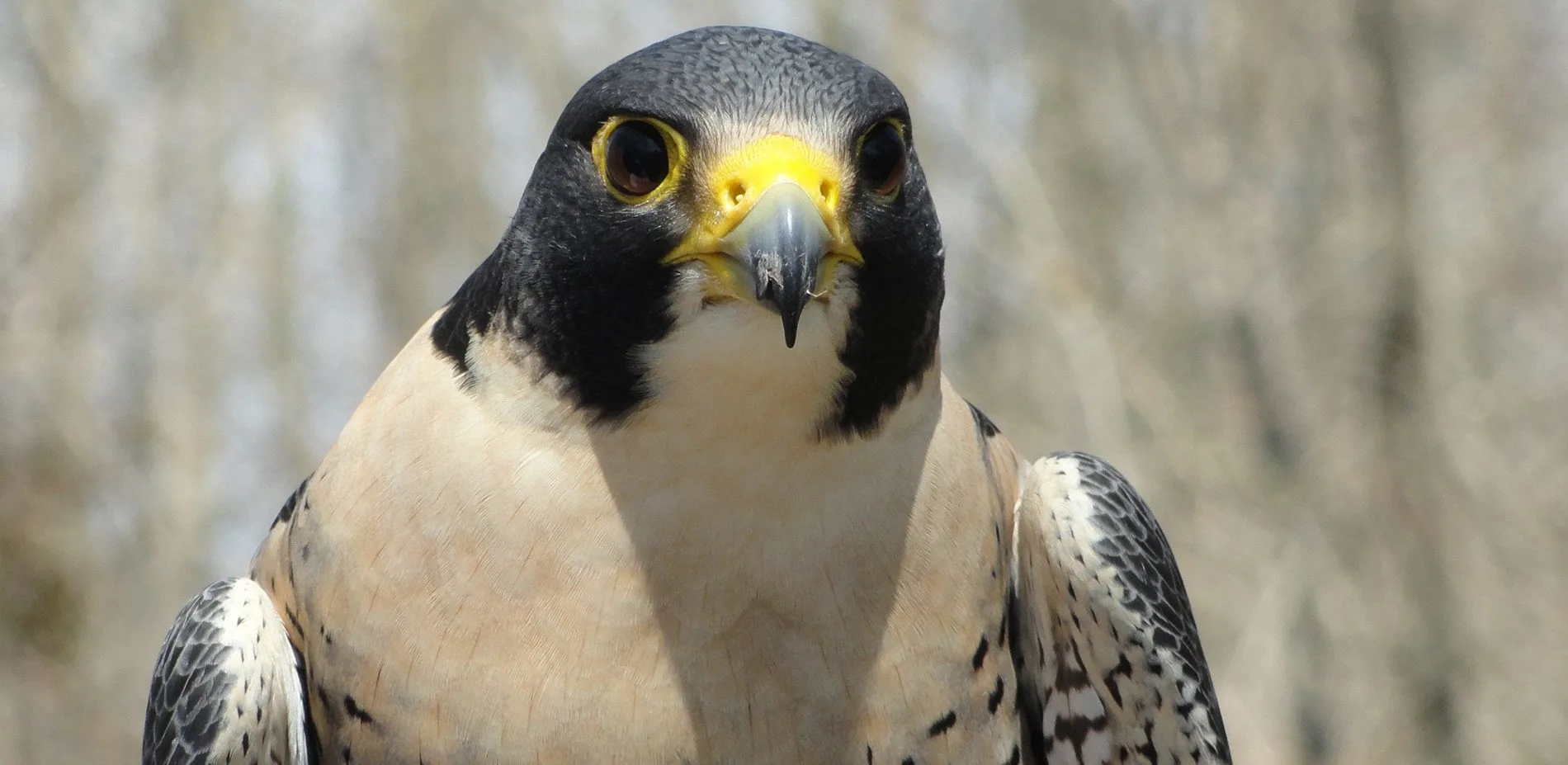
The Prairie Club + Redefined
Twelve students representing seven university departments celebrated the Prairie Club’s accomplishments through film, animation, art, and children’s books. The team created eleven film and animation shorts describing the natural and cultural landscapes of the dunes, artwork that advertised each short, and two children’s books. The collaborative project broadcasts the art, science, and conservation tenets of landscape architecture.

The Vietnam Veterans Memorial: History, Design, and the American People
The Vietnam Veterans Memorial tablet app represents a collaboration among 23 students from 16 disciplines. The app synthesizes the history, design, and context of the Memorial with cultural history and current social practices. Compelling narratives with images, audio, text, video and animations, are offered, with the intent of reaching the millions who visit the Memorial each year, particularly middle-school age children who are the largest demographic of visitors to the National Mall.
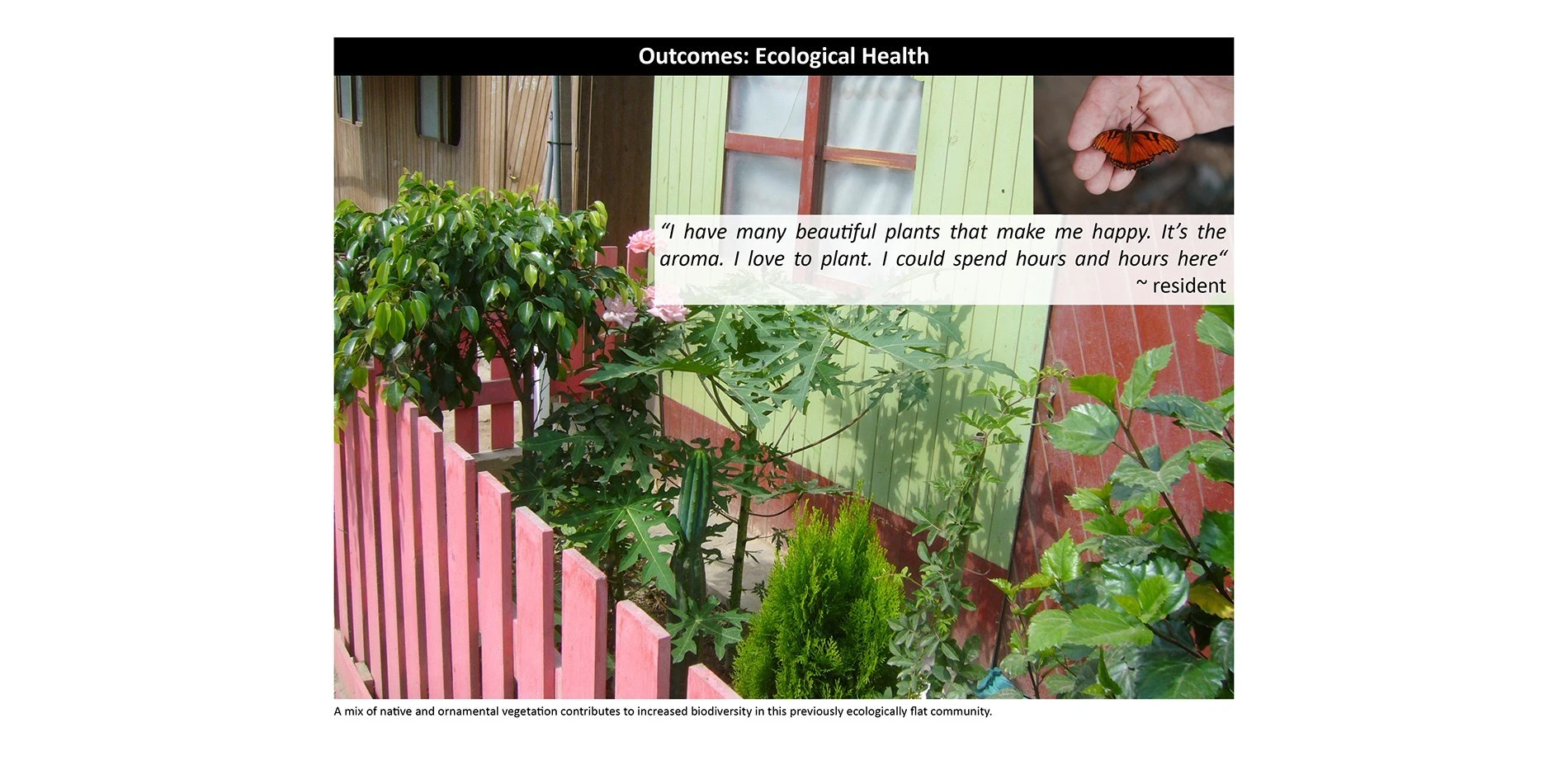
Gardens, Greenspace and Health in Eliseo Collazos
The Gardens, Greenspace and Health Project is a participatory design, implementation and research project in the informal settlement of Eliseo Collazos, Lima, Peru Residents constructed twenty-‐nine household gardens in partnership with an interdisciplinary team of health researchers and designers. Gardens are improving physical, mental, social, economic and environmental health in this impoverished urban community.
Community Service Category
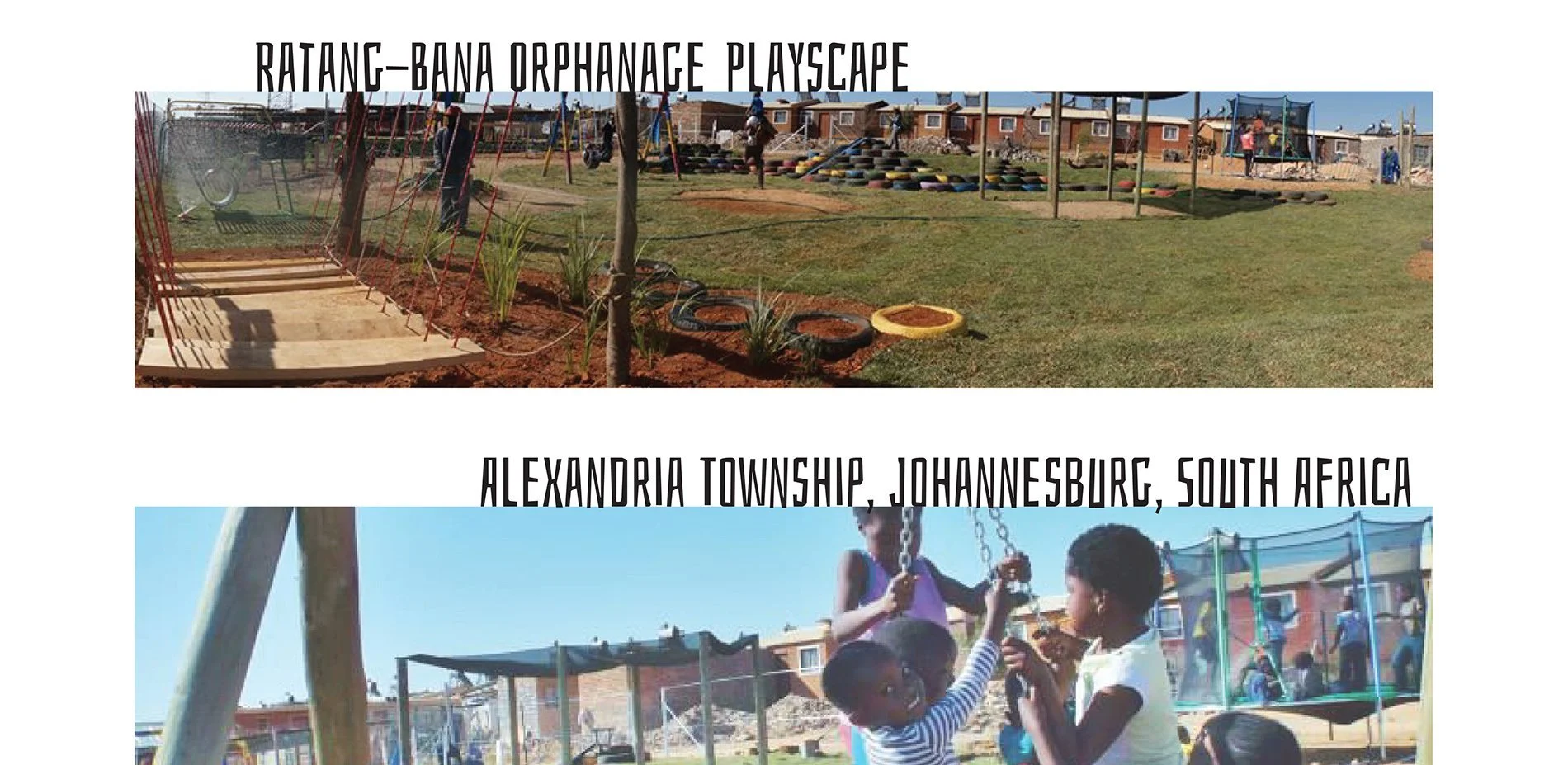
Ratang Bana AIDS Orphanage Playscape
Thirteen undergraduate landscape architecture students undertook the design and construction of a playground for the Ratang Bana Aids Orphanage in Alexandra Township, South Africa. In partnership with Kidlinks World charity, the project overcame constraints of time and money to provide hope for the more than 350 children the orphanage serves. The project strengthened the physical presence of the orphanage in the community, enhanced child development, and provided a safe environment for the children.
Community Service
Honor Awards
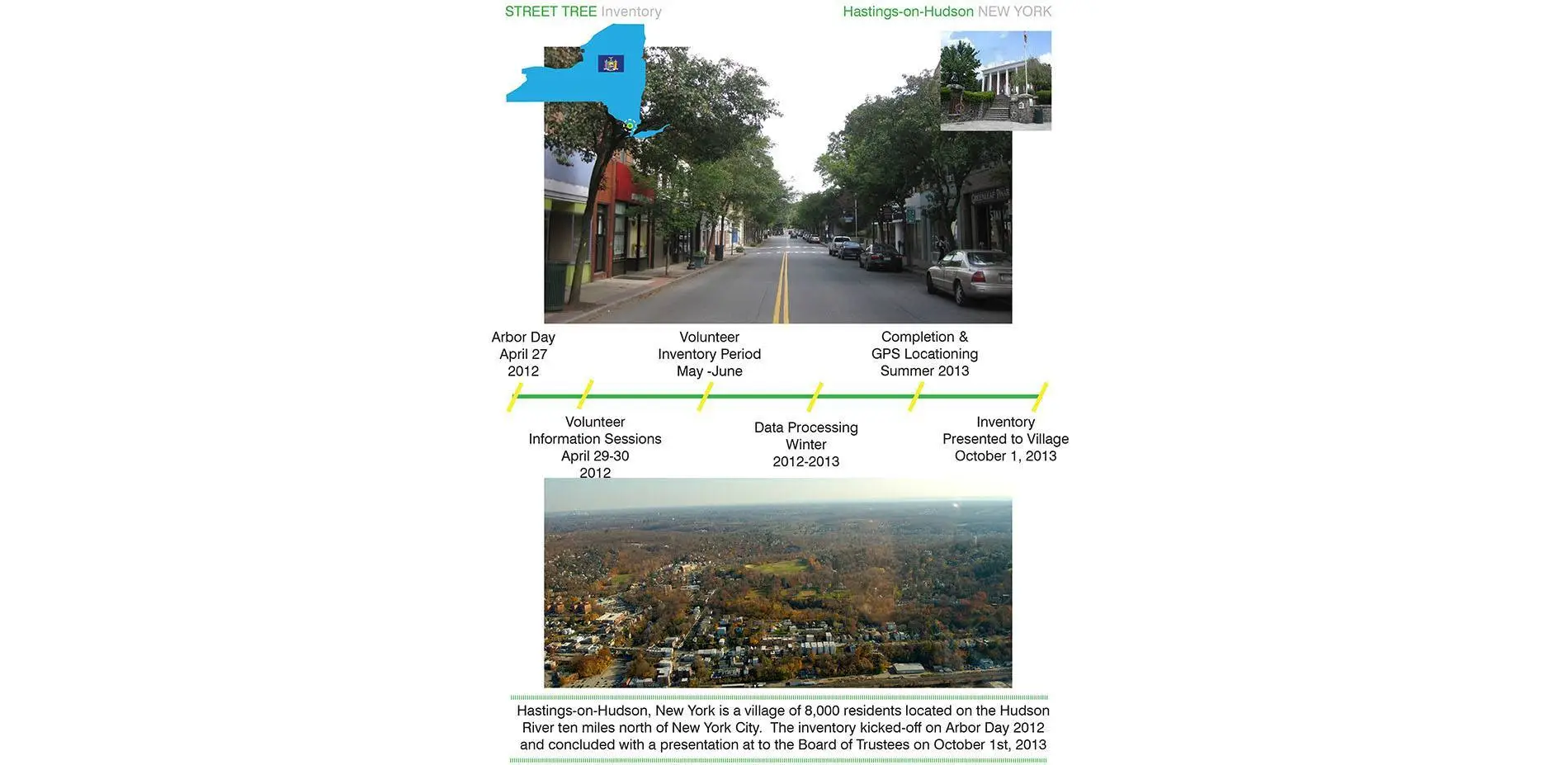
The Hastings-on-Hudson Community Street Tree Inventory
The Hastings-on-Hudson Street Tree Inventory engaged village residents in the creation of a dynamic database to facilitate caretaking of publicly-owned trees. One hundred volunteers served as neighborhood tree stewards receiving basic training in tree identification and observation collection. Around their blocks, the stewards recorded data on species, location, size, condition, and planting spaces. Analysis informed a planting and green infrastructure protocol for the village towards encoura
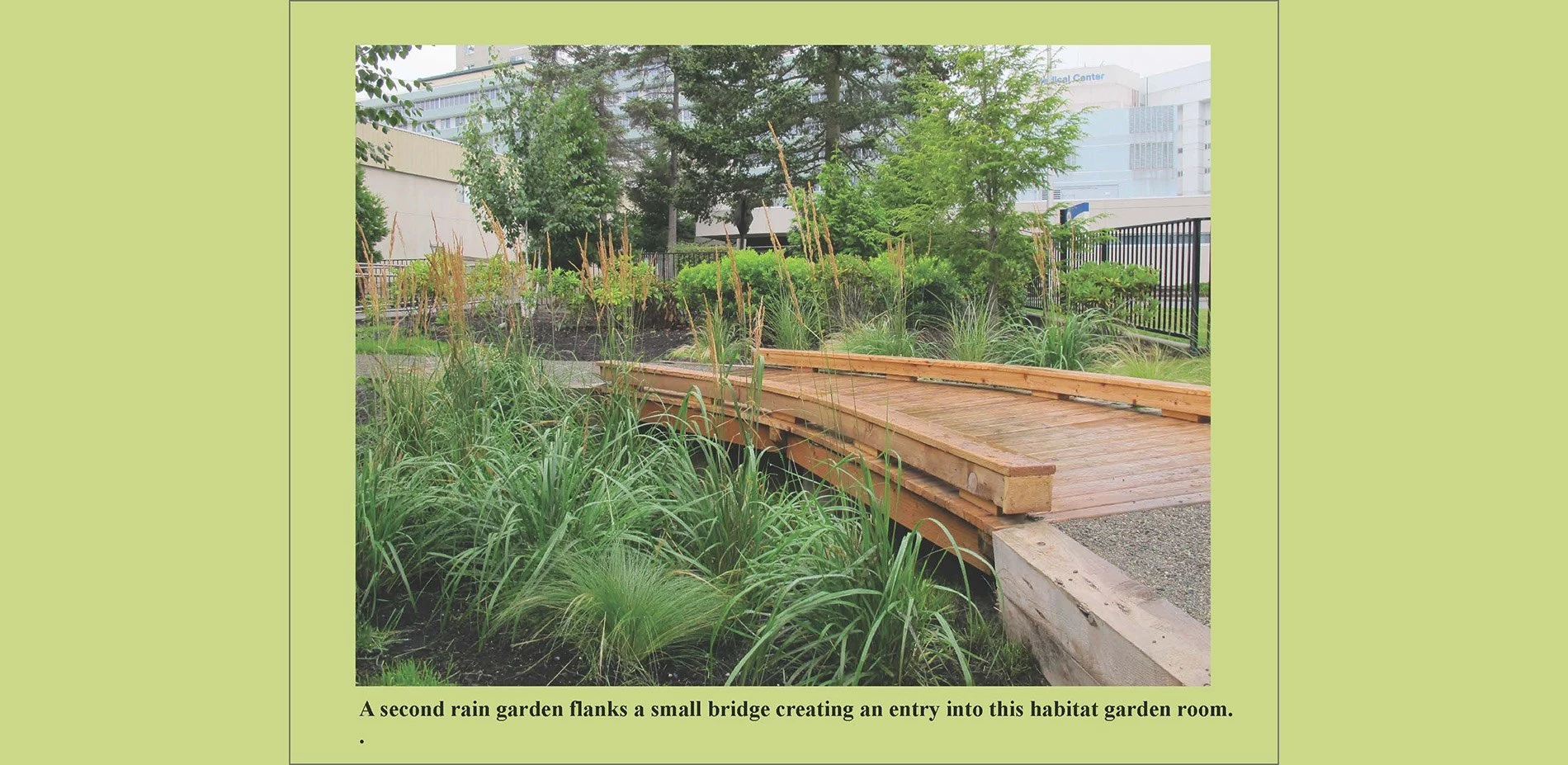
Creating Home, A Healing Garden for Veterans and their Families
The gardens at the Fisher House in the Veterans Administration Medical Center offer a place that is familiar and creates a sense of belonging and connection. Residents use the gardens for exercise, children's play, contemplation, gardening, sensory stimulation and escape, all qualities that the families requested and felt were important to their well-being, and to what would help them endure the stress and uncertainty they face while residing at the Fisher House for medical treatment.