
.webp?language=en-US)

.webp?language=en-US)
Sh*tscape: Mumbai’s Landscape In-Between
Bret Betnar, Student ASLA
-
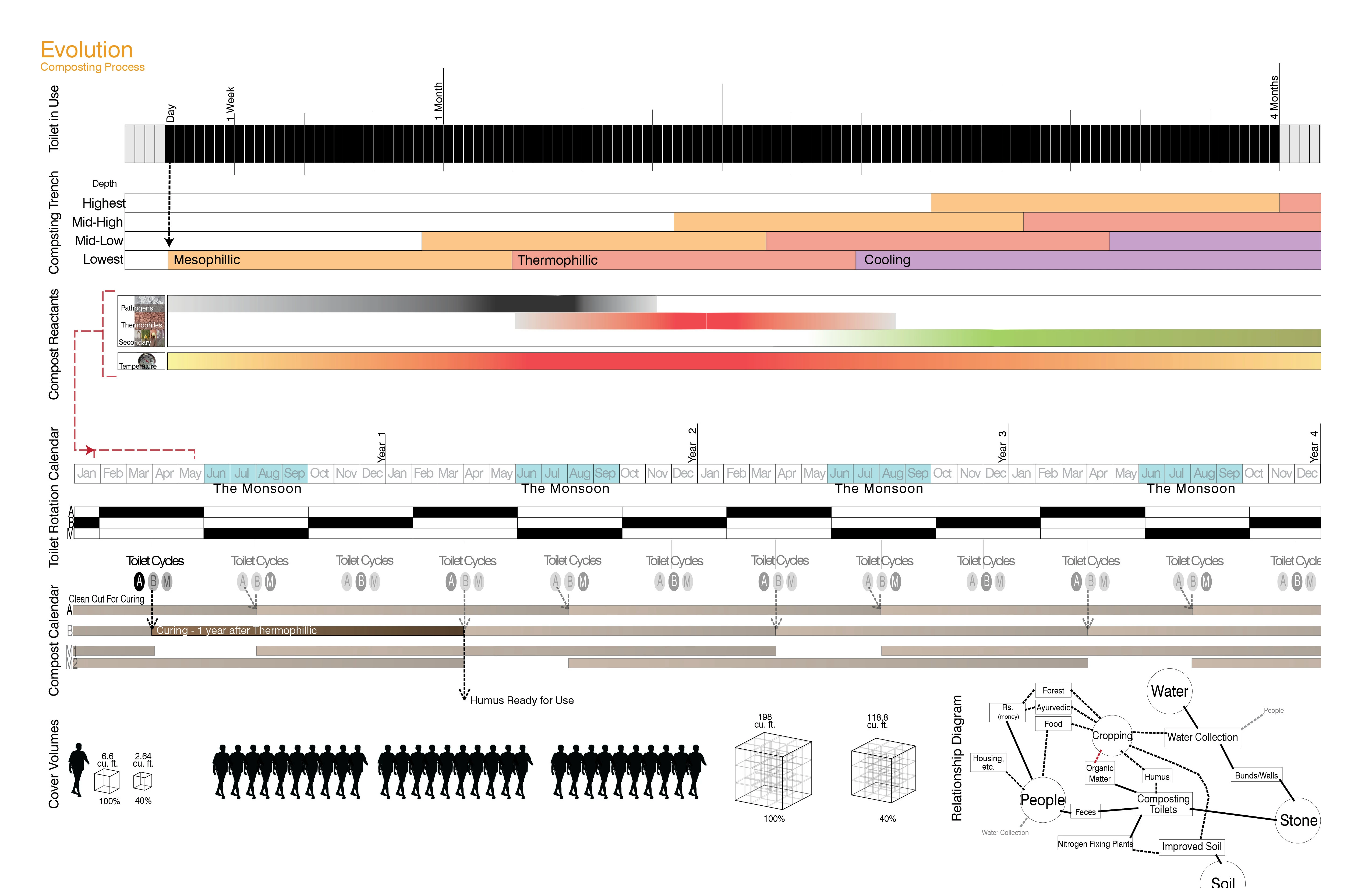
A growing number of the world’s population has little or no access to sanitation. This is particularly prevalent in India, where over 750 million people are without adequate sanitation facilities. Few designers have attempted to grapple with this ‘dirty’ subject. Sh*tscape: Mumbai’s Landscape In-Between proposes the making of an entirely functioning landscape built from human excreta. It will recover the ‘soil’ from the settlements while extracting the beneficial flora from the forest and, in turn, utilize both as a generator for a new and evolving landscape.
-
Introduction
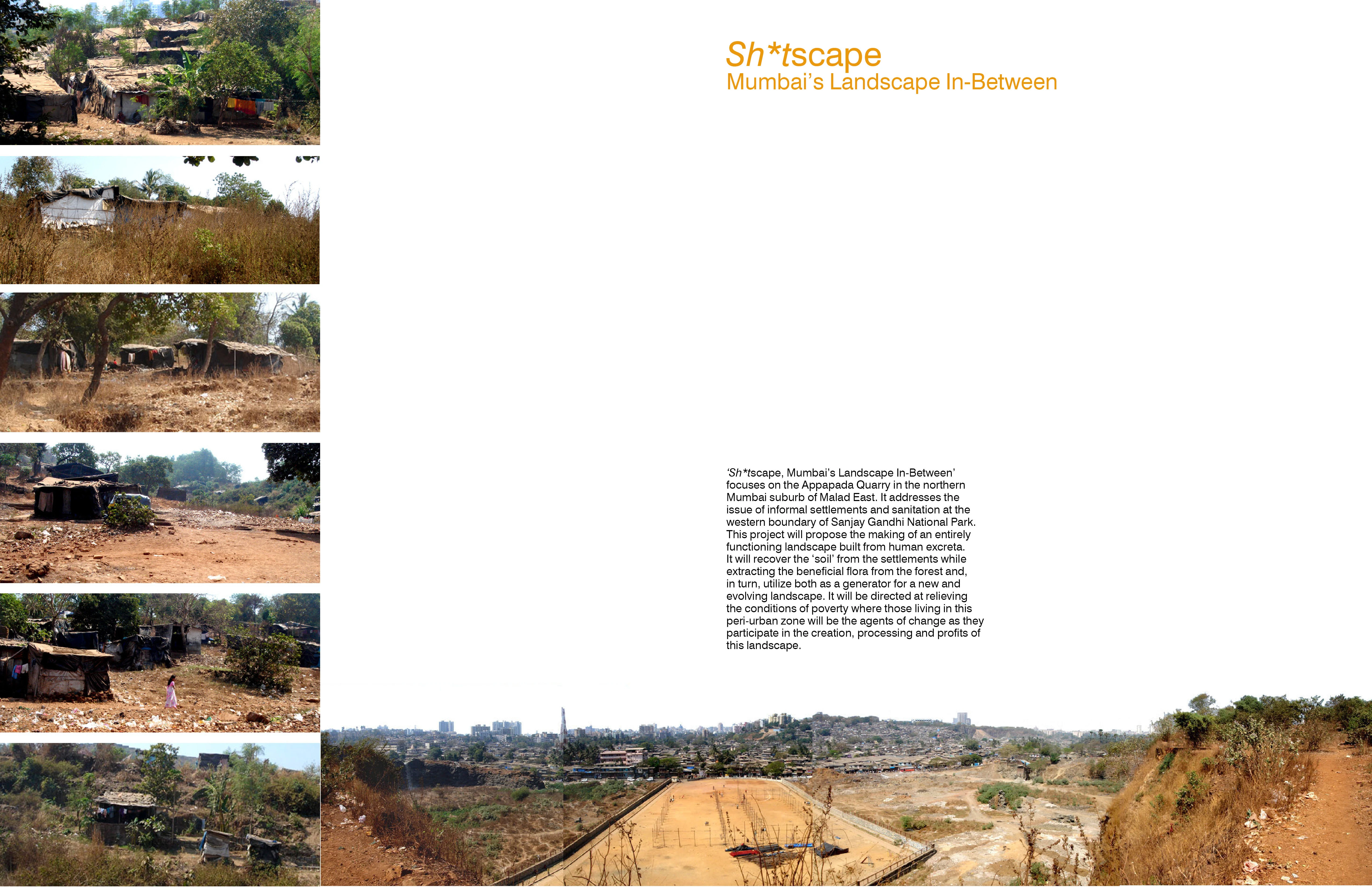
Sh*tscape, Mumbai’s Landscape In-Between focuses on the Appapada Quarry in the northern Mumbai suburb of Malad East. It addresses the issue of informal settlements and sanitation at the western boundary of Sanjay Gandhi National Park. This project will propose the making of an entirely functioning landscape built from human excreta. It will recover the ‘soil’ from the settlements while extracting the beneficial flora from the forest and, in turn, utilize both as a generator for a new and evolving landscape. It will be directed at relieving the conditions of poverty where those living in this peri-urban zone will be the agents of change as they participate in the creation, processing and profits of this landscape.
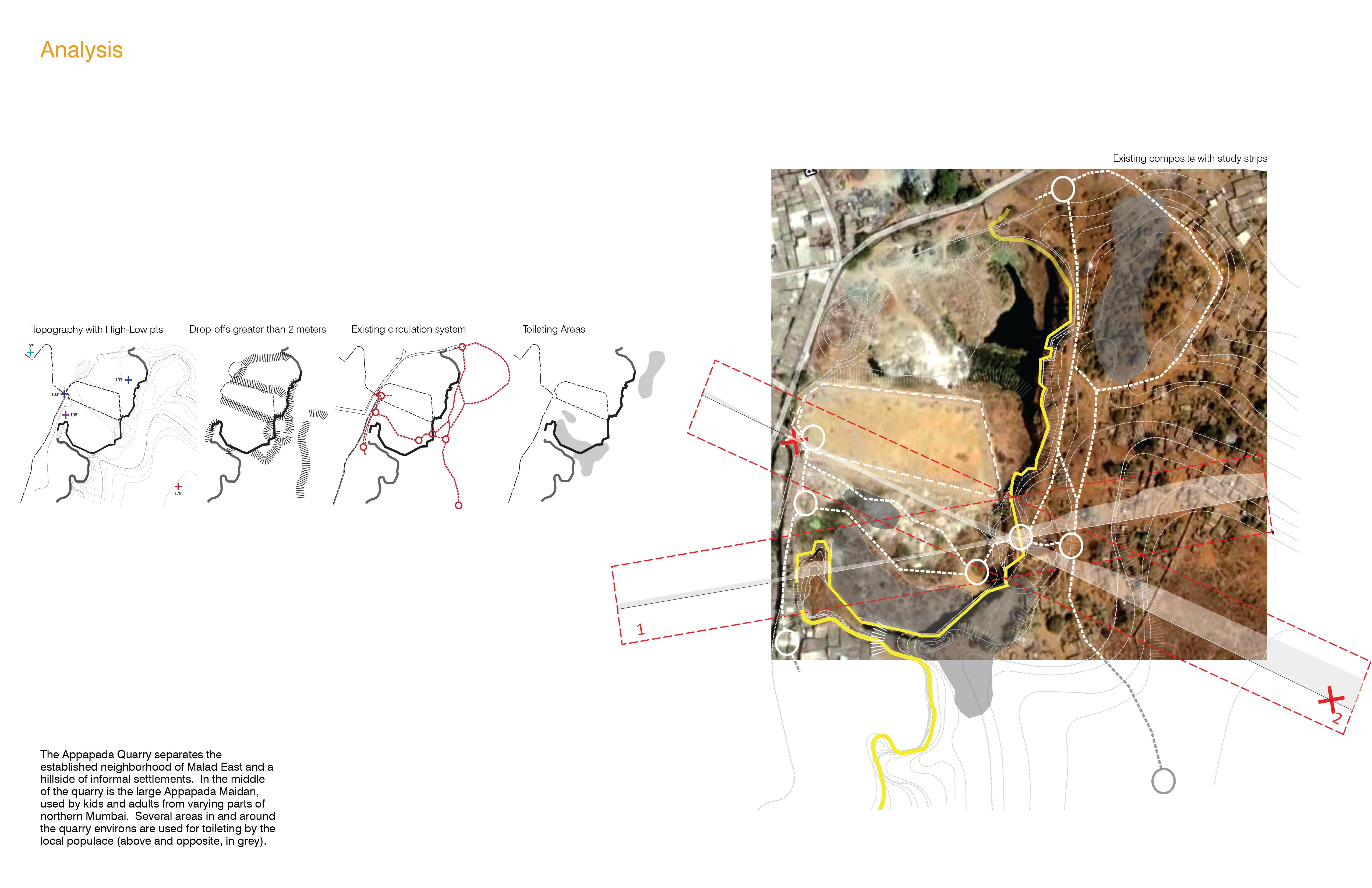
The Appapada Quarry separates the established neighborhood of Malad East and a hillside of informal settlements. In the middle of the quarry is the large Appapada Maidan, used by kids and adults from varying parts of northern Mumbai. Several areas in and around the quarry environs are used for toileting by the local populace.
Insertion
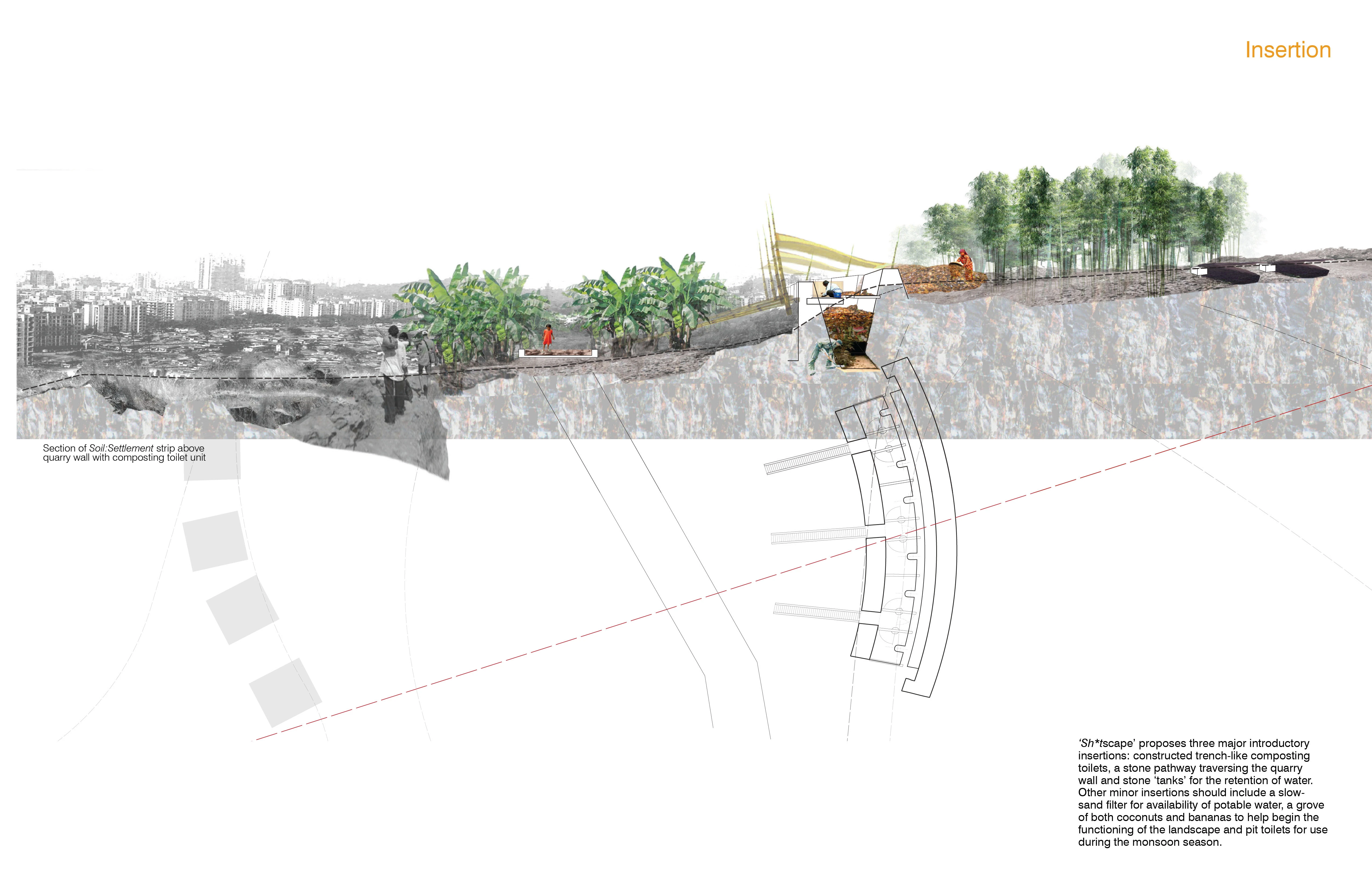
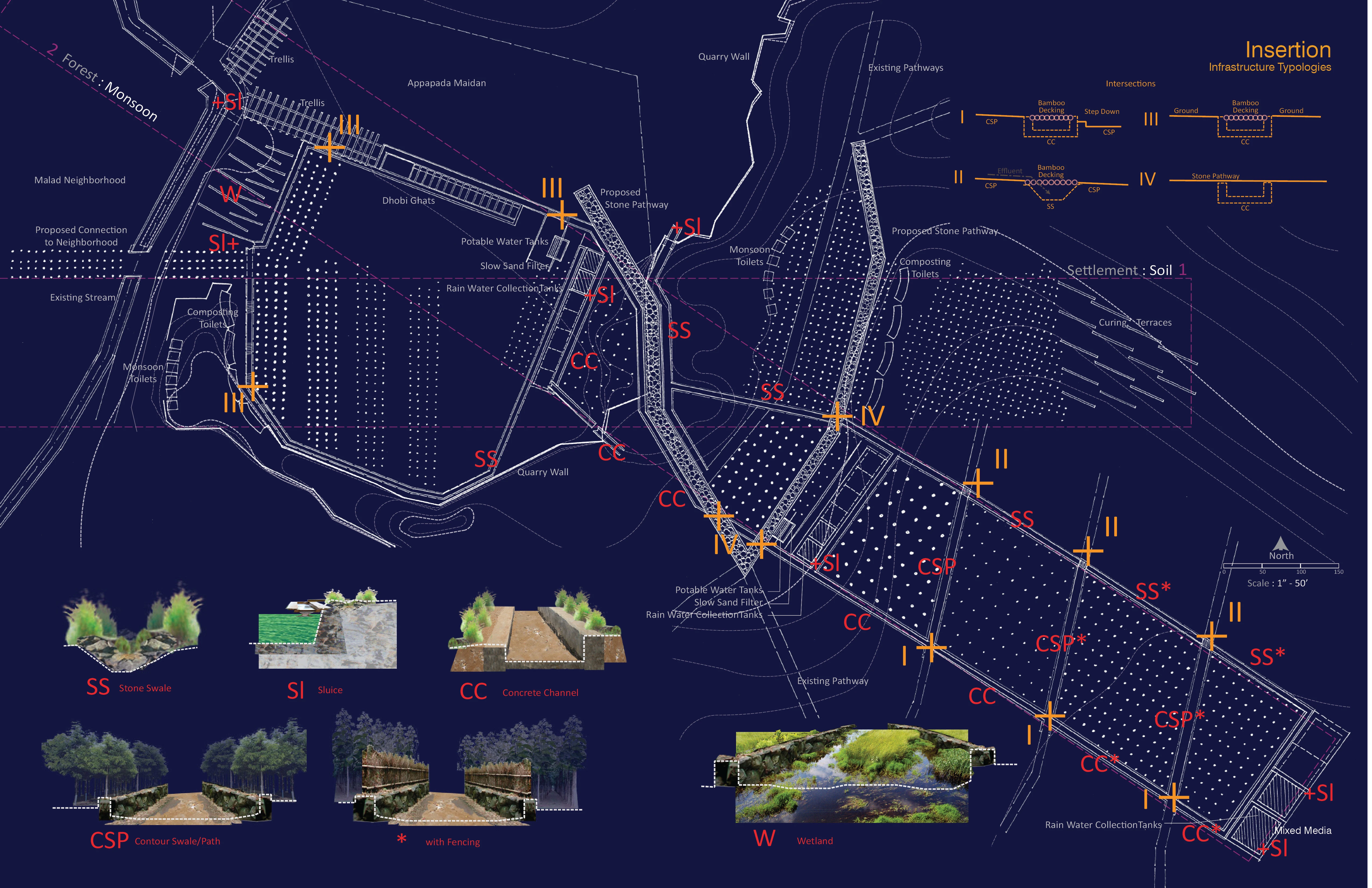
Sh*tscape proposes three major introductory insertions: constructed trench-like composting toilets, a stone pathway traversing the quarry wall and stone ‘tanks’ for the retention of water. Other minor insertions should include a slow-sand filter for availability of potable water, a grove of both coconuts and bananas to help begin the functioning of the landscape and pit toilets for use during the monsoon season.
Extraction
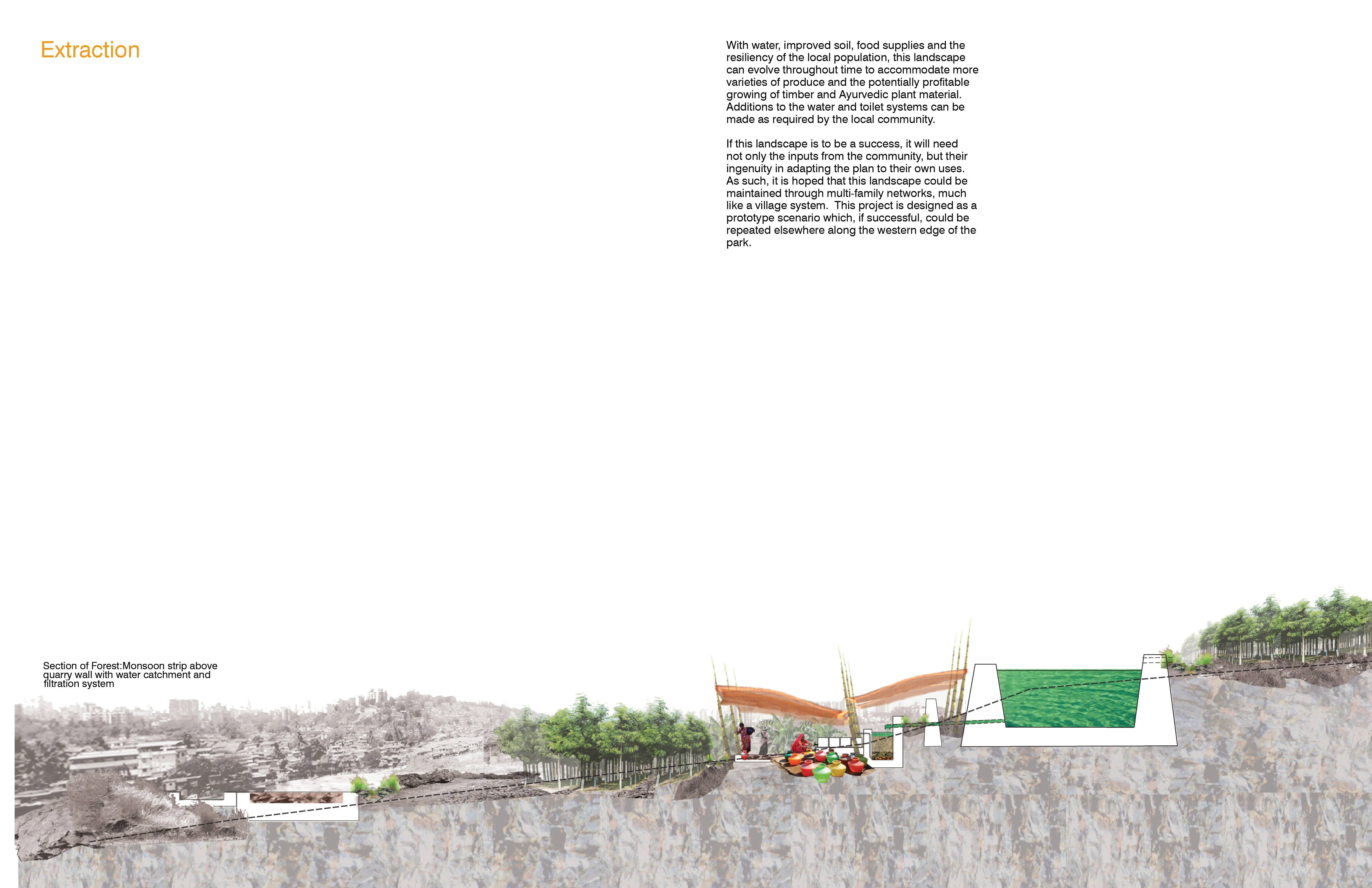
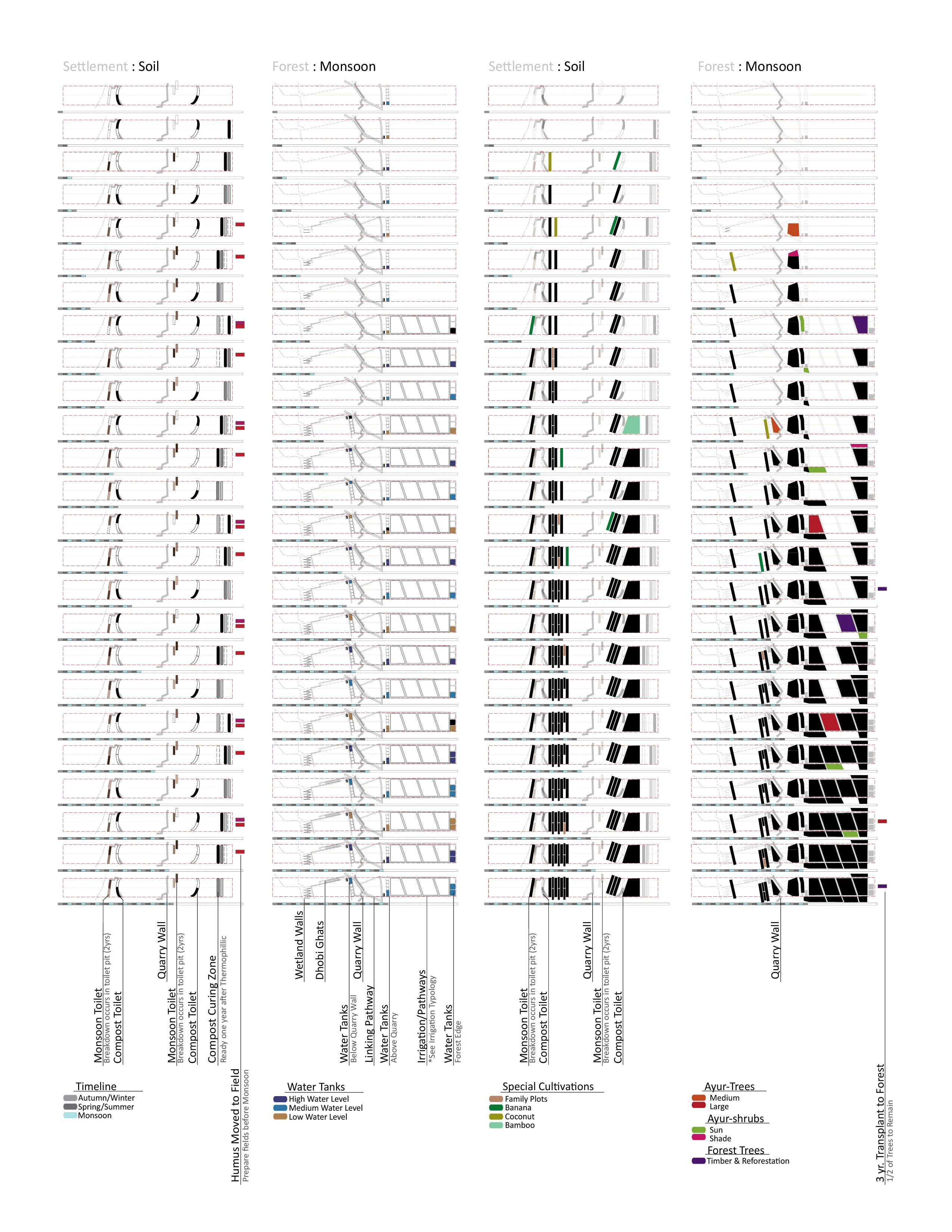
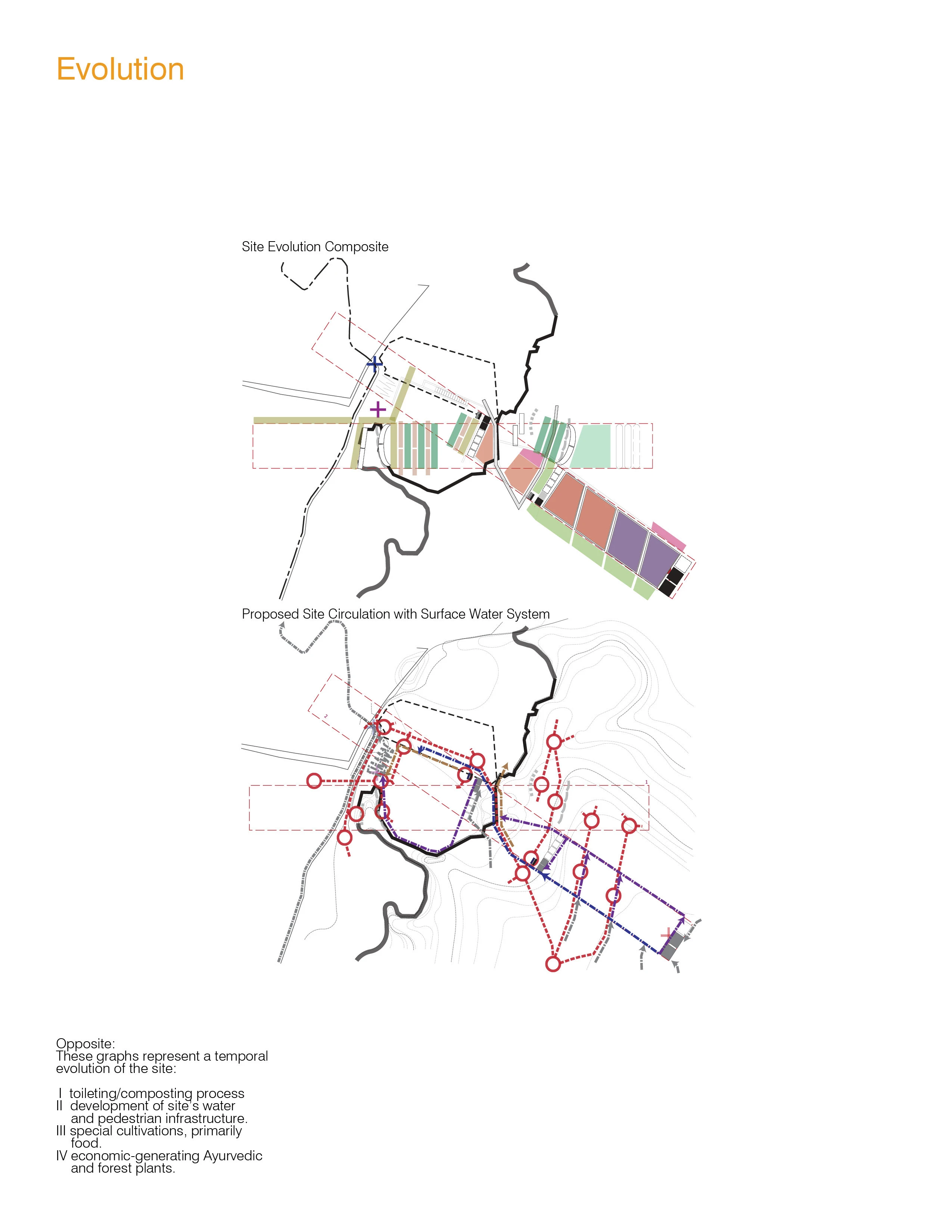
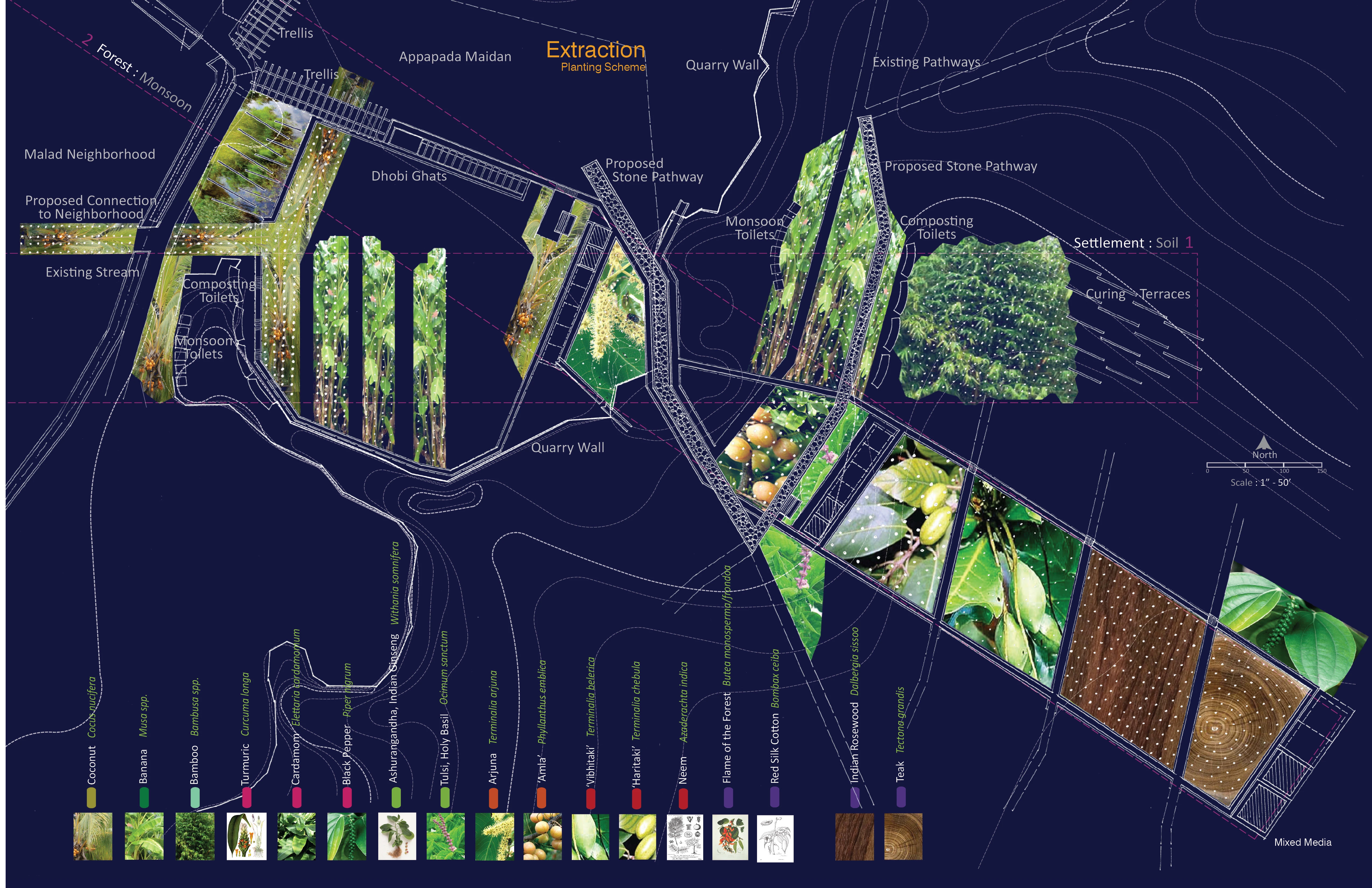
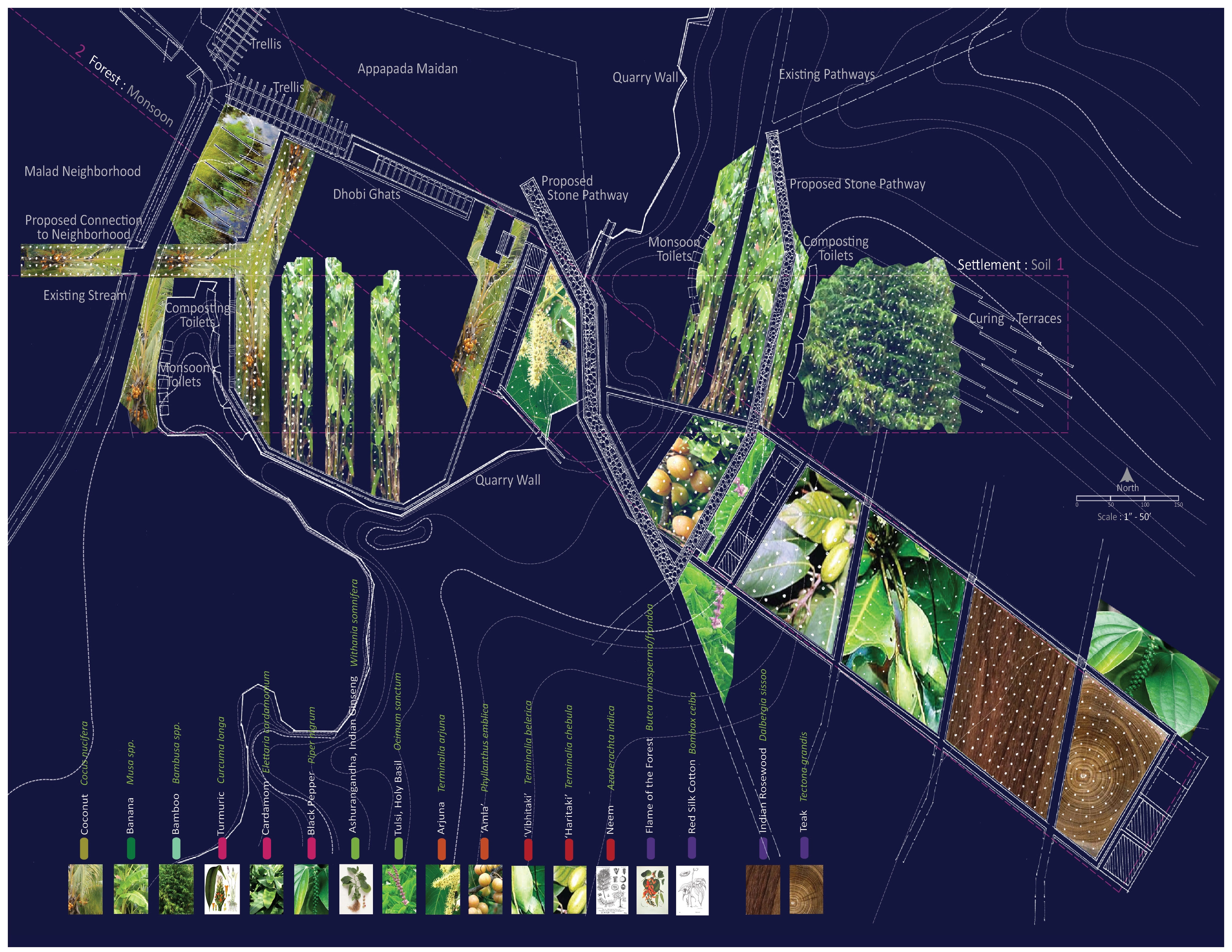
With water, improved soil, food supplies and the resiliency of the local population, this landscape can evolve throughout time to accommodate more varieties of produce and the potentially profitable growing of timber and Ayurvedic plant material. Additions to the water and toilet systems can be made as required by the local community as it grows and formalizes.
If this landscape is to be a success, it will need not only the inputs from the community, but their ingenuity in adapting the plan to their own uses. As such, it is hoped that this landscape could be maintained through multi-family networks, much like a village system. This project is designed as a prototype scenario which, if successful, could be repeated elsewhere along the western edge of the park.
-
Sunjoy Monga
Kavita Khanna
The People of Mumbai
Mumbai Studio MatesUniversity of Pennsylvania Department of Landscape Architecture
The Trident/Oberoi
Hare Rama Hare Krishna MandirAaron Kelley and Carlos
Advertisement
Related Awards
Award of Excellence, Analysis & Planning
H2Oquirrh: Regional Water Reform for a Resilient Salt Lake Valley
Location: Salt Lake City, UT
Firm: Design Workshop
Client: Wasatch Front Regional Council, Salt Lake County
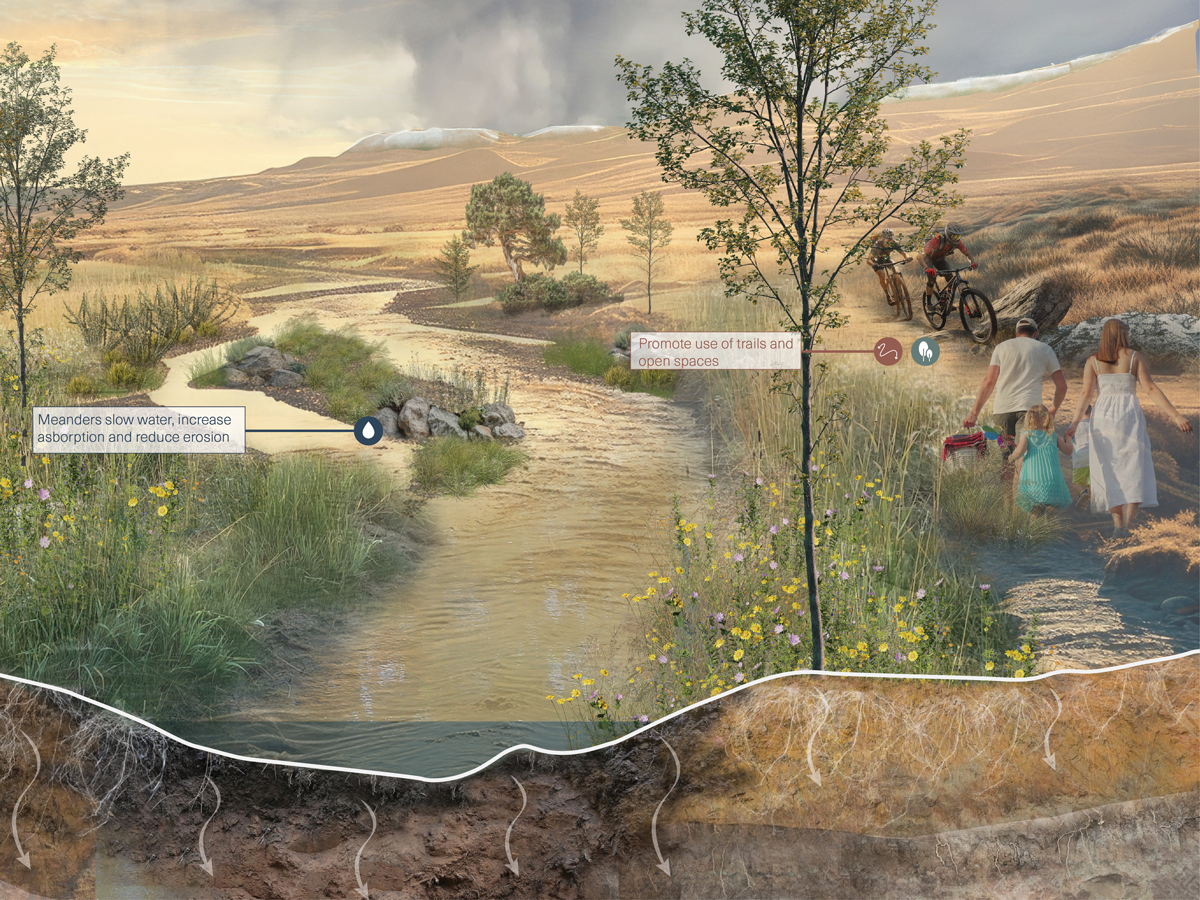
Water flowing from the Oquirrh Mountains is a critical contributor to the Great Salt Lake. Severe drought and human-caused decline threaten the lake’s viability, with cascading impacts on ecosystems and public health. This regional collaboration of seven jurisdictions, the H2Oquirrh Vision Plan, undertakes a large systems analysis of hydrologic cycles, land cover, and land-use decisions to identify site-specific interventions across nine creeks and washes. Led by landscape architects and water resource engineers, the study advances a deeper understanding of localized drivers of water loss and proposes innovative solutions through integrated landscape infrastructure design and policy.
-listing-img.webp?language=en-US)