

.webp?language=en-US)

.webp?language=en-US)
Kristina Hill, Affil. ASLA
on Climate Change
At a recent conference on designing wildlife habitats, you said cities are always warmer than surrounding areas because of the urban heat island effect. Cities are then precursors to climate change. In fact, “cities are at the edge of climate change.” What can cities’ experience with elevated heat levels teach us about best and worst ways to mitigate and adapt to climate change?
The fact is, I have yet to see any “worst” – except perhaps no preparation at all! Here, in the U.S., we live in what I call the American Media Bubble – where the media aren’t using climate change to sell papers, unlike their Canadian and European counterparts. Since they don’t see the headlines the rest of the world is reading, the average American doesn’t know what’s at stake. And as a result, their elected officials are discouraged from taking action. But the rest of the world is starting to prepare. Our economic future, and the health, safety and welfare of many of our citizens, depends on learning from the best practices that are out there.
I’ll say something about the best instead. The best approach I know of can be simply described using three categories of actions: to protect, renew, and re-tool. That means, to protect the most vulnerable people and places, especially the ones that offer the greatest future diversity and flexibility; to renew our basic resources, like soil fertility, water quality and quantity, air quality, and human health; and to re-tool, altering urban systems – buildings, transit, landscapes -- to use less energy (since energy use is still a proxy for CO2 generation, unless you use only clean sources), and generate fewer wastes that can’t be used by someone else, locally. I’ll give some examples, since all three categories of action require spatial strategies and create significant roles for landscape architects who have the drive to change cities. Most American cities are just at the point of taking stock of the magnitude of their exposure to climate change, but European cities have acted and offer practical lessons learned.
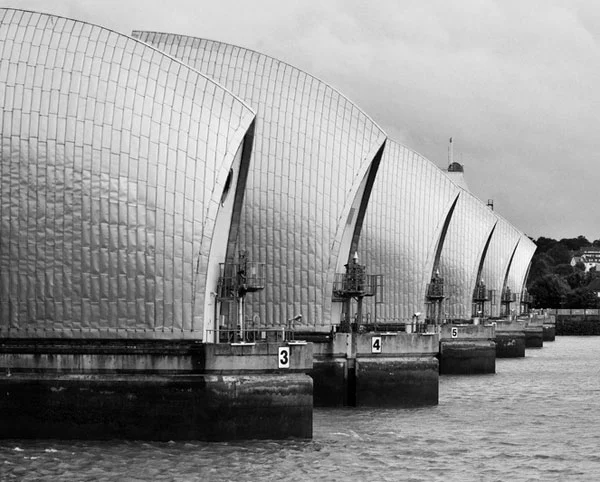
Cities are at the edge of climate change in several ways. First, in the sense that enough people’s lives and property are at stake to force them to take actions to adapt. Rotterdam is investing to try to make itself “climate proof” because its Europe’s biggest cargo port city, it houses an increasingly large portion of the Dutch population, and the Dutch believe in their ability to live with the changing dynamics of water. Not only do they believe in it at home, they also see it as a major export—knowledge and ability they can share with cities all over the world, for a profit. London has built one of the world’s most famous storm barriers on the Thames because the land in the center of the city is so valuable, and the population so large, that they can’t afford NOT to protect it. Hamburg has used a different strategy – also driven by the location of its cargo port inside the city limits. It will allow flooding, but designed a major new part of the city to be resilient to high water, with water-proof parking garages, a network of emergency pedestrian walkways 20 feet above the street, and no residential units at ground level. Even the parks in this new Harbor City district are designed to withstand battering by waves and storm surge, either by floating as the waters rise, or by incorporating lots of hard surfaces that only need to be washed off when the waters recede.
Advertisement
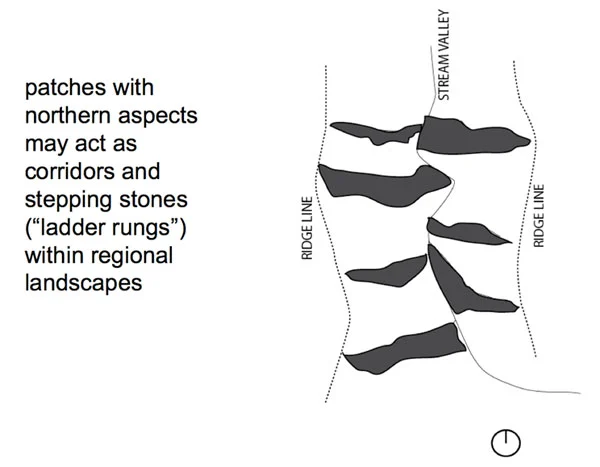
These examples fall into the “protect” category of adaptive actions. So would efforts to conserve north-facing slopes, where many of today’s native plant species may persist the longest as summer heat waves and droughts become more extreme, more common, and of greater duration. North-facing slopes might be our Noah’s Ark, bringing species with us into the future and buying them time to adapt – behaviorally or genetically -- if they are able.
But from an ethical point of view, the most important way to protect cities is to protect the most vulnerable people who live in them: low-income children and their caregivers (often single mothers), people with illnesses, and seniors. All over the world, people with even modest wealth will be able to protect themselves. They’ll buy better air conditioning, pay more for electricity as fuel prices rise, stay in a hotel when floods come, get health care when they need it, maybe even relocate by buying a home in a less vulnerable location. Children born into poor families where their mothers have to both work and care for them without paid help are in a very different situation. Many people in New Orleans who lived paycheck to paycheck did not evacuate when Katrina came, not because they were stubborn or unaware but because it was the end of the month and they couldn’t afford to stay in a motel. Or didn’t own a car to evacuate with in the first place. Most people in the world are that poor. If we want to adapt, we need to help them adapt. Those children contain the seeds of our future creativity. Adapting cities without protecting children is not only unethical, it’s unwise.
New York City, London, and other major cities have been creating detailed climate change adaptation action plans. In your mind, what do cities need to focus on the most as they develop these plans? What about smaller communities creating plans with very limited resources?
This question offers me a chance to provide examples of both the renewal and the re-tooling actions.
In the U.S., Chicago has the most detailed and strategic climate adaptation plan. Mayor Daly made the environment one of his priorities, and he and his staff have done their best work in this area. Even so, what they mostly have is a good sense of what the problems are -- but not a lot of solutions. This is principally because the problems will emerge over time, and it’s difficult in our political climate to spend lots of public money before a problem is part of everyday life. This past year was a case in point – in winter, there were unusually large snowstorms in cities like Washington, D.C., and people claimed that “global warming” was a hoax. By summer, we found ourselves on track to experience the hottest year ever across the planet as a whole. The second-hottest year was 2005. People have a hard time understanding that the real problem is not a gradual warming trend; the real problem is that we’re facing an increase in climate extremes – from snowfall to heat and from floods to drought. Flooding this year in Brazil and now Pakistan has affected the health and security of millions of people, most of whom are children. Cities need to recognize that it’s not about planning for an average of 2-10 degrees warmer summers; it’s the new extremes in rainfall, flooding, drought, and the duration of heat waves that will really challenge our infrastructure and affect our lives. Cities need to focus on these extremes, and make investments to be more resilient to them in terms of both the duration and the magnitude of these extreme circumstances.
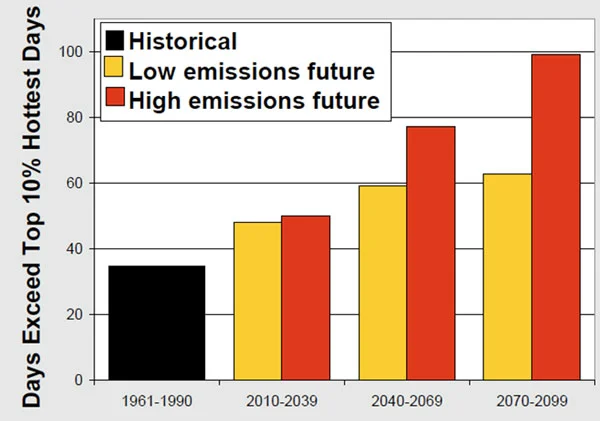
That’s what I mean by “re-tooling.” Urban systems represent enormous investments of public money, and once built, the debt accrued by building them creates a long lag time before these expensive systems can be changed significantly. Landscape architects need to wade into some of the policy and planning debates that surround these investments of public money. If we were designing a house and landscape for ourselves and everyone we care about to live in, together, 30 years from now, we wouldn’t design it based on our income and needs today. When cities build infrastructure, or develop/re-develop large areas of land, those projects are meant to have value and perform as intended for at least 30 years; many are intended to function for 50 or 70 years, perhaps longer. We need to question whether these urban places and systems are really being designed to perform as intended during an era of increasing climate extremes, because we and almost everyone we care about will live in them, all over the world. We need to demand investment strategies that link future debt to future performance. No project should be allowed to generate public debt for 30-40 years if it won’t add to our future capacity to adapt; if it doesn’t increase our resilience, it should be paid for only out of today’s money, or not be built at all.
Taking out highways makes some sense, financially as well as in terms of new land use options, because maintaining an underutilized, polluting roadway ad infinitum is expensive. The effort in the South Bronx to remove the Sheridan Expressway is a good example; it could be replaced with a mix of public and market-rate housing, and parks that increase the resilience of that district to flooding while providing clean places to swim when it’s hot. Other cities, from Portland to San Francisco and Milwaukee to Providence, have taken out highways. That kind of capital investment is expensive in the short term, but may save public money in the relatively near future while increasing resilience. Our ways of thinking about public infrastructure have to change pretty radically from the old “more is better” attitude if we want cities to avoid spending themselves into a dead-end, with lower quality of life and reduced economic competitiveness.
Cities need to focus on resilience as they make their debt commitments. If they are investing in projects that replace old highways with new ones, but don’t add significant alternatives to driving (like public transit), they’re making a mistake. Those cities will be paying for that non-adaptive project for so long, they won’t have any money to spend on adaptation. On the other hand, projects like public transit inside growing cities should be able to extend their debt over a longer period, making them more affordable, because they will expand the options of people who live in the future. They are an investment in future flexibility, and increase our adaptability to trends like rising fuel prices. That makes them an investment in resilience. Designers, public advocacy groups, elected officials, federal agencies, and bond rating agencies should use criteria like this to demand smarter decision-making with respect to climate change, and alter the type of work designers have to do in cities. No more short-term, single-purpose infrastructure (or public space or urban district plans, which are seen as more a part of infrastructure today than they have been for 150 years).
I think big cities will have to incorporate both centralized and decentralized infrastructure into their investments. Small communities, on the other hand, will likely have to choose between encouraging density or enabling more people to live off the grid in an affordable, healthy way. With greater density, we can use centralized systems to make these small cities more livable (with less driving, more walkable neighborhoods, more affordable infrastructure services). With greater energy, water and waste independence on a house by house basis, and access to cleaner transportation technologies (electric cars), small cities can provide fewer services and make themselves more resilient by keeping their costs from growing. The latter strategy is pretty optimistic that cleaner, house-based technologies will be ready and affordable, and that people will be willing to live within the limits they generate. I’m not such a technological optimist, so I’d advocate for the density strategy.
Youngstown, Ohio offers an example of the “renewal” category of actions for smaller cities. By that, I mean renewal of basic resources like soil fertility, water and air quality, health, and food security. As I understand the story that came through the media, the elected officials decided to acquire derelict residential properties using a spatial strategy that, when the houses were demolished, created a park system that would allow higher quality of life for future residents. The vegetation and water resources of the park system could be “grown” slowly over time, using successional strategies for the plants (with limited maintenance interventions) and using biological processes to help clean soils and water. Small communities that take the long view, using a 50-year timeframe to compare alternatives and focusing on their quality of life in a healthier environment, will be attractive places to live in a geographically-flexible future economy. If the land acquisition is planned well, and short-term uses are allowed that fit today’s needs – say, local food production, or even ATV recreation if it supports a disturbance regime that helps plant succession -- that same future-oriented green infrastructure can get a mayor re-elected in the short term as well.
Climate change is expected to cause mass migrations of animal and plant species. You said it’s more efficient for species escaping rising heat levels to move up in elevation as opposed to moving north. Unfortunately, for many species, there isn’t higher elevation. What design solutions can aid migration?
The most important planning and design strategies for biodiversity involve first protecting the land that has been conserved to date, in two ways. Number one, by adding buffer zones to their edges in which development is restricted or prevented. This is especially important on northern-aspect slopes, where characteristic regional species are more likely to persist in an era of increasing dryness and temperature extremes. Second, educating the public about the importance of reducing the negative impacts of what landscape ecologists call “the matrix” – which includes all the developed landscapes outside the reserves. This is a strategy ecologists sometimes call “reducing matrix hostility.” It basically means that even developed landscapes can contribute to the overall ability of a region to support sensitive species that lived there before development occurred. When each developed parcel manages the quality and quantity of its stormwater runoff, for example, it contributes to a healthier landscape with sustained regional biodiversity. If parcels contain fertile soils and plants that support native insects, and even allow some standing dead trees in the mix, they’re more likely to support “stop-over” feeding or perching by native birds. Improving air quality can make it possible for insects to locate and pollinate plants in developed landscapes. Reducing noise on roadways can benefit frogs that use sound in mating behavior in wetlands nearby. Building wildlife over- and under-passes can allow animals to migrate and disperse through heavily developed landscapes.
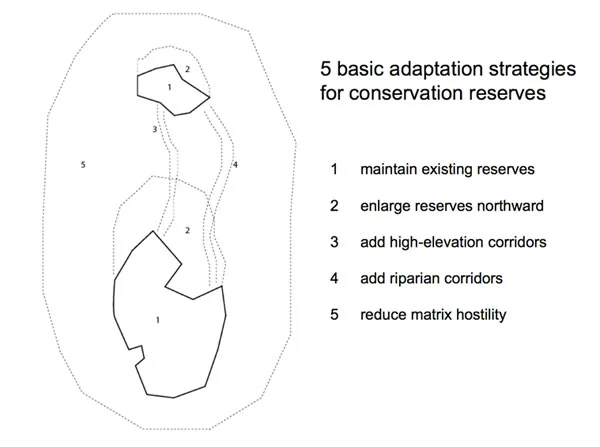
In addition to making sure the conserved patches are shored up with buffers and a region has reduced its “matrix hostility,” climate change creates an imperative to add corridors and stepping stones – both north-south (connecting across latitudes) and up-down (connecting across elevation gradients) – at all spatial scales. As the ecologist Stuart Pimm has pointed out in a recent article, it’s more efficient for species to move a few thousand feet laterally to move up by hundreds of feet of elevation as a way of staying cooler than it is to move tens or hundreds of miles north to get the same benefit. But going up in elevation is like walking the plank, because it means there is less area available as the species go up – and the solution is limited by the maximum height of the hills or mountains available.
The biggest questions involve timing. If species characteristic of a region start to die out, will species that could survive the new seasonal conditions be able to get there, find suitable locations, and successfully reproduce before they die out in their own regions? When will the species that are their food be available locally? When will new predators, parasites, and competitors also move in? It’s a very complicated four-dimensional chess game, not a simple progression towards the north or up in elevation. That’s why no one can really predict which species will survive where, and what traits will end up in the mix.
The potential new spatial strategy in all this involves conserving slopes with northern aspects, linking them to each other via waterways and ridges. I hope we will see legislation over the next 10-20 years that identifies these slopes as potential refuges for biodiversity in an era of increasing temperature spikes and drought events. But even without that, designers and planners can take this into account on their own and with their clients. Like the cove forests of Appalachia, these cooler, protected areas will be places where the species that have been characteristic of many regions may persist as climate change occurs – making them key elements of future habitat diversity and possibly trait diversity.
You also argue that climate change will yield changes in the distribution of plants and animals, and their traits. Furthermore, some plants and animals may even benefit from climate change. How will climate change impact species distribution? What kinds of traits will enable some plants and animals to better adapt?
This is an issue that the ecologist Stuart Pimm has drawn attention to in a very thorough, readable article that appeared in the journal Current Biology in July 2009. He’s done the very best job I’ve seen of providing examples for how complicated these dynamics might be. Pimm has provided examples of butterflies in the U.K. that have recently expanded their range because they changed host plants (the species used to be limited to only one plant); or butterflies that remain linked to one plant species, but have drastically expanded their range as a result of warmer temperatures that have helped their host plants expand geographically. He raises questions about how species will be able to take advantage of “openings” in ecosystems as certain species die out – will the resources needed by new species be in place? For instance, will the insects eaten by a particular bird already be available when the bird arrives? Will they be eaten by a new competitor when they do arrive, leaving the bird unable to find sufficient food? These changes are going to involve a lot of very specific timing issues, and will probably take decades and even centuries to “settle in” to new patterns of species distributions.
Biologists do expect some species to benefit from climate disruptions, and others to lose out. For example, one of my colleagues here at at the University of Virginia, Michael Pace, has recently found that zebra mussel populations in the Hudson River seem to be declining as temperatures have risen. We’ve been worried about the impacts of this introduced species for decades. The problem of its population expansion could actually be halted by warming waters. On the unhappy side, many species around the world are expected to become extinct as a result of these complex changes. The loss of key tree species in the western U.S. whose seeds have been staple foods for species such as grizzly bears may be a factor that drives greater conflicts between humans and bears, as another example. The recent killing of a camper north of Yellowstone has been attributed to a grizzly whose cubs were malnourished, at the same time the whitebark pine – a key food source - has been in decline from drought and an insect pest. We may wonder why bears become more dangerous, then discover a link to stresses related to climate disruptions.
It’s literally impossible to predict the interactions among predators, prey, parasites, mutualists, and competitors as the environment changes around them. We can’t just look at a hardiness zone map and shift today’s species northward a couple of states. It won’t be that simple. When you consider the impact that pathogens have had on individual tree species, for example, the idea that climate changes will produce smooth northward transitions starts to seem ludicrous. What happens if something like Dutch Elm disease comes along as climate changes? We could end up with key species missing from the new mix of “suitable” plants for a region. Their seeds may get to the new region, but they may not be able to survive, even if the climate is right.
In terms of traits, many people don’t realize that it’s actually higher trait diversity-- not species diversity – that drives ecosystems to higher productivity. If we have fewer species in the future but the same or a greater number of traits, the level of functional performance generated by ecosystems (purifying air and water, or providing energy through photosynthesis, for example) may not change. But we don’t know enough to predict whether or how fast traits may diversify within species, or within ecosystems. So most people use the “proxy” of species diversity to represent trait diversity, and perhaps we should continue to do so until we have better ways to predict how traits may change.
In downtown Chicago and other cities, coyotes and other wildlife have been found digging through dumpsters, in the subway, and inside supermarkets. What kind of designs can aid animals that have taken up urban living because of changes in their natural environments?
That’s an interesting question, from a strategic point of view. Species that are already thriving in urban environments or begin to do so in the future may not need our help, since they are finding ways to survive by themselves in human-dominated environments. They may, however, provoke new attitudes, ethical debates, and management relationships. I think that’s the really interesting part—will our cultural attitudes towards these animals change? Perhaps even our sense of what it means to be human among other species may change. What would happen if an animal that represents a threat to our children becomes able to thrive in urban areas?
Coyotes are probably expanding their urban populations not just because of lost habitat outside cities, although that may be a factor in some areas, but also because of changes in their behavioral traits. They are becoming habituated to human presence as they increasingly subsist on a diet of wasted human food and cats. Juvenile animals learn from their mothers and their peers how to find food and den sites, and what dangers to avoid. Urban coyotes appear to be learning that they don’t need parks to make dens, although it’s not yet clear to researchers what elements of the built environment are suitable for them. They’re also learning that toddlers are not dangerous, and may be prey. Over the next few decades, we may have to learn to design deterrents and exclosures – fences or something equally effective -- that keep coyotes out of areas where small children play, rather than design habitat for coyotes in cities. We may eventually even need to hunt coyotes to keep their urban populations small, and remind them that humans should be avoided. Coyotes have been an important part of stories that encode and convey the knowledge of Native American peoples, playing the role of trickster and teacher to humans. What happens to that relationship when the teacher comes to the city and really thrives there? Will urban people learn new things about their relationship to other species? It’s hard to fully appreciate how much that could change our self-image as urban people, over a long period of interaction.
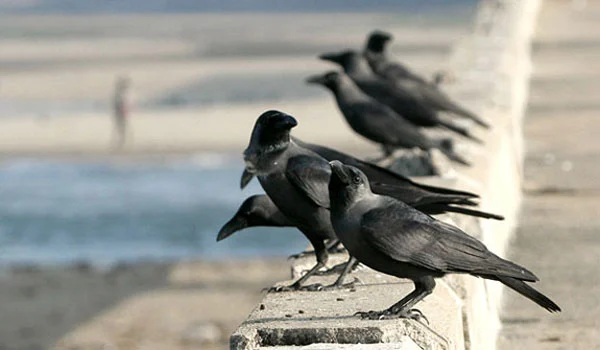
Crows and other corvid species offer a similar example. Crows thrive in cities because of the food subsidy they receive from human food wastes available in dumpsters. As their populations grow, their impact on wild food sources also seems to increase – particularly on songbirds, when crows eat the juveniles in the nest. We could design exclosures, in the form of wire or plastic mesh structures that would keep the larger-bodied crows out while allowing smaller songbirds to fly in. Installing the mesh during nesting season could be a fun public art action, as well as change the ecological performance of urban woodlands and shrubs. Crows are another smart species that aren't shy of humans. YouTube videos have popped up showing crows dive-bombing urban pedestrians when they walk near a tree that has a crow’s nest in it. And like coyotes, crows are a legendary teaching species, appearing in stories that tell humans how to be resourceful as they live and interact with other forms of life in North America. Crows are now associated with potential transmission of West Nile virus, and may teach us about the dangers of living with other species (or people) who are hosts for disease, and create new ethical debates about how we can make cities more resilient in the face of contagious illnesses transmitted by animal vectors. That’s a longer conversation, but again, one about renewal of fundamental resources like health as ecosystems change in response to long-term trends.
Stormwater overflow from cities also presents a major problem for natural fish habitat in surrounding areas. You cited projects in Seattle, like the SEA Street, which can help ensure fish eggs don’t get flushed away during rainstorms. How can infrastructure be designed to be wildlife-friendly?
Infrastructure can be designed much better than we have done it for the last 100 years, for both people and wildlife. Once our elected leaders and their advisors make the question of whether an investment in infrastructure will add to our resilience their top priority, planners and designers should be involved in those projects by necessity alongside civil engineers. That’s an additional, self-interested reason why we need to advocate for that change in priorities about the investment of public funds.
Before I give examples to answer this question, I want to point out that “infrastructure systems” include the point-of-use of resources (inside buildings, for example, where electricity is consumed) in addition to the transmission networks that convey resources from a place of abundance to a place of scarcity in relation to demand. These systems also include the landscapes that support the place of abundance, both inside and outside urban areas -- headwaters and tributaries that drain to reservoirs, for instance. Our focus on the networks for conveyance – pipes, overhead powerlines, highways, and seawalls – when we conceive of infrastructure has drastically reduced our ability to imagine options for making cities and their supporting regions more resilient.
When designers are working on infrastructure projects designed to help cities adapt to new climate extremes (as well as population growth and economic trends), issues related to social justice and support for biodiversity should be easier to integrate. It’s useful to remember, however, that from a functional point of view, trait diversity matters to ecosystem performance more than species diversity. It is in our direct interests as humans to conserve and promote trait diversity, in order to increase the ability of the ecosystems around us to provide us with basic services – like cleaning our air and water through biological processes. The legislative process has a long way to go before we see a federal “Endangered Traits Act,” and yet that’s what the issue is for ecosystem functioning.
If infrastructure projects protect vulnerable people -- especially poor families -- and special places, like north-facing slopes, or headwaters of stream systems, or estuary “nurseries” for fish and shellfish, that’s the first performance issue. The second is that these projects should contribute to the renewal of basic resources (soil fertility, air quality, water quality, etc.) and not reduce the supply of these. Finally, the third is that they should contribute to re-tooling our ways of moving things around, so that we are more resilient to extreme environmental events and increasing fuel costs.
Transit, parks, and new shoreline structures that provide habitat while protecting property and utilities all look like better investments using the criteria I’ve noted above. To me, being “wildlife-friendly” isn’t the point – it’s about supporting ecosystem resilience, with humans recognized as an integral component of those ecosystems. Empirical observations and models support the conclusion that many species will become extinct or rare because of climate disruptions and increased urbanization over the next several centuries, no matter what designers do today. The real trick is to act ethically as human beings in the midst of those larger trends, advocating to protect what we can and increase our ecosystem-level resilience over time.
The port of Antwerp has implemented a strategy that provides an interesting example for infrastructure and wildlife. Biologists and planners collaborated there to identify a “habitat backbone” system of permanent wetlands to support habitat for natterjack toads. But they added the idea that port landscapes with shifting, temporary uses can also play an important role in providing temporary habitat, as part of what landscape ecologist Richard Forman once called the “shifting mosaic” of a landscape. It’s possible that many other species could be supported in and around urban areas by providing both a core habitat area (the “backbone”) and temporary zones available in different seasons, or in different years (the “shifting mosaic”).
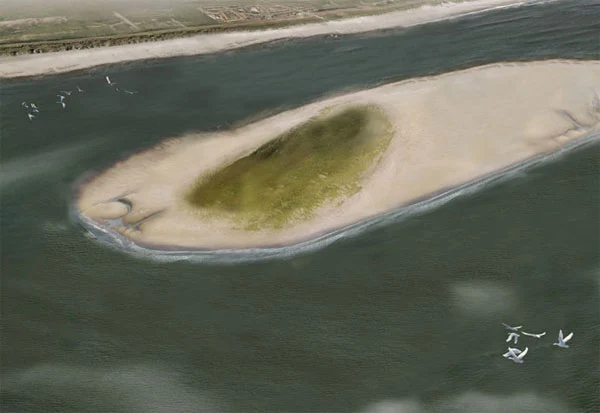
The Bay Area Conservation and Development Commission in San Francisco is studying ways to respond to increases in sea level while supporting species that live in the Bay, using a mix of artificial marshes and hardened shoreline structures. The Dutch are experimenting with a strategy they call the “sand motor,” in which they would place dredged sand in an artificial mini-peninsula along their coast, and allow the processes of wave action and along-shore currents to redistribute it as massive sand dunes to protect their coast. I believe that this sort of “cyborg landscape” strategy, combining artifice and natural processes, holds the most promise for supporting biodiversity while achieving human goals – not the least of which might be gaining an aesthetic that appreciates processes and change. If humans see change as beautiful, adaptation will be easier.
Lastly, a recent article in Topos argued that landscape architects may actually be having a negative climate impact because they specify unsustainable products. Part of the problem is that in many cases sustainable product alternatives aren’t available. What can landscape architects and other designers do to help bring down greenhouse gas emissions now?
This reminds me in a funny way of the whole “paper vs. plastic” debate. Clearly, we need to attend to the materials we use and make sure they embody less energy, generate less waste, and are less toxic. Absolutely. But in the larger sense of urban resilience, the economic and material context of different cities and projects makes it difficult to generalize about which materials are best. If I use low-embodied-energy materials to build a house in a part of New Orleans that is below sea level, have I addressed the larger contextual problem? No. Is it more important that some really terrific new projects in Stockholm have used concrete and steel, which can be thought of as high-embodied-energy materials, or that they are very efficient in energy use once built, generate very small amounts of un-renewable waste, and are linked by public transit? I would say their innovations are more important than the question of material usage.
The key is for designers to pay attention to research about materials, and choose the best available components in their region. ASLA and/or the Landscape Architecture Foundation could do a lot to provide this information. Overall, I think the use of energy and generation of CO2 by buildings and transportation completely swamps the use of energy in designed landscapes. I would prefer to see designers focus on policy and spatial strategy innovations, rather than get into a “holier-than-thou” debate about materials. With that said, obviously there is a lot of common-sense advice we can give to clients and implement in our designs – my highest priorities are in relation to water use. We can use plants that need less water in most urban settings where droughts are increasing, and give more thought to using drip irrigation systems in regions that did not formerly require irrigation (the southeast U.S., for examples). We can take advantage of greenwaste recycling programs in mulch specifications, and even advocate for linking the graywater generated by buildings to our designed landscapes. In a few years to a few decades, that may be the best source of urban irrigation water available, and could transform the way urban streams function if landscape irrigation supports summertime base flows.
In terms of recent research that has broad implications, perhaps one of the most surprising to landscape architects would be the news that helping fewer trees to grow older and larger provides much more carbon storage than planting many new, young trees. Urban areas and their regions are full of early-successional forests that, according to this research, could contribute more if they were thinned to allow more individuals to reach a maximum biomass. Perhaps our “million tree programs” are misguided, if they involve planting lots of small-caliper trees that require gas-powered maintenance crews and equipment. Helping individual trees get bigger may do more to reduce carbon emissions than any other single thing that landscape architects do, outside of policy and infrastructure strategy innovations.
My preferred advice about what landscape architects can do now is to suggest that we get involved in local politics to shape major investments of public funds. ASLA and LAF can help with that as well, though local and state chapters. But it may also be that a younger generation of activist designers will lead the way here, as they have in cities like Seattle. Policy debates are messy and volatile, but our vision as a profession is needed now more than ever in that arena. We need to be bold, and share our ideas in public -- every day.
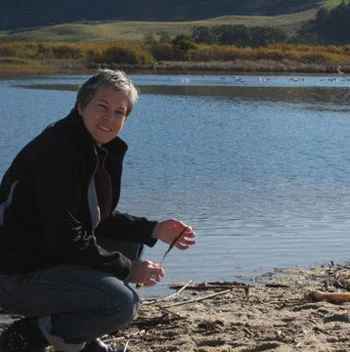
Kristina Hill, PhD, Affiliate ASLA, is Chair of the Landscape Architecture department at the University of Virginia.
Interview conducted by Jared Green.