
.webp?language=en-US)

.webp?language=en-US)
The Haunt of Mobile: Reconnecting Down the Bay
Jacob Morris, Student ASLA
-
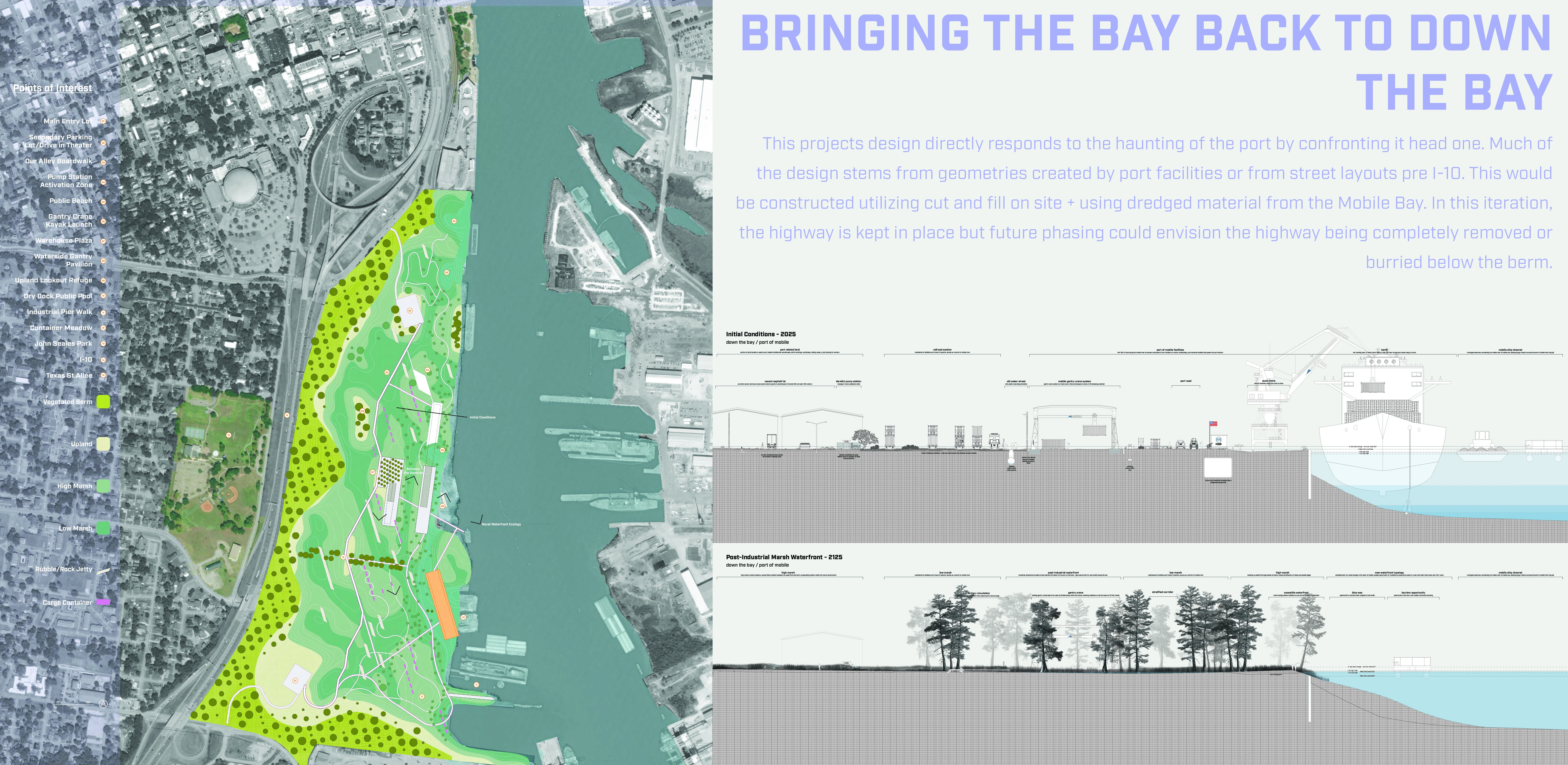
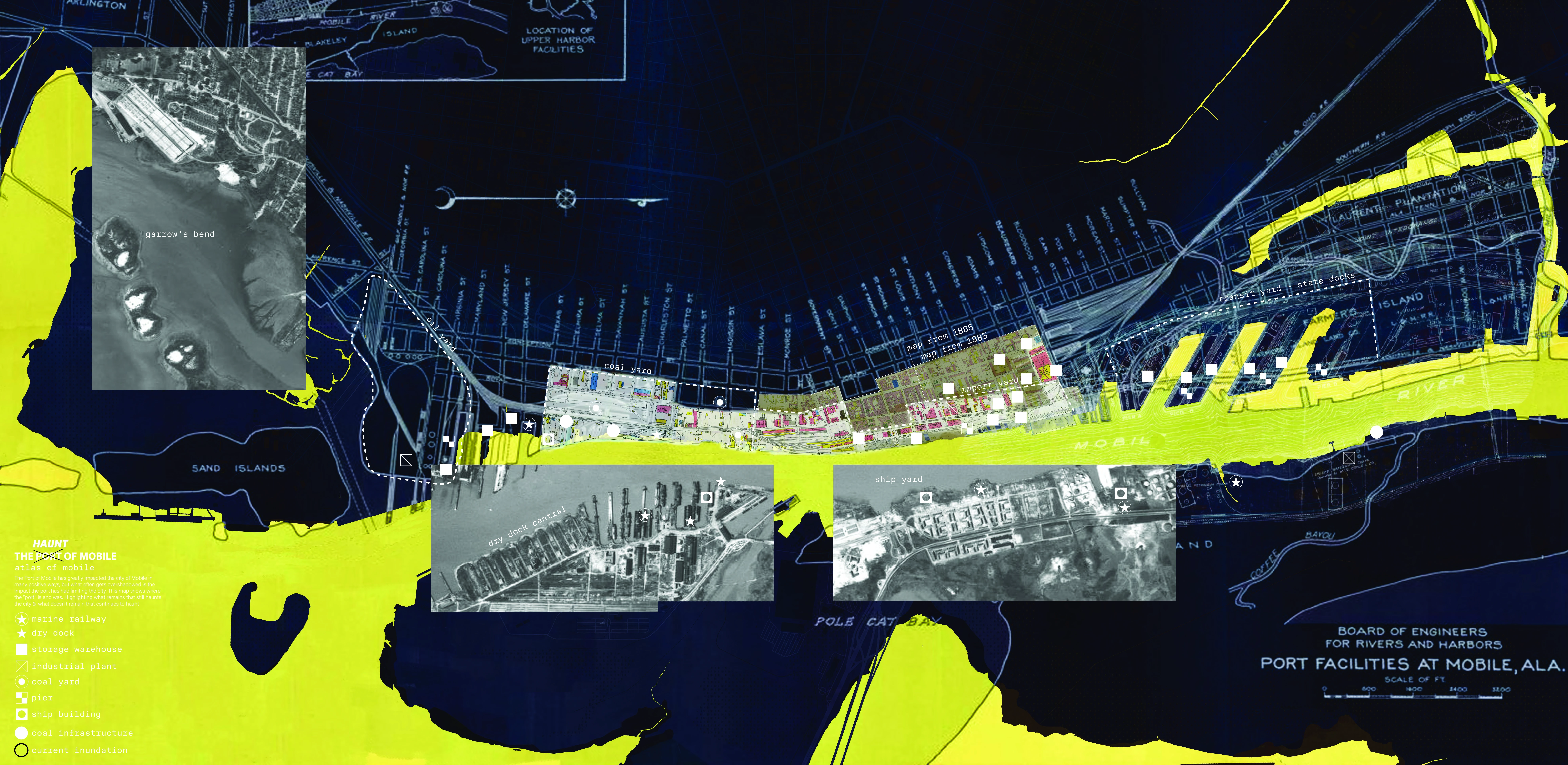
This project imagines a new future for Mobile's industrial waterfront, one that confronts its industrial history while mending ecological and community relationships with water. Rooted in Avery Gordon's concept of haunting, it utilizes sea level rise as a narrative device for change.By transforming 220 acres of port-related land into a stratified novel marsh ecology, this design reclaims haunted land as a public resource for Mobile. It is more than an ecological restoration but a project that is a social and cultural reckoning which directly addresses today's impacts of redlining, segregation, and industrial expansion that have affected Mobile.
-
Framed through Avery Gordon’s concept of haunting—an animated state in which repressed or unresolved social violence makes itself known—this project explores how that presence demands not just recognition but requires action. Haunting, in this sense, is not merely a ghost seeking visibility, but a specter that needs something must be done. It is not enough to acknowledge the haunting; one must confront the unresolved violence and recognize those it has affected.
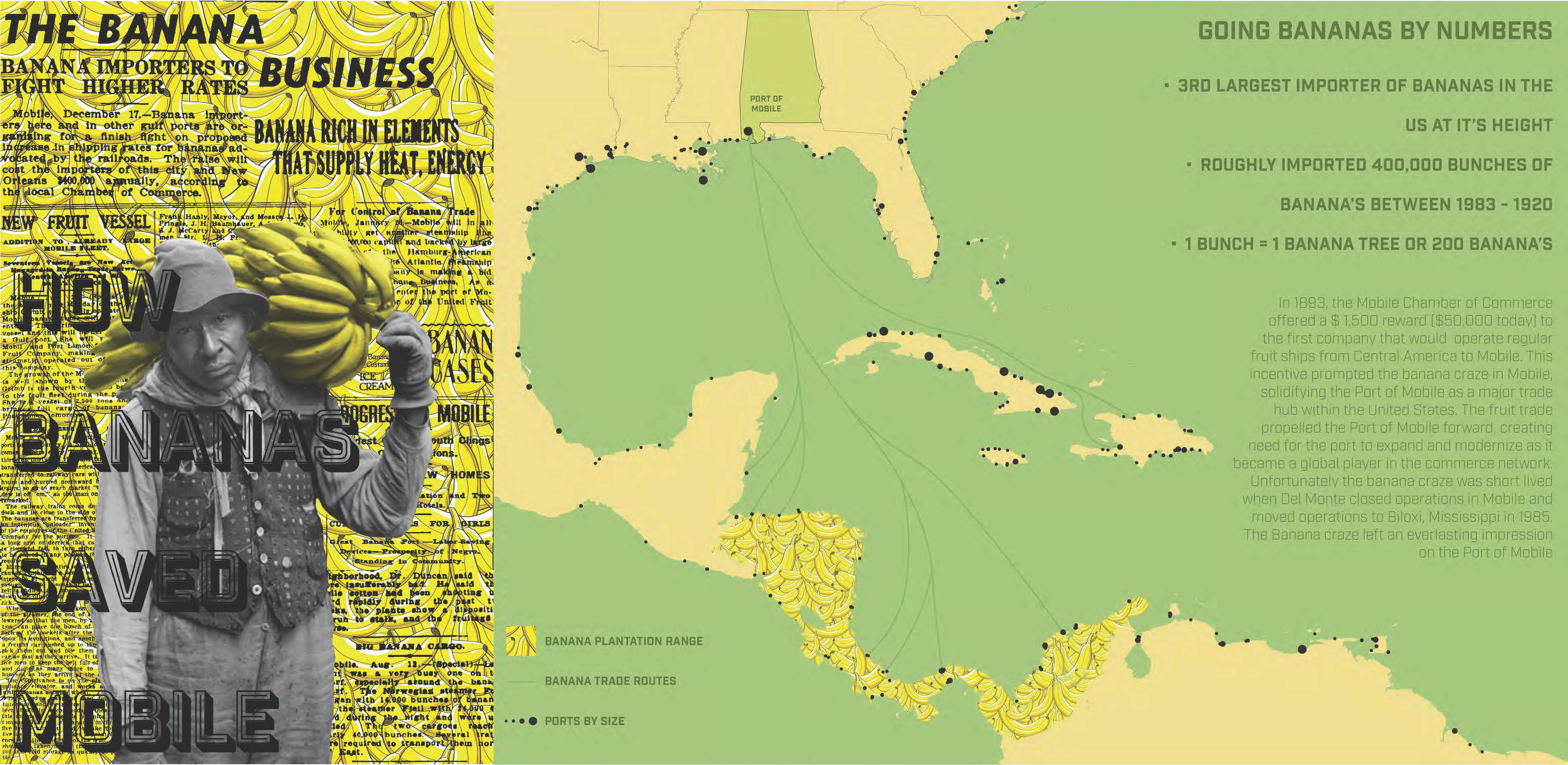
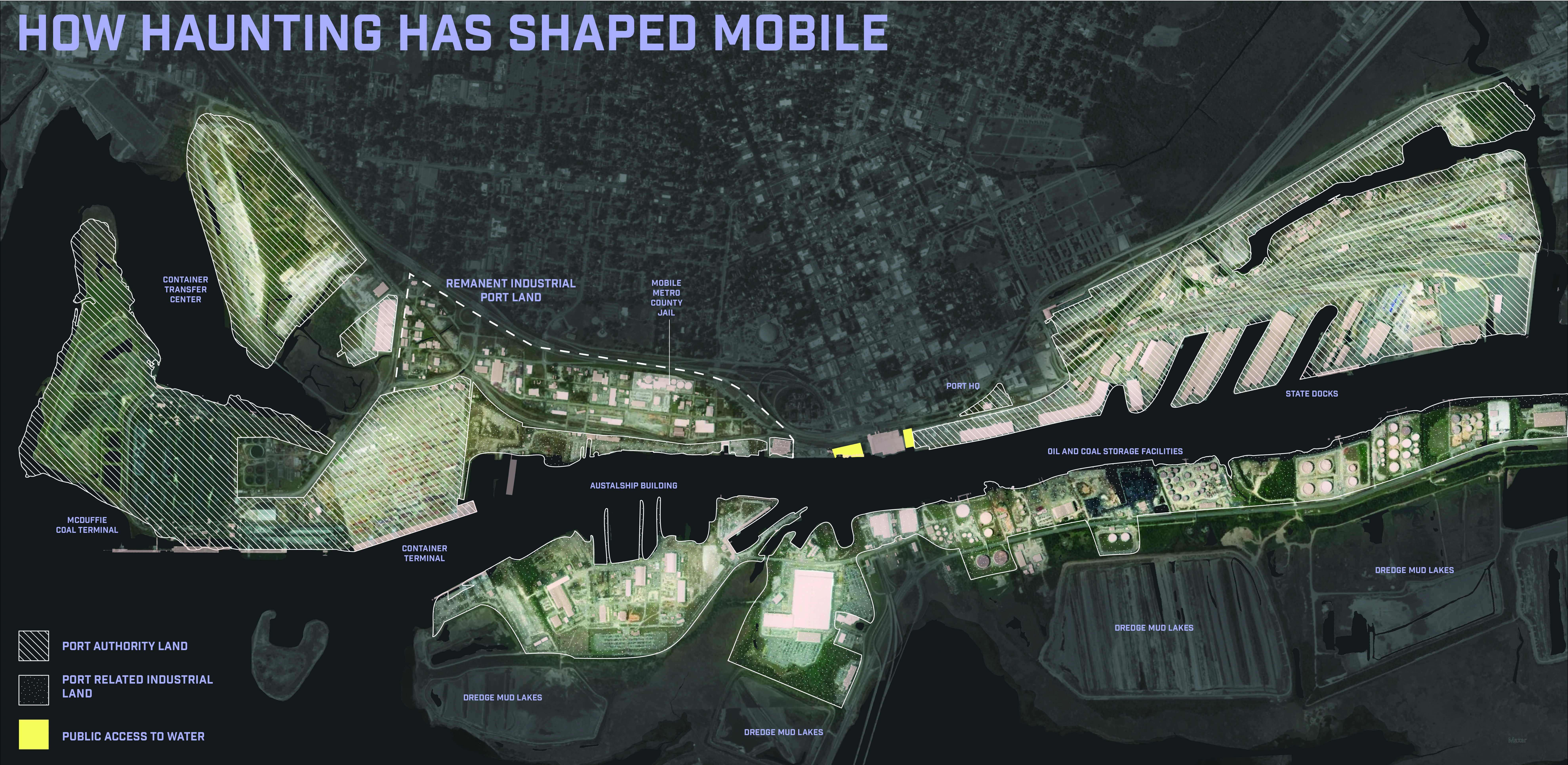
The Port of Mobile actively haunts the city. Its negative impacts have long been overlooked in favor of its economic importance. This project seeks to confront that haunting—serving as the something to be done Gordon calls for. The Port and the city of Mobile are inextricably linked, an evolving and intertwined landscape since the city’s founding. Today, the Port occupies all of downtown Mobile’s waterfront.
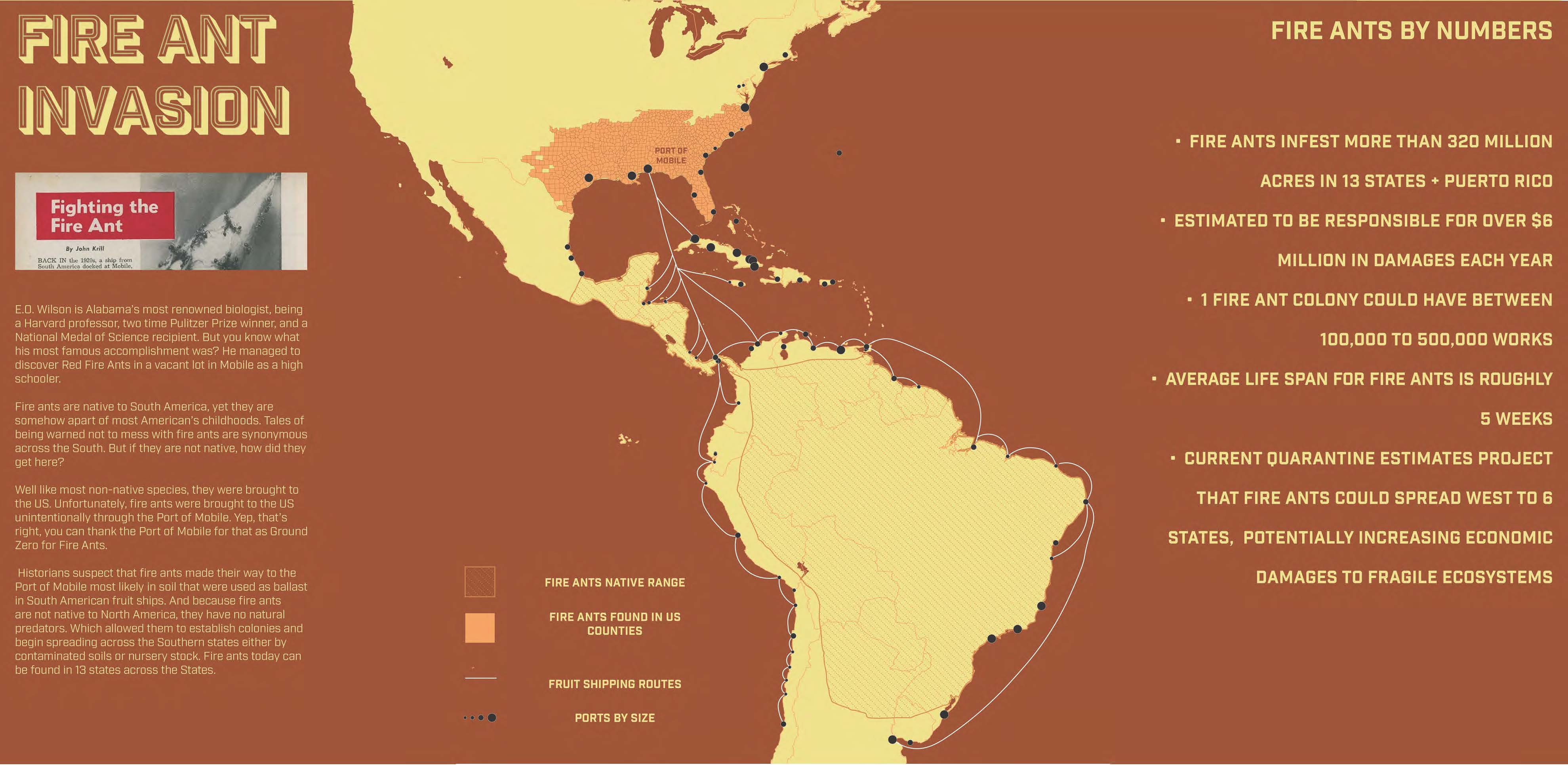
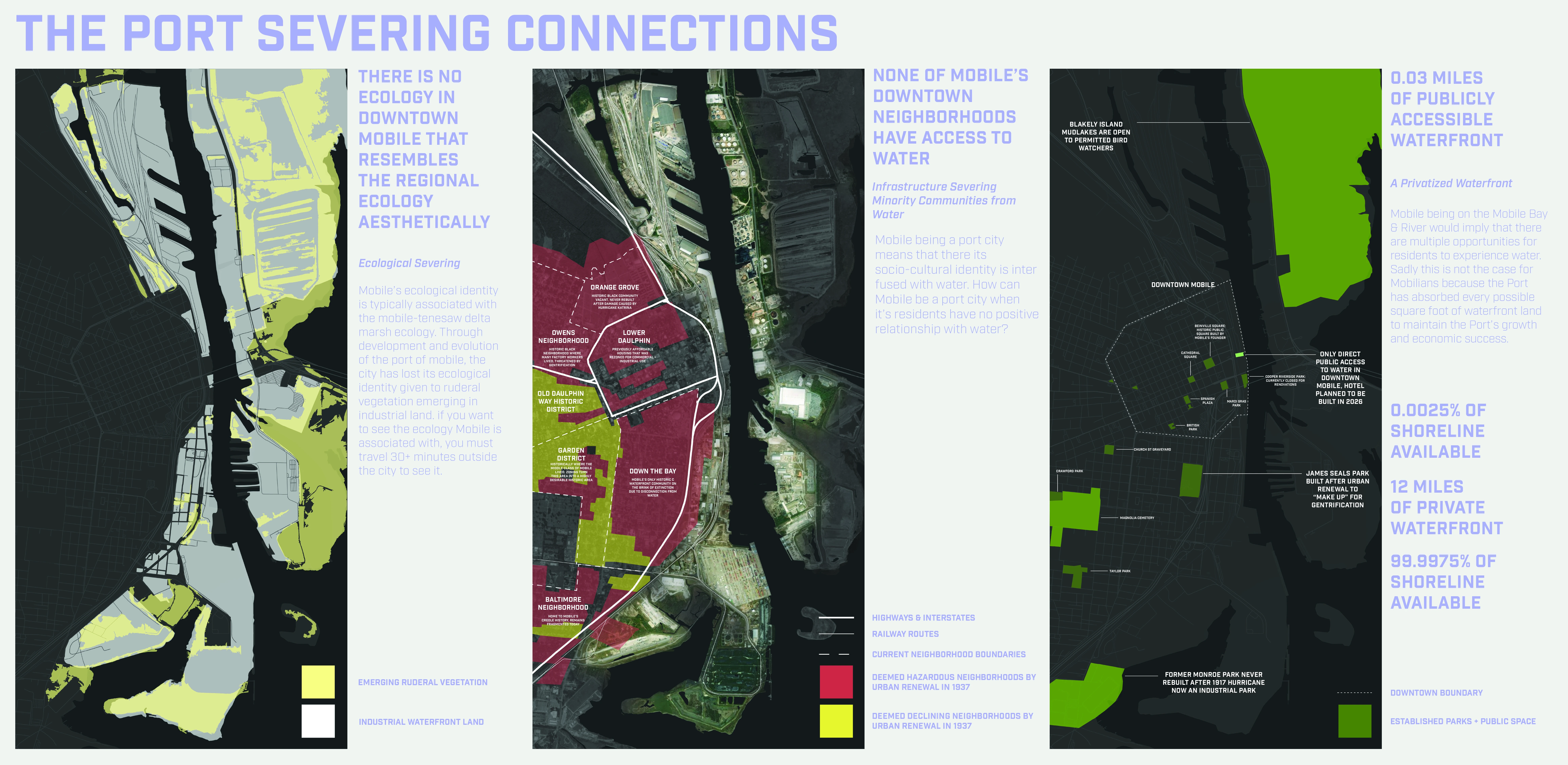
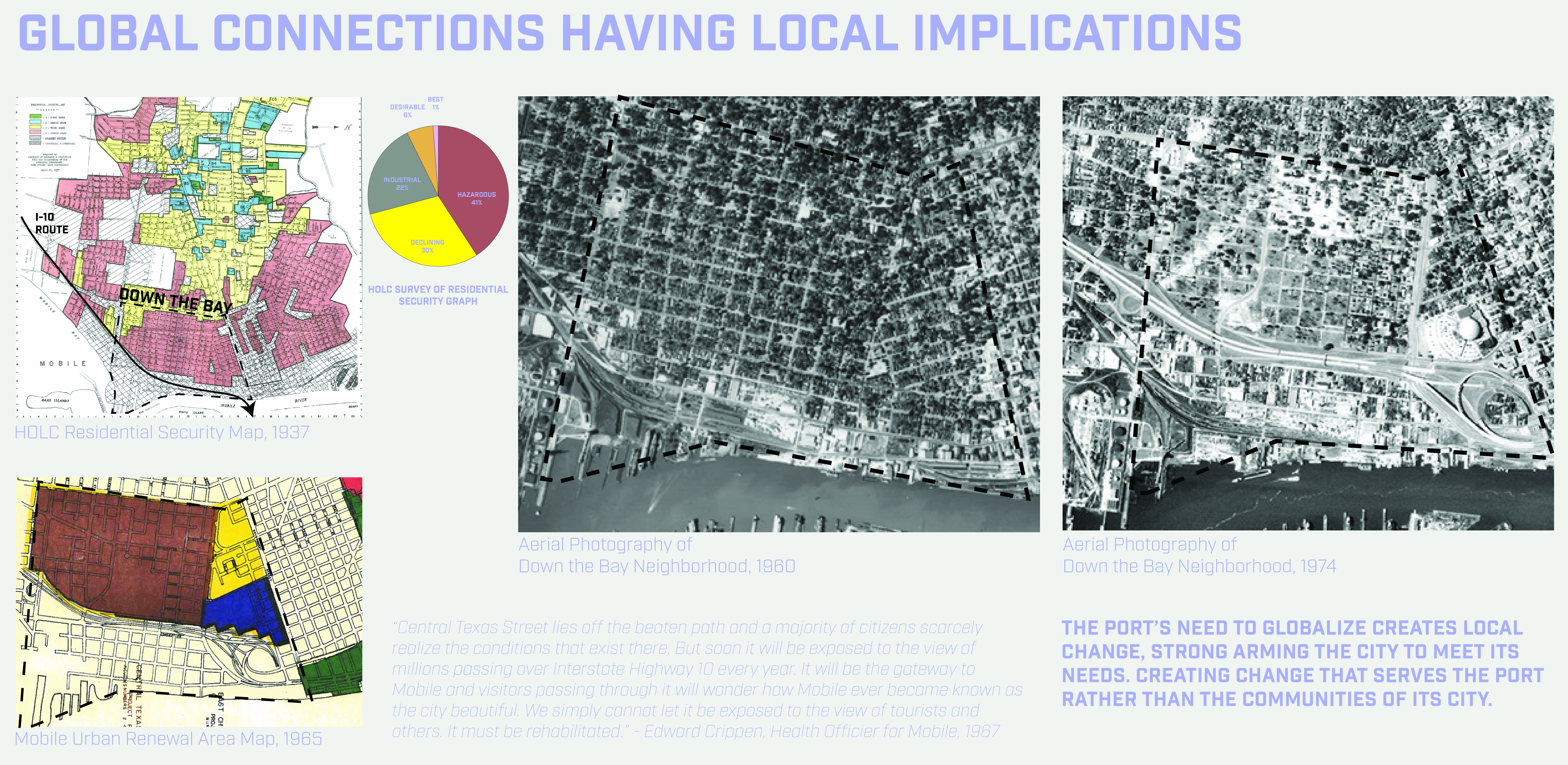
The global connections forged through the Port since Mobile’s founding in 1702 have had profound local and regional implications. During the era of urban renewal, minority communities in Mobile were labeled “hazardous” or “declining” through redlining practices. This is a familiar story across the U.S., but in Mobile, the haunting persists more acutely: the Port’s dominance actively shapes city planning and policy decisions, often at the expense of vulnerable communities. Highways, railroads, and land reclamation along the shoreline have all been undertaken in the name of the Port.
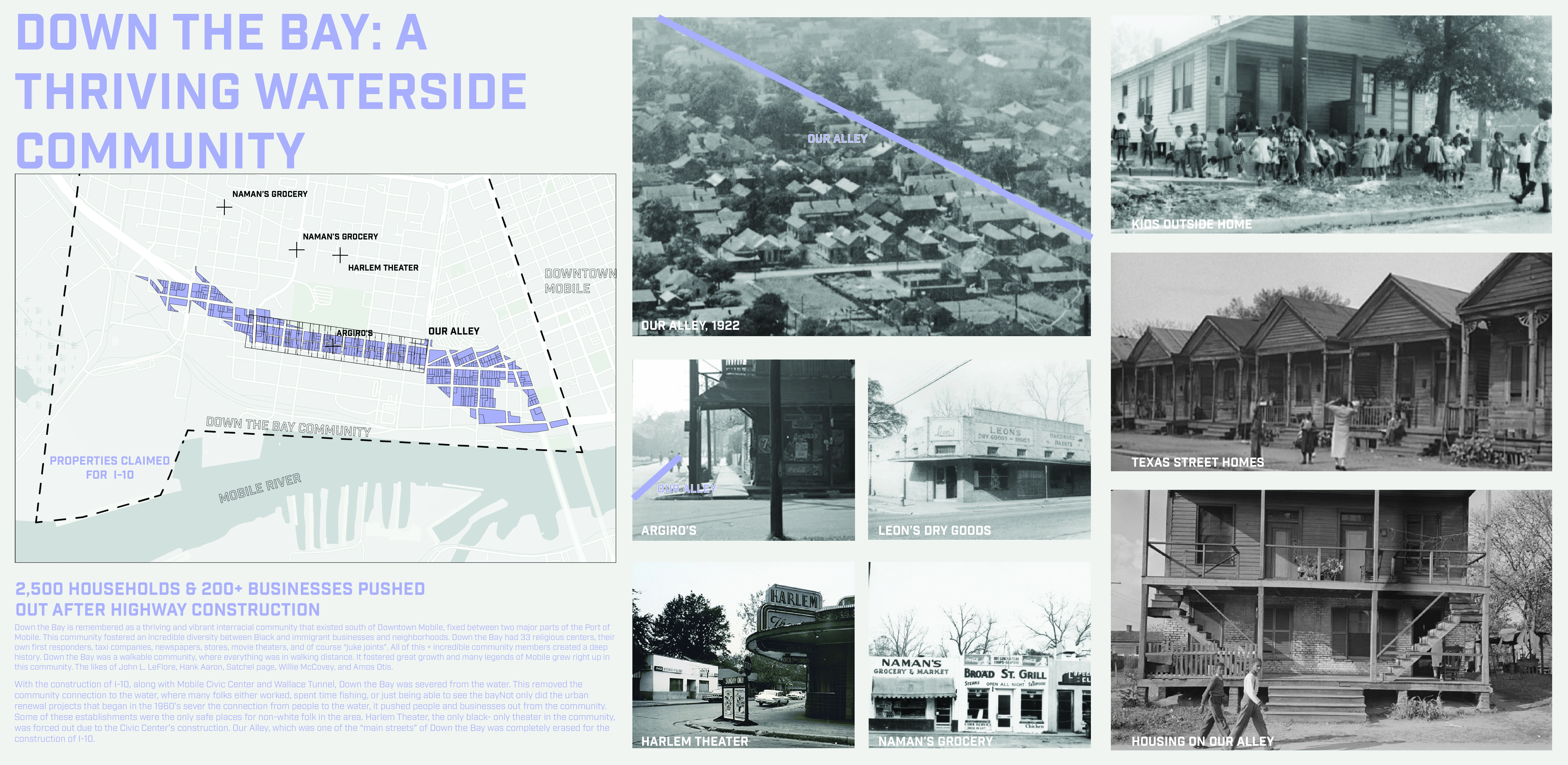
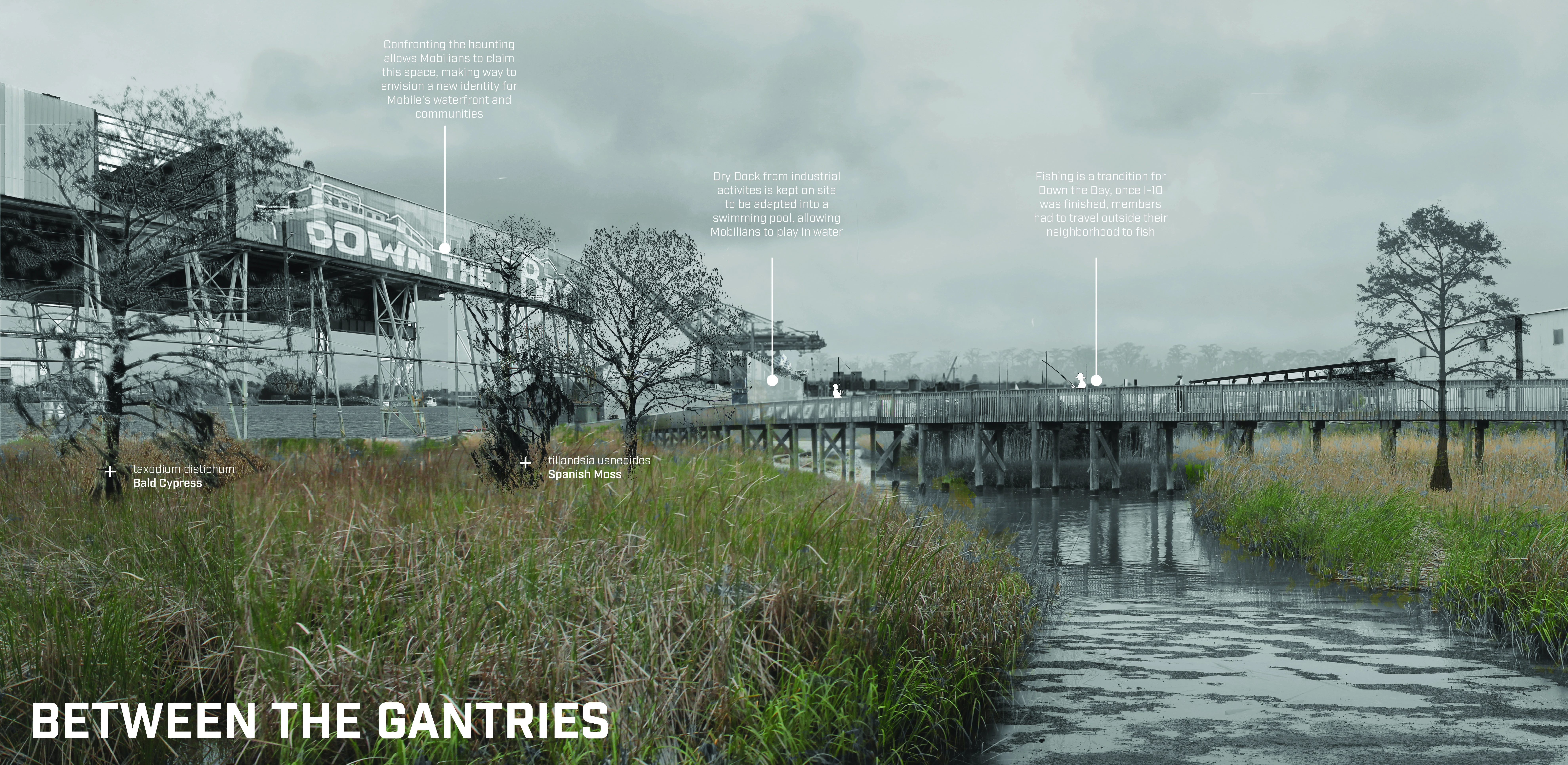
Down the Bay is not the only community haunted by this history, but it is emblematic. Once a vibrant Black and immigrant neighborhood, it is remembered for its rich cultural and economic ties to the water. The University of South Alabama’s oral history program preserves these memories, even as the community itself faces erasure, because of its connection to the water being severed by I-10 and industrial rail lines. This was a place where people worked, built businesses, and created lasting memories. Urban renewal transformed its heart into the undervalued and neglected landscape seen today.
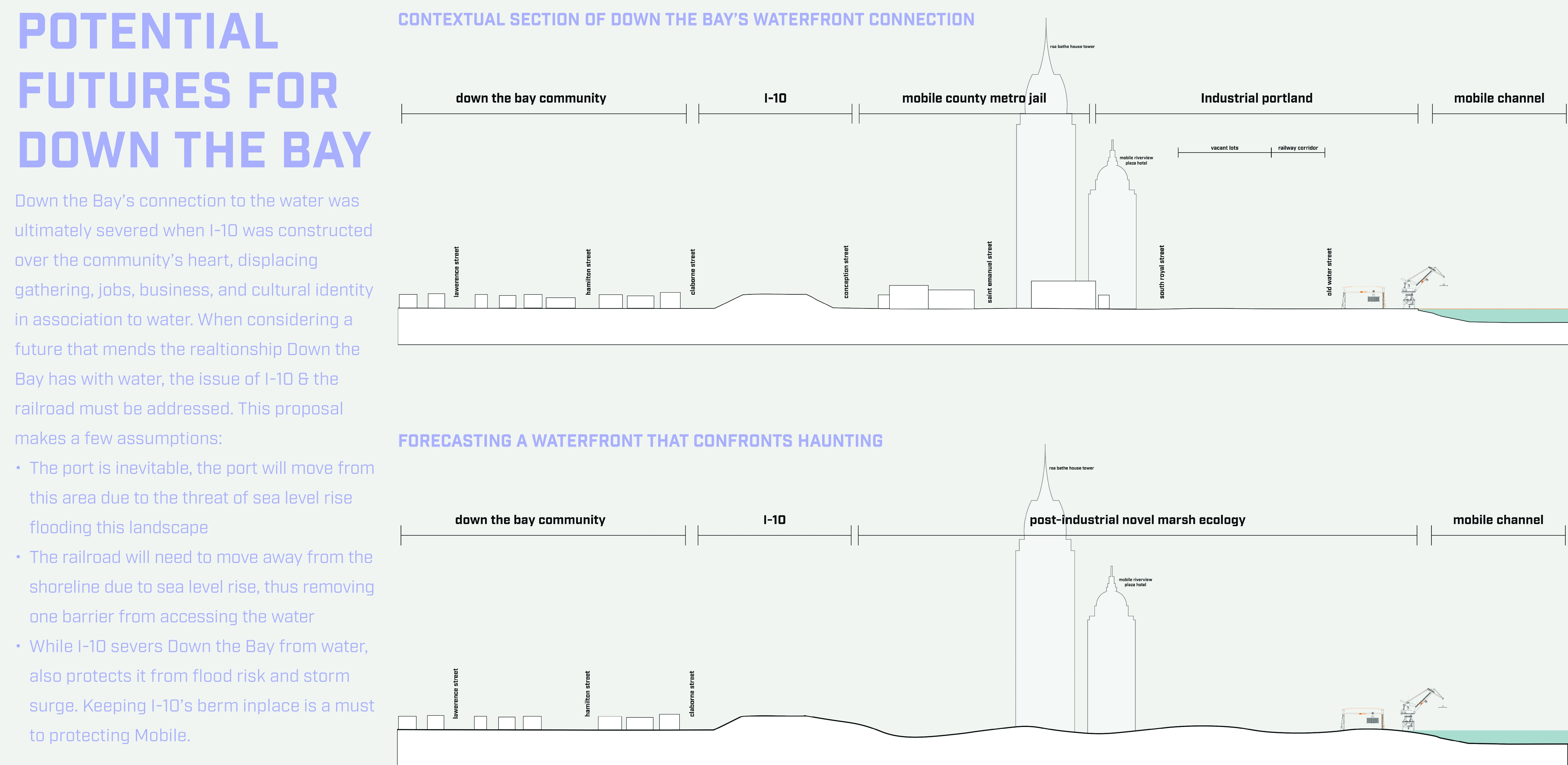
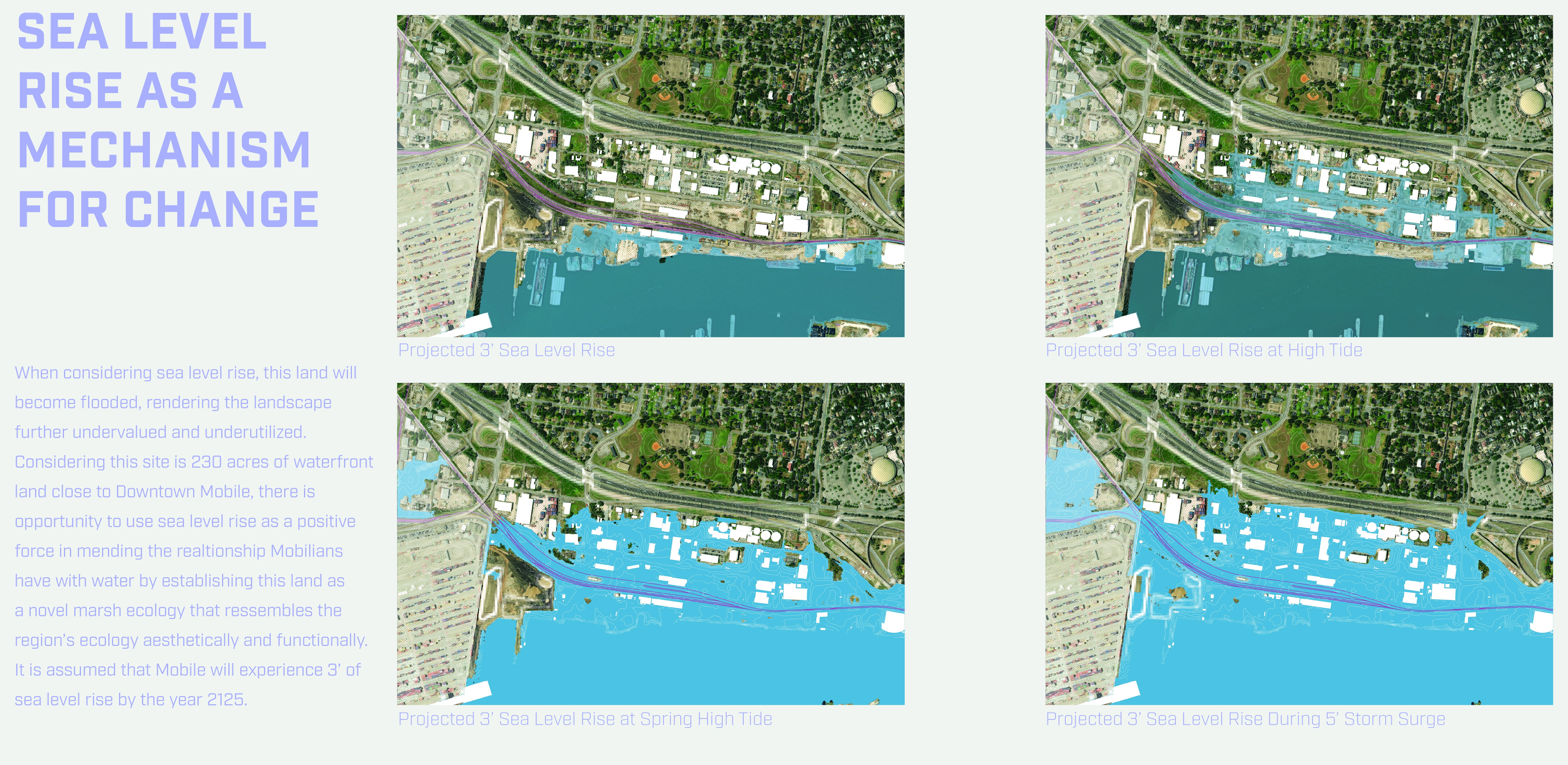
This project proposes to use sea level rise as a catalyst for transformation. Rather than resist this change, the flooding becomes an opportunity to confront the haunting head on, being the something to be done Gordon Avery talks about.
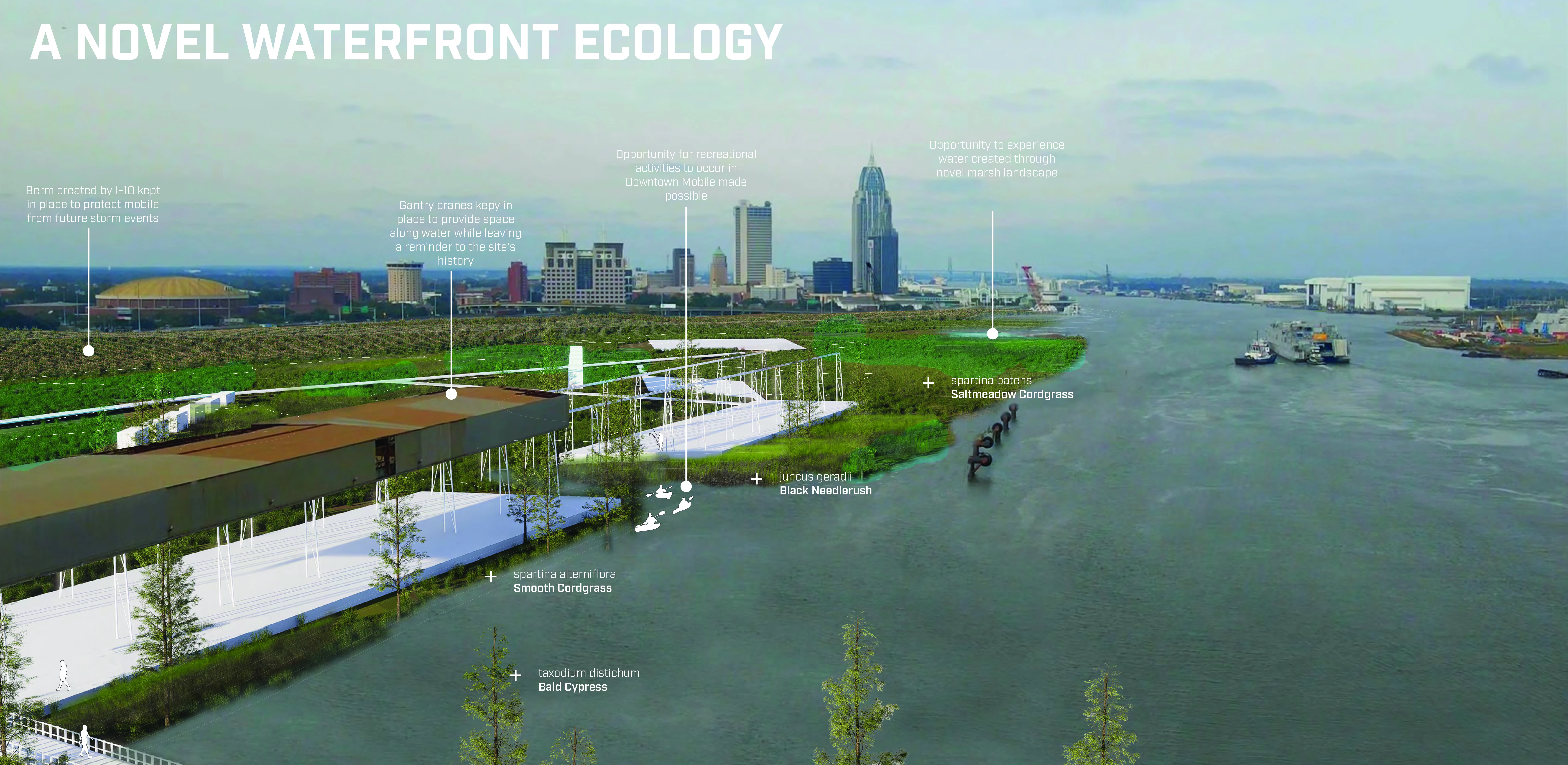
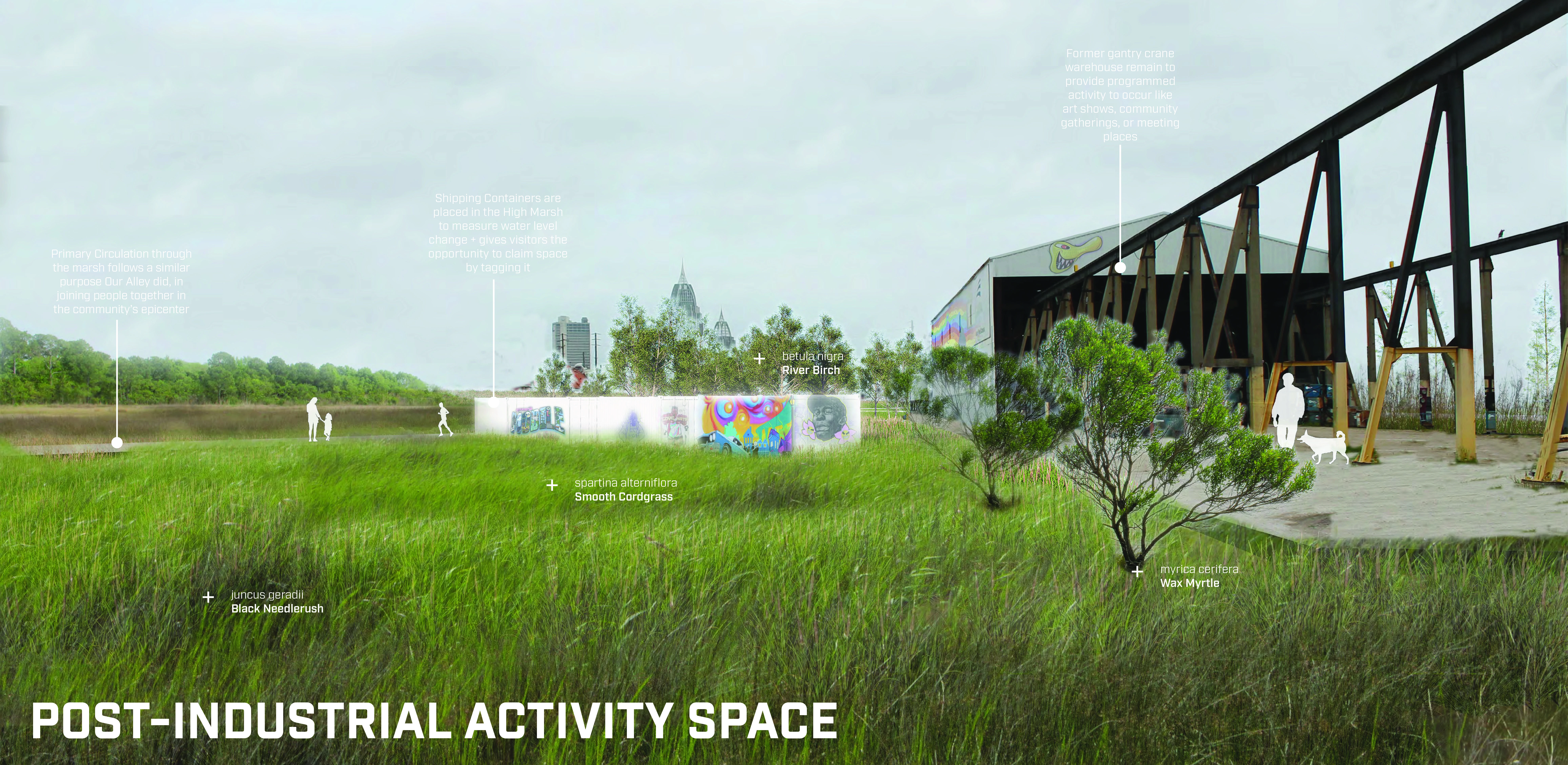
The design incorporates a stratified marsh gradient—low marsh, high marsh, upland, vegetated berm, and industrial ruderal zones — packed in one landscape where Mobilians can renew their relationship with the water. It creates space for recreation in downtown Mobile, while embracing, rather than erasing, the site’s industrial past. Artifacts such as shipping containers and rubble jetties are arranged in conversation with the Port’s container terminal geometry. Industrial infrastructure like dry docks and gantry cranes are preserved, affording Mobilians the opportunity to reclaim this landscape as their own. The future envisioned here offers Down the Bay and Mobile, a chance to reshape its identity as a port city.
Growing up in coastal Virginia, I have this deep understanding of what it means to live in a city where water is an active presence in people's daily lives. It's difficult to imagine how a city on the water has no good realtionship with it. Which is why I was attracted to the Port of Mobile. The overall goal for this project is to begin to reevaluate and improve the relationships port city residents have with water.
-
- Black Needle Rush
- Saltgrass
- Saltmeadow Cordgrass
- Marsh Elder
- Sea Oxeye Daisy
- Smooth Cordgrass
- Glasswort
- Saltwort
- Wax Myrtle
- Bald Cypress
- Water Tupelo
- Live Oak
- River Birch
- Longleaf Pine
- Northern Sea Oats
Advertisement
Related Awards
Award of Excellence, Analysis & Planning
H2Oquirrh: Regional Water Reform for a Resilient Salt Lake Valley
Location: Salt Lake City, UT
Firm: Design Workshop
Client: Wasatch Front Regional Council, Salt Lake County
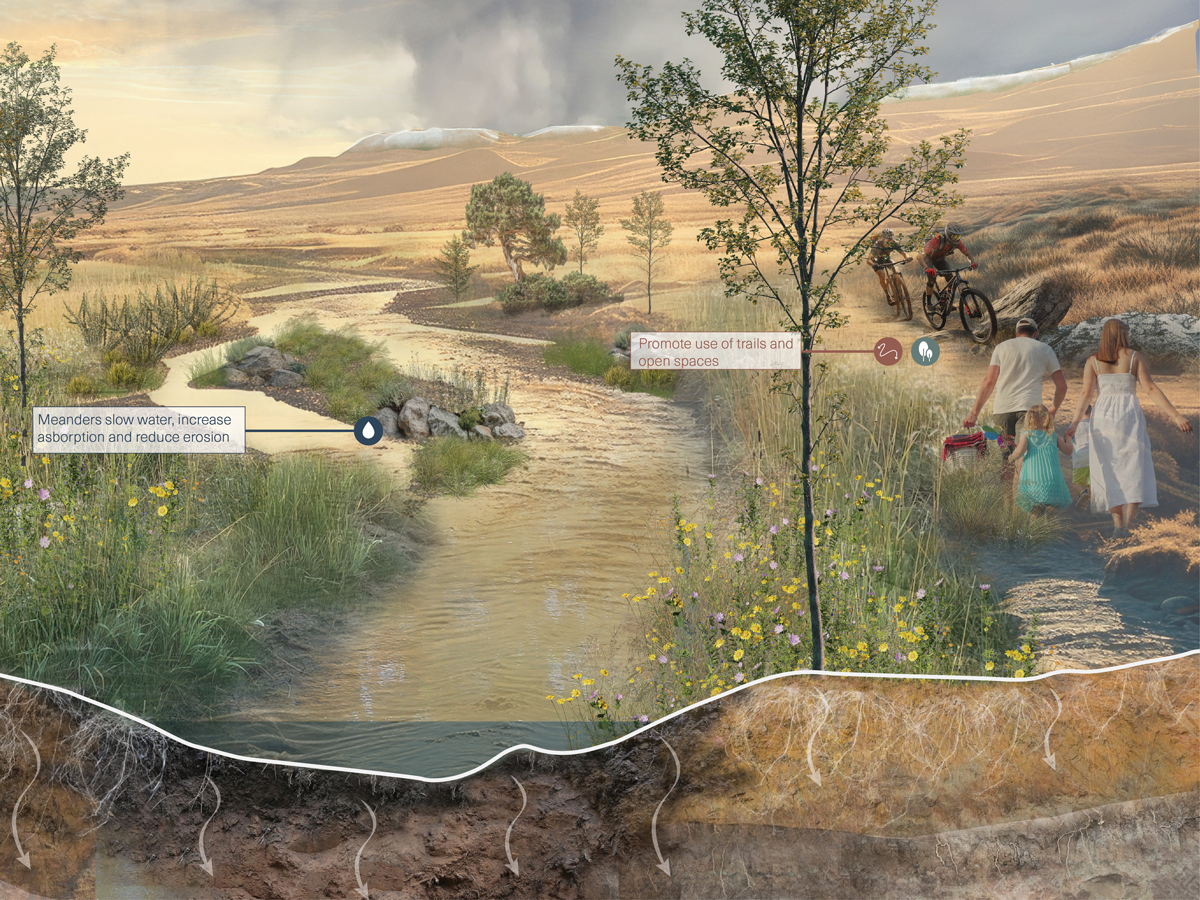
Water flowing from the Oquirrh Mountains is a critical contributor to the Great Salt Lake. Severe drought and human-caused decline threaten the lake’s viability, with cascading impacts on ecosystems and public health. This regional collaboration of seven jurisdictions, the H2Oquirrh Vision Plan, undertakes a large systems analysis of hydrologic cycles, land cover, and land-use decisions to identify site-specific interventions across nine creeks and washes. Led by landscape architects and water resource engineers, the study advances a deeper understanding of localized drivers of water loss and proposes innovative solutions through integrated landscape infrastructure design and policy.
-listing-img.webp?language=en-US)